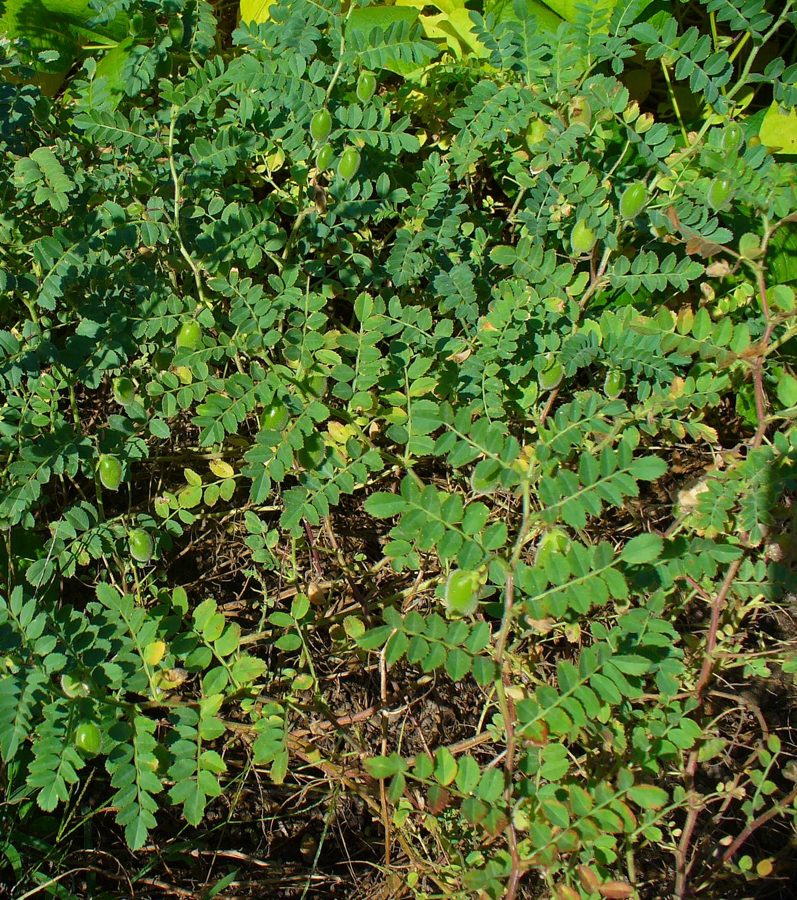
Chickpea plant (© H. Zell (Wikimedia Commons))
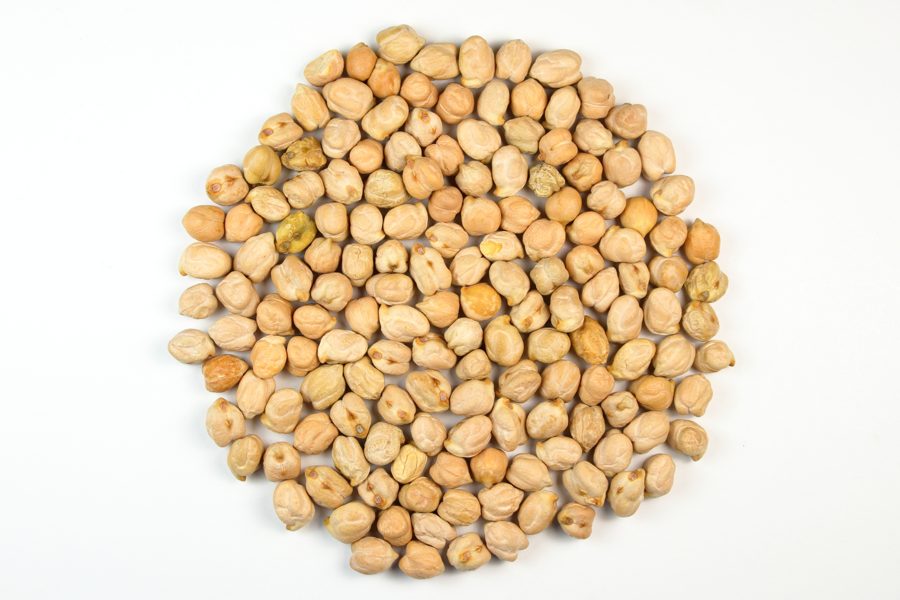
Chickpeas (© Sanjay Acharya (Wikimedia Commons))
Reference:”
Discussion
In ISA 30:24 the prophet says that when God restores the nation of Yehudah (Judah), the oxen and donkeys will eat belil chamits “winnowed with shovel and fork.” The Hebrew word belil is accepted as meaning “fodder” or “provender,” but the modifying word chamits is debated. RSV translates it as “salted,” GNB says, “finest and best,” REB has “well-seasoned,” and NLT uses “good.” NRSV and NAB combine the two words, saying “silage.” However, the Hebrew word chamits is cognate with the Arabic chumus and the Aramaic chimtsa, both of which refer to the Chickpea Cicer arietinum. So Zohary advocates translating chamits as “chickpeas.” The choice is between two interpretations of chamits, one favored by cognate evidence, the other by traditional exegesis. In the excavation of Yeriho (Jericho), chickpeas were found dating from at least 2000 B.C., well before the time of Yeshayah (Isaiah), but archeologists claim to have found chickpeas on other sites in the Middle East also, some dating to 7000 B.C. Wild species found growing in the northern part of the Fertile Crescent have led botanists to believe that the chickpea originated there.
Description
The chickpea stands about 20 centimeters (8 inches) high and has small leaves opposite each other on the stems and branches. The flowers are blue or white and form a short pod with one or two almost cubical seeds, tan in color.
Special significance
The intent of ISA 30:24 is to show the glorious future of Yehudah (Judah), where even the cows and donkeys will dine on delicious food.
Translation
The context here is rhetorical, so if the translator understands chamits to mean “chickpeas,” it may be effective to use a cultural equivalent, preferably a plant that local farm animals would find delicious. Some translators, lacking a specific word for chickpeas, will need to use a generic term or phrase. If a transliteration from a major language is desired, consider Arabic hummus; French poischiche, cicerole; Portuguese graãodebico; and Spanish garbanzo. If, on the other hand, the alternative meaning of chamits is taken, a simple phrase such as “good food,” “best food” or “mixed food” is acceptable.
 Open English Translation (OET)