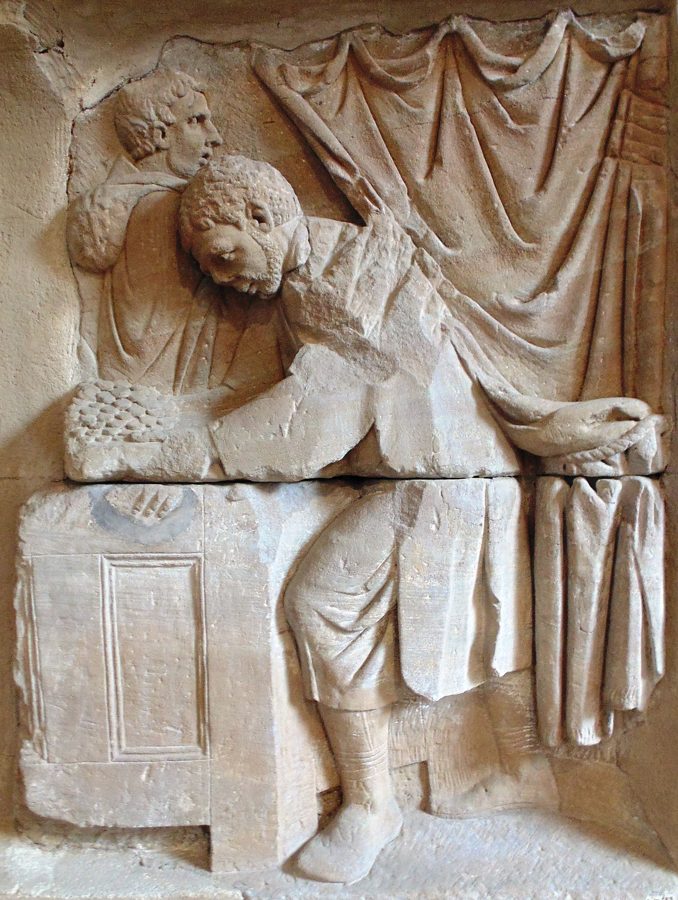
Moneychanger or banker at a table (O.Mustafin, CC0, via Wikimedia Commons)
References
- Greek τράπεζα trapeza: MAT 21:12, MARK 11:15, LUKE 19:23, YHN 2:15
Description
A small table was used by people for conducting money transactions. This was most likely a table at which someone could sit, not a low table where people reclined to eat (see 5.7 Table for eating<REALIA:5.7>).
———
Translation
When Yeshua (Jesus; Grk. Yesus) confronted the moneychangers in the Temple (MAT 21:12, MARK 11:15, YHN 2:15), he literally overturned the tables where they were transacting business. Just as the English word “bank” comes from a word for table or “bench,” so also in Greek the word trapeza came to mean a place for financial dealings. In LUKE 19:23 the master asks the servant why he had not put the money “on a table.” Some translations have “in[to] the bank” (RSV, GNT), while others say “on deposit” (NIV, REB).
 Open English Translation (OET)