Northern kingdom details
← ⌂ →
Yakov (Jacob) was the patriarch of Yisrael (Israel).
After his descendants left Egypt (Heb. Mitsrayim) and moved into ‘the promised land’, they were guided by the prophets and by various heroes and guides (traditionally known in English as ‘Judges’, although that describes their role poorly) before they had a king. Shaul (Saul) was their first king, succeeded by King David and then his son King Shelomoh (Solomon).
However, the more northern tribes disagreed with the leaders of the southern tribes of Yehudah (Judah, David’s tribe) and Benyamin over succession plans.
They also resented having to travel to Yerushalem (Jerusalem, located in Yehudah's area) several times per year.
All of that and more eventually resulted in Yisrael splitting into two kingdoms: the northern kingdom which continued to be known as Yisrael with Samaria as its capital city,
and a southern kingdom that became known by the name of the dominant tribe of Yehudah (Benyamin was a relative small tribe) and which retained Yerushalem (Jerusalem) as its capital.
By the ‘Northern kingdom’, we mean the northern area occupied by the majority ten tribes who then established Samaria as their capital and worship centre.
Sometimes the northern kingdom also goes by the name ‘Efraim’ (Ephraim, one of the ten tribes).
The prophets who spoke to the northern kingdom of Yisrael include Eliyyyah (Elijah), Elisha, Yonah (Jonah), Amos, and Hoshea (Hosea).
People and places
Jacob · Egypt · Saul · David · Solomon · Jerusalem · Samaria · Elijah (KI1 17:1) · Elisha · Jonah · Amos (AMO 1:1) · Hosea
Selected readings
BMM BibleMapper.com Maps:
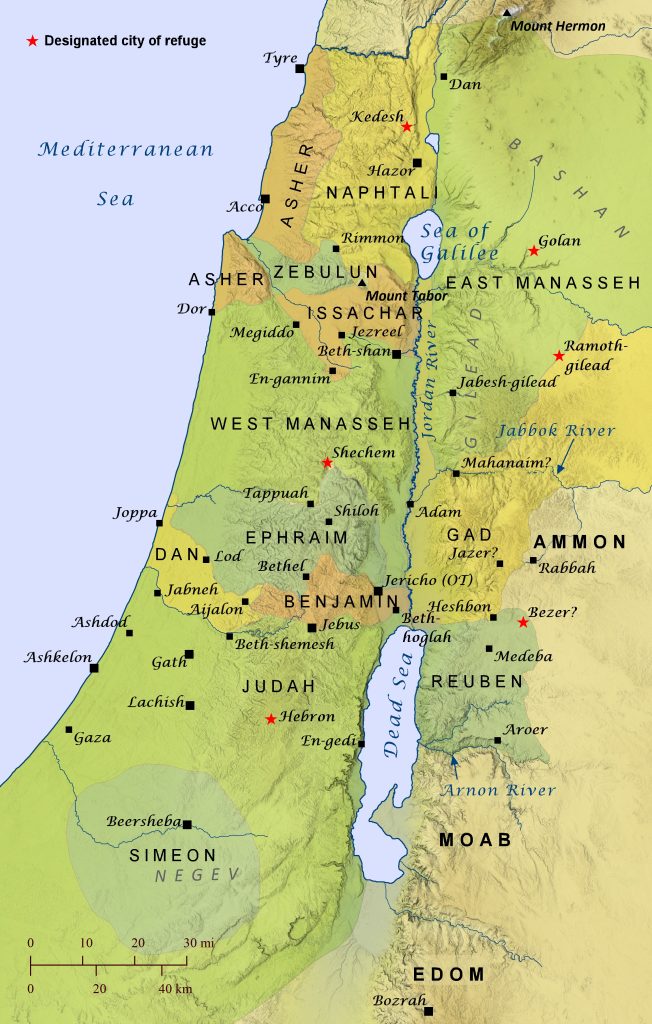
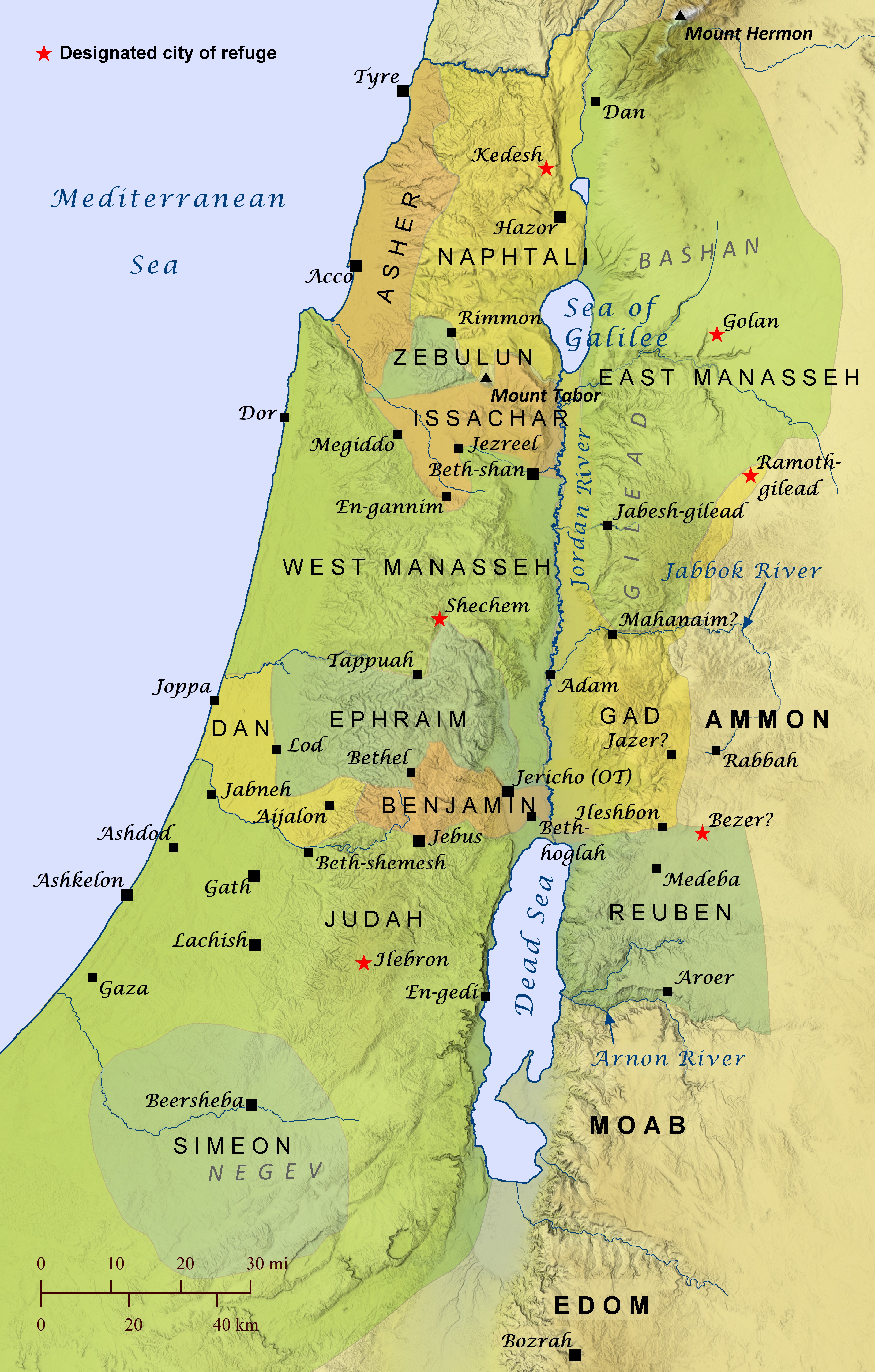
Tribal Allotments of the Promised Land
After the Israelites had conquered portions of the Promised Land and Joshua had grown old, the Lord directed him to divide the rest of the land among the tribes of Israel as their inheritance (Joshua 13-20). The eastern tribes had already been allotted their land under Moses’ leadership (Numbers 32), but they continued to help the other tribes drive out the Canaanites from land west of the Jordan River. The Lord also instructed the Israelites to designate several cities of refuge, where someone could flee for protection from an avenger if they accidentally killed someone (Numbers 35; Joshua 20).
BMM BibleMapper.com Maps:
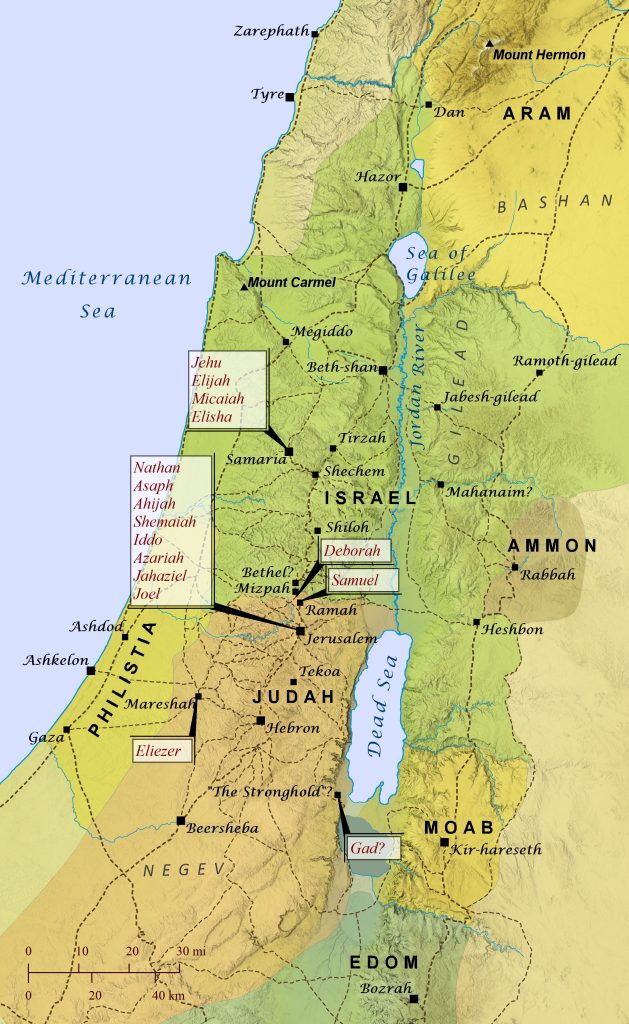
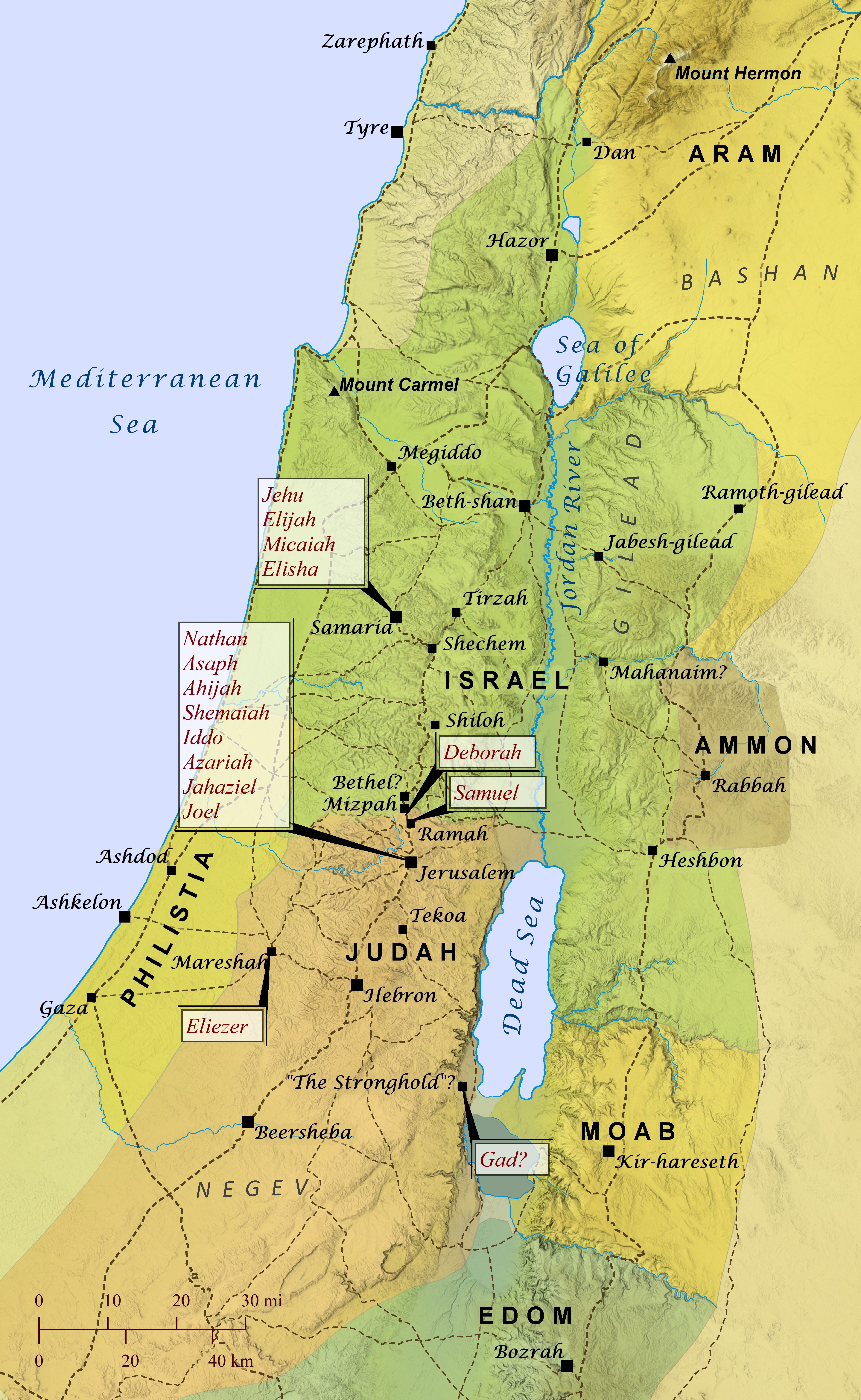
Prophets of the Old Testament before 800 B.C.
If you ask someone today what biblical prophets did, they will likely tell you that they divinely foretold of future events. While this was often the case, most prophets in the Bible focused as much on “forthtelling” God’s messages as they did on “foretelling” the future. That is, their primary role was to simply “forthtell” divinely acquired messages to leaders and groups of people, and at times that included foretelling of coming judgment, blessing, rescue, etc. Also, though plenty of prophets (sometimes called “seers” in Scripture) often spoke in confrontational or eccentric language that put them at odds with kings and religious leaders, the biblical writers also applied the term prophet to people who communicated God’s messages in ways that many readers today might not think of as prophecy, such as worship leaders appointed by David to “prophesy with lyres, harps, and cymbals” (1 Chronicles 25:1). Similarly, the books of Joshua, Judges, 1 & 2 Samuel, and 1 & 2 Kings are typically categorized as history by Christians, but in the Hebrew canon they belong to the category of Former Prophets. The Lord raised up prophets throughout all of biblical history, from the giving of the law under Moses to the revelation of the last days by the apostle John, and the kings of Israel and Judah often recognized and supported specific people as official prophets of the royal court and consulted them to find out God’s perspective about official matters. Following is a list of nearly everyone designated as prophet or seer in the Old Testament and the primary area of their ministry.
• Deborah (1216 B.C.) [Judges 4:4] => Baal-tamar?
• Samuel (1070 B.C.) [1 Samuel 3:20; 1 Chronicles 29:29; 2 Chronicles 35:18] => Ramah
• Gad (1018 B.C.) [2 Samuel 24:11; 1 Chronicles 21:9; 29:29; 2 Chronicles 29:25] => Masada?
• Nathan (1000 B.C.) [2 Samuel 12:1; 1 Chronicles 29:29; 2 Chronicles 29:25] => Jerusalem
• Asaph (1000 B.C.) [2 Chronicles 29:30] => Jerusalem
• Ahijah (935 B.C.) [1 Kings 11:29; 2 Chronicles 9:29] => Jerusalem
• Shemaiah (930 B.C.) [2 Chronicles 12:2-15] => Jerusalem
• Iddo (913 B.C.) [2 Chronicles 9:29; 12:15; 13:22] => Jerusalem
• Jehu son of Hanani (890 B.C.) [1 Kings 16:1-7; 2 Chronicles 19:2] => Samaria?
• Azariah (890 B.C.) [2 Chronicles 15:1-8] => Jerusalem
• Elijah (860 B.C.) [1 Kings 18:36] => Samaria
• Micaiah (853 B.C.) [1 Kings 22:8-23; 2 Chronicles 18:7-22] => Samaria
• Jahaziel (853 B.C.) [2 Chronicles 20:14] => Jerusalem
• Eliezer (853 B.C.) [2 Chronicles 20:37] => Mareshah
• Elisha (850 B.C.) [1 Kings 19:16; 2 Kings 2:15] => Samaria
• Joel (835 B.C.) [Joel 1:1] => Jerusalem