Open Bible Data Home  About  News  OET Key  Downloads

OET OET-RV OET-LV GHT ULT UST BSB MSB BLB AICNT OEB WEBBE WMBB NET LSV FBV TCNT T4T LEB BBE Moff JPS Wymth ASV DRA YLT Drby RV SLT Wbstr KJB-1769 KJB-1611 Bshps Gnva Cvdl TNT Wycl SR-GNT UHB BrLXX BrTr Related Parallel Simple Interlinear Topics Reference Dictionary Search

Southern kingdom details

Yakov (Jacob) was the patriarch of Yisrael (Israel). After his descendants left Egypt (Heb. Mitsrayim) and moved into ‘the promised land’, they were guided by the prophets and by various heroes and guides (traditionally known in English as ‘Judges’, although that describes their role poorly) before they had a king. Shaul (Saul) was their first king, succeeded by King David and then his son King Shelomoh (Solomon). However, the more northern tribes disagreed with the leaders of the southern tribes of Yehudah (Judah, David’s tribe) and Benyamin over succession plans. They also resented having to travel to Yerushalem (Jerusalem, located in Yehudah's area) several times per year. All of that and more eventually resulted in Yisrael splitting into two kingdoms: the northern kingdom which continued to be known as Yisrael with Samaria as its capital city, and a southern kingdom that became known by the name of the dominant tribe of Yehudah (Benyamin was a relative small tribe) and which retained Yerushalem (Jerusalem) as its capital.

By the ‘Southern kingdom’, we mean the southern area of what was originally part of the Kingdom of Israel, but when the very large tribe of Yehudah (Judah) and the very small tribe of Benyamin (Benjamin) split off to stay loyal to David’s descendants who continued to rule from Yerushalim (Jerusalem). This kingdom of Yehudah continued to be ruled by David’s descendants, although we often saw a pattern of ‘good king’, ‘bad king’ (unlike the Northern Kingdom which pretty much had all bad kings).

The prophets who spoke to the southern kingdom of Yehudah include Eliyyyah (Elijah), Isaiah, Mikah (Micah), Zefanyah (Zephaniah), Ovadyah (Obadiah), Nahum, Yeremyah (Jeremiah), Yoel (Joel), and Habakkuk.

People and places

Jacob · Egypt · Saul · David · Solomon · Jerusalem · Samaria · Elijah (KI1 17:1) · Isaiah · Micah (JER 26:18) · Zephaniah (ZEP 1:1) · Obadiah (OBA 1:1) · Nahum · Jeremiah (CH2 35:25) · Joel (JOL 1:1) · Habakkuk

Selected readings

Show passage in OET: KI2 18:1–7

OET-RV KI2 18:1

18 In the third year of Elah’s son King Hoshea’s reign over Yisrael (Israel), Ahaz’s son Hizkiyah (Hezekiah) became king of Yehudah (Judah).

OET-RV KI2 18:2

2 He was twenty-five when he became king and he reigned from Yerushalem (Jerusalem) for twenty-nine years. (His mother was Zekaryah’s (Zechariah’s) daughter Avi.)

OET-RV KI2 18:3

3 He did what Yahweh had said was correct behaviour like his ancestor King David had done.

OET-RV KI2 18:4

4 He demolished the hilltop shrines and shattered their pillars, and he cut down the Asherah poles. He crushed the bronze serpent that Mosheh (Moses) had made, because the Israelis had named it ‘Nehushtan’ and had been offering incense to it until then.

OET-RV KI2 18:5

5 Hizkiyah fully trusted in Yisrael’s god Yahweh, and no other king was like him among all the kings of Yehudah that either preceded or followed him.

OET-RV KI2 18:6

6 He relied completely on Yahweh—not turning away from following him, and he obeyed the instructions that Yahweh had commanded Mosheh.

OET-RV KI2 18:7

7 So Yahweh helped him and he was successful in everything he did. He rebelled against the Assyrian king and refused to submit to his demands.

OET-LV KI2 18:1

18 And_he/it_was in_year three of_Hōshēˊa the_son_of ʼĒlāh the_king_of Yisrāʼēl/(Israel) Ḩizqiyyāh the_son_of ʼĀḩāz the_king_of Yəhūdāh/(Judah) he_became_king.

OET-LV KI2 18:2

2 A_son_of twenty and_five year[s] he_was when_he_became_king and_twenty and_nine year[s] he_reigned in_Yərūshālaim/(Jerusalem) and_name_of his/its_mother was_ʼAⱱī the_daughter_of Zəkaryāh.

OET-LV KI2 18:3

3 And_he/it_made the_right in/on_both_eyes_of YHWH according_to_all that Dāvid his/its_father he_had_done.

OET-LV KI2 18:4

4 He he_removed DOM the_high_places and_he_broke DOM the_sacred_pillars and_he_cut_down DOM the_ʼAshērāh_pole and_he_crushed_to_pieces the_snake_of (the)_bronze which Mosheh he_had_made if/because until the_days (the)_those the_people_of Yisrāʼēl/(Israel) they_were making_smoke to_him/it and_he/it_called to_him/it Nehushtan.

OET-LV KI2 18:5

5 In_YHWH the_god_of Yisrāʼēl/(Israel) he_trusted and_after_him not anyone_was like_him among_all_of the_kings_of Yəhūdāh and_which they_were before_him.

OET-LV KI2 18:6

6 And_he_clung to_YHWH not he_turned_aside from_after_him and_he_kept commands_of_his which YHWH he_had_commanded DOM Mosheh.

OET-LV KI2 18:7

7 And_it_was YHWH with_him/it in_all that he_went_out he_prospered and_he_rebelled against_the_king_of ʼAshshūr and_not he_served_him.
Show passage in OET: KI2 25:1–12

OET-RV KI2 25:1

25 In the ninth year of Tsidkiyah’s (Zedekiah’s) reign, on the tenth day of the tenth month, the Babylonian King Nevukadnetsar (Nebuchadnezzar) brought all his army to Yerushalem (Jerusalem). They made their camp outside the city, and then built attack structures all around it

OET-RV KI2 25:2

2 and besieged the city for two years.

OET-RV KI2 25:3

3 ⇔The people didn’t have enough to eat and the famine became severe.

OET-RV KI2 25:4

4 Then the Babylonians began breaking into the city, but the local fighters sneaked out at night through a gate between two walls near the king’s garden and escaped down to the desert plain.

OET-RV KI2 25:5

5 However, the Babylonian soldiers chased after the king and they overtook him on the Yeriho (Jericho) plains, and his army scattered.

OET-RV KI2 25:6

6 King Tsidkiyah was captured and taken to the Babylonian king at Rivlah, where he was sentenced—

OET-RV KI2 25:7

7 He was forced to watch as his sons were slaughtered, then his eyes were gouged out and he was taken to Bavel (Babylon) restrained with two bronze chains.

OET-RV KI2 25:8

8 On the seventh day of the fifth month of Babylonian King Nevukadnetsar’s (Nebuchadnezzar’s) nineteenth year as king, his servant Nevuzar-Adan, who was his chief bodyguard, went to Yerushalem (Jerusalem).

OET-RV KI2 25:9

9 He set fire to Yahweh’s temple and the palace, and all of Yerushalem’s houses, so no important building remained.

OET-RV KI2 25:10

10 Then the army under the command of Nevuzar-Adan tore down the walls surrounding Yerushalem.

OET-RV KI2 25:11

11 He exiled all the rest of the people from the city, all the surrendered soldiers, and the rest of the population,

OET-RV KI2 25:12

12 but he let some of the poorest people remain on the land to look after the vineyards and as farmers.

OET-LV KI2 25:1

25 And_he/it_was in_the_year_of (of)_the_ninth of_reigning_his in_month (the)_tenth on_ten of_month Nebuchadnezzar the_king_of Bāⱱel he and_all army_of_his he_came on Yərūshālaim/(Jerusalem) and_he_encamped on/upon_it(f) and_they_built on/upon_it(f) a_siege-work all_around.

OET-LV KI2 25:2

2 And_ the_city _it_came in_(the)_siege until one_plus_of ten year to/for_the_king Tsidqiyyāh.

OET-LV KI2 25:3

3 On_day_nine of_month and_ the_famine _it_was_severe in_city and_not it_belonged food to_the_people_of the_earth/land.

OET-LV KI2 25:4

4 And_ the_city _it_was_broken_into and_all the_men_of (the)_war the_night the_way_of the_gate between the_two_walls which was_at the_garden_of the_king and_the_ones_from_Kasdiy were_on the_city all_around and_he/it_went the_way_of the_ˊArāⱱāh.

OET-LV KI2 25:5

5 And_ the_army_of the_ones_from_Kasdiy _they_pursued after the_king and_they_overtook DOM_him/it in_the_plains_of Yərīḩō/(Jericho) and_all army_of_his they_were_scattered from_with_him.

OET-LV KI2 25:6

6 And_they_seized DOM the_king and_they_brought_up DOM_him/it to the_king_of Bāⱱel to_Riⱱlāh and_they_spoke with_him/it judgement.

OET-LV KI2 25:7

7 And_DOM the_sons_of Tsidqiyyāh/(Zedekiah) they_slaughtered to_eyes_of_his and_DOM the_eyes_of Tsidqiyyāh he_made_blind and_he_bound_him with_(the)_fetters and_he_brought_him Bāⱱel.

OET-LV KI2 25:8

8 And_in_month (the)_fifth on_day_seven of_month it was_year_of nine- teen year to/for_the_king Nebuchadnezzar the_king_of Bāⱱel Nəⱱūzarʼₐdān the_chief_of the_bodyguards the_servant_of the_king_of Bāⱱel he_came Yərūshālaim/(Jerusalem).

OET-LV KI2 25:9

9 And_he_burnt DOM the_house_of YHWH and_DOM the_house_of the_king and_DOM all_of the_houses_of Yərūshālaim/(Jerusalem) and_DOM every_of house_of a_great_person he_burnt with_fire.

OET-LV KI2 25:10

10 And_DOM the_walls_of Yərūshālaim/(Jerusalem) all_around all_of the_army_of the_ones_from_Kasdiy which was_the_chief_of the_bodyguards they_pulled_down.

OET-LV KI2 25:11

11 And_DOM the_rest_of the_people which_remained in_city and_DOM those_who_had_fallen who they_had_fallen on the_king of_Bāⱱel and_DOM the_rest_of the_multitude Nəⱱūzarʼₐdān the_chief_of the_bodyguards he_took_into_exile.

OET-LV KI2 25:12

12 And_some_of_the_poor_of the_earth/land the_chief_of the_bodyguards he_left_behind to_vinedressers and_to_husbandmen.

Jump to OET KI2 18:1–7 section.

Jump to OET KI2 25:1–12 section.


BMM BibleMapper.com Maps:

Map

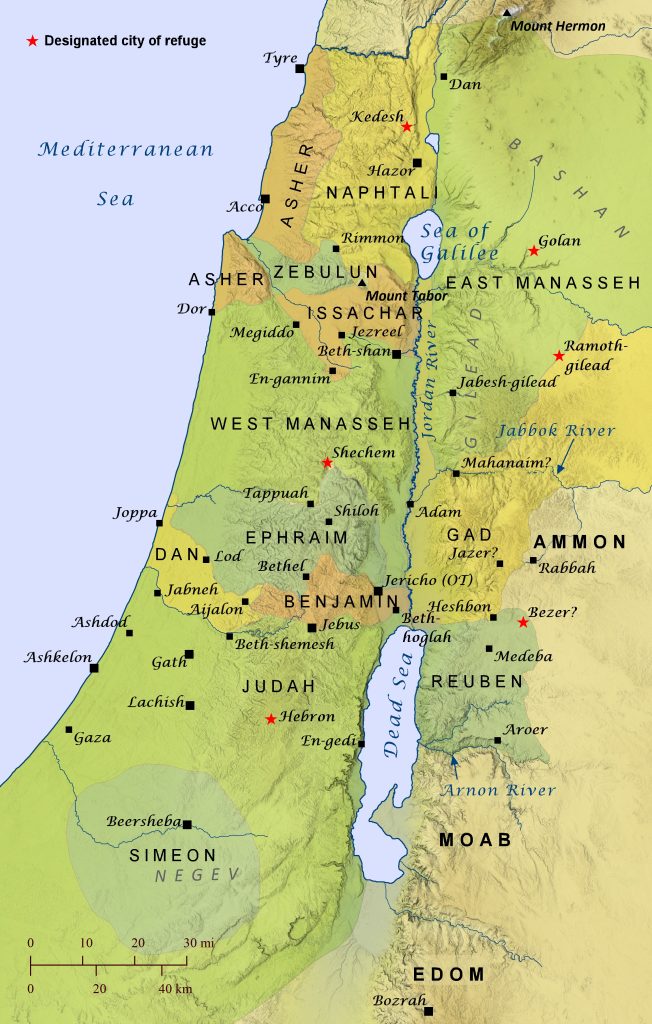
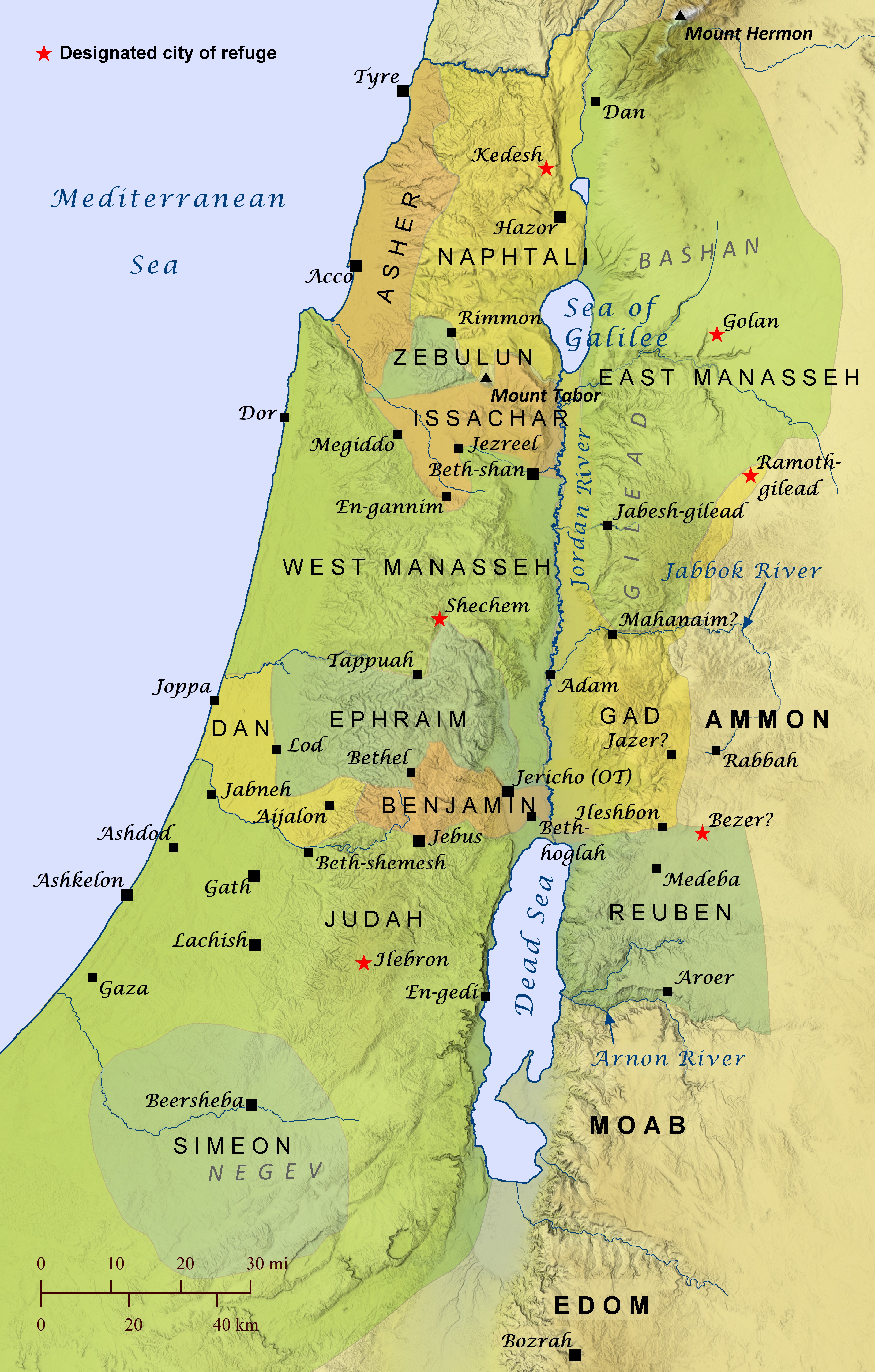
Tribal Allotments of the Promised Land

After the Israelites had conquered portions of the Promised Land and Joshua had grown old, the Lord directed him to divide the rest of the land among the tribes of Israel as their inheritance (Joshua 13-20). The eastern tribes had already been allotted their land under Moses’ leadership (Numbers 32), but they continued to help the other tribes drive out the Canaanites from land west of the Jordan River. The Lord also instructed the Israelites to designate several cities of refuge, where someone could flee for protection from an avenger if they accidentally killed someone (Numbers 35; Joshua 20).

BMM BibleMapper.com Maps:
Map

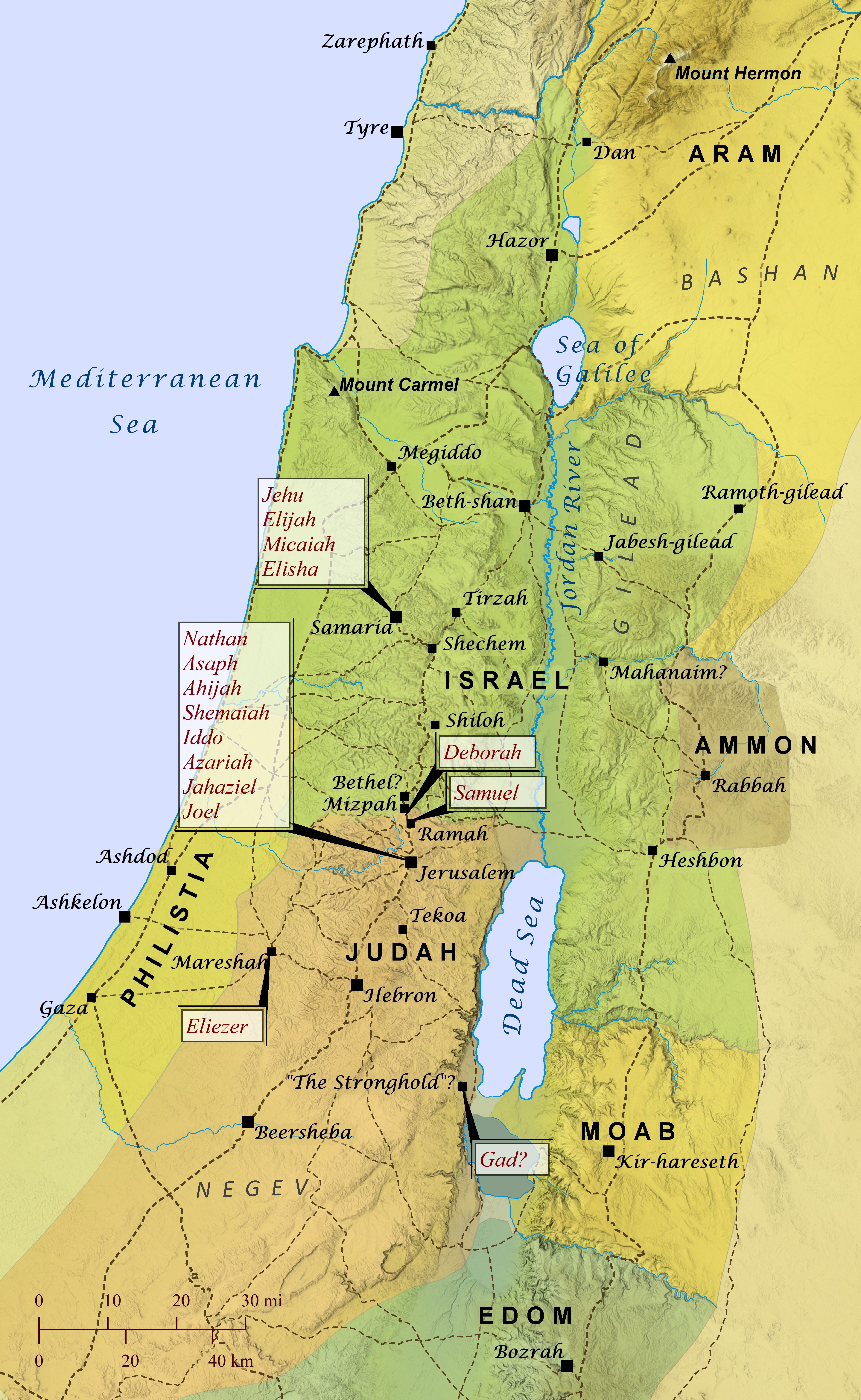
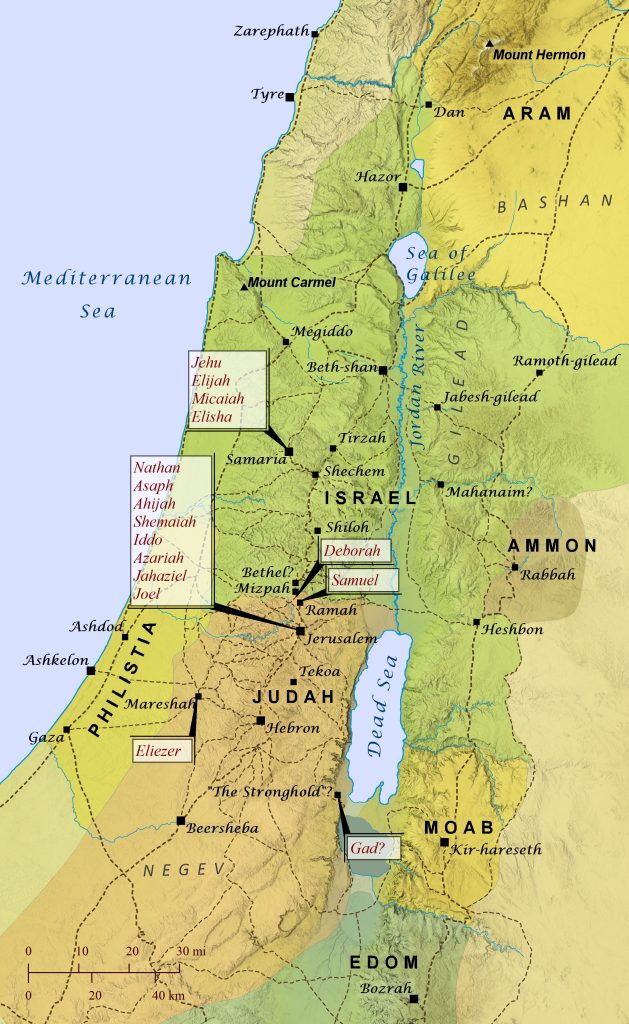
Prophets of the Old Testament before 800 B.C.

If you ask someone today what biblical prophets did, they will likely tell you that they divinely foretold of future events. While this was often the case, most prophets in the Bible focused as much on “forthtelling” God’s messages as they did on “foretelling” the future. That is, their primary role was to simply “forthtell” divinely acquired messages to leaders and groups of people, and at times that included foretelling of coming judgment, blessing, rescue, etc. Also, though plenty of prophets (sometimes called “seers” in Scripture) often spoke in confrontational or eccentric language that put them at odds with kings and religious leaders, the biblical writers also applied the term prophet to people who communicated God’s messages in ways that many readers today might not think of as prophecy, such as worship leaders appointed by David to “prophesy with lyres, harps, and cymbals” (1 Chronicles 25:1). Similarly, the books of Joshua, Judges, 1 & 2 Samuel, and 1 & 2 Kings are typically categorized as history by Christians, but in the Hebrew canon they belong to the category of Former Prophets. The Lord raised up prophets throughout all of biblical history, from the giving of the law under Moses to the revelation of the last days by the apostle John, and the kings of Israel and Judah often recognized and supported specific people as official prophets of the royal court and consulted them to find out God’s perspective about official matters. Following is a list of nearly everyone designated as prophet or seer in the Old Testament and the primary area of their ministry.

• Deborah (1216 B.C.) [Judges 4:4] => Baal-tamar?
• Samuel (1070 B.C.) [1 Samuel 3:20; 1 Chronicles 29:29; 2 Chronicles 35:18] => Ramah
• Gad (1018 B.C.) [2 Samuel 24:11; 1 Chronicles 21:9; 29:29; 2 Chronicles 29:25] => Masada?
• Nathan (1000 B.C.) [2 Samuel 12:1; 1 Chronicles 29:29; 2 Chronicles 29:25] => Jerusalem
• Asaph (1000 B.C.) [2 Chronicles 29:30] => Jerusalem
• Ahijah (935 B.C.) [1 Kings 11:29; 2 Chronicles 9:29] => Jerusalem
• Shemaiah (930 B.C.) [2 Chronicles 12:2-15] => Jerusalem
• Iddo (913 B.C.) [2 Chronicles 9:29; 12:15; 13:22] => Jerusalem
• Jehu son of Hanani (890 B.C.) [1 Kings 16:1-7; 2 Chronicles 19:2] => Samaria?
• Azariah (890 B.C.) [2 Chronicles 15:1-8] => Jerusalem
• Elijah (860 B.C.) [1 Kings 18:36] => Samaria
• Micaiah (853 B.C.) [1 Kings 22:8-23; 2 Chronicles 18:7-22] => Samaria
• Jahaziel (853 B.C.) [2 Chronicles 20:14] => Jerusalem
• Eliezer (853 B.C.) [2 Chronicles 20:37] => Mareshah
• Elisha (850 B.C.) [1 Kings 19:16; 2 Kings 2:15] => Samaria
• Joel (835 B.C.) [Joel 1:1] => Jerusalem
OET logo mark