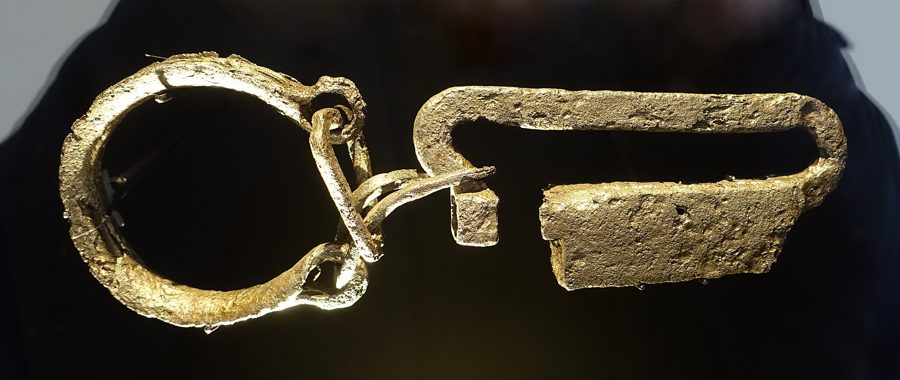
Shackle for the ankles to restrict prisoner movement (Daderot, Public domain or CC0, via Wikimedia Commons)
References
- Hebrew כֶּבֶל kevel: PSA 105:18, PSA 149:8
- Hebrew נְחֹשֶׁת nchosheth: HERO 16:21, 2 SAM 3:34, 2 KI 25:7, 2 CHR 33:11, 2 CHR 36:6, YIR 39:7, YIR 52:11, LAM 3:7
- Greek πέδη pedē: MARK 5:4, LUKE 8:29, SIR 6:29, SIR 21:19, 3 MAC 4:9, 3 MAC 6:19, SIR 6:24, SIR 33:29
1 more references
1 MAC 3:41 - Greek χειροπέδη cheiropedē: SIR 21:19
Description and usage
Fetters were metal chains with special links prepared to go around the ankles. They served to restrict the movement of someone considered dangerous or being imprisoned. There is considerable overlap between this entry and the preceding one on “chain.” See also the illustration there.
———
Translation
The equivalent in some languages for “fetters” is simply “chains on the feet.” MARK 5:4 and LUKE 8:29 refer to both chains and fetters. Fetters were used to bind the legs and feet and chains were used to bind the hands and arms. Where a specific word for “fetters” is not known, it is possible to render the literal phrase “bound with fetters and chains” as “put chains on his hands and feet.”
The Old Testament text usually specifies the material of which the fetters or chains were made. The Hebrew word nchosheth refers to brass or bronze, while the two references to kevel in the Psalms are to instruments of iron.
 Open English Translation (OET)