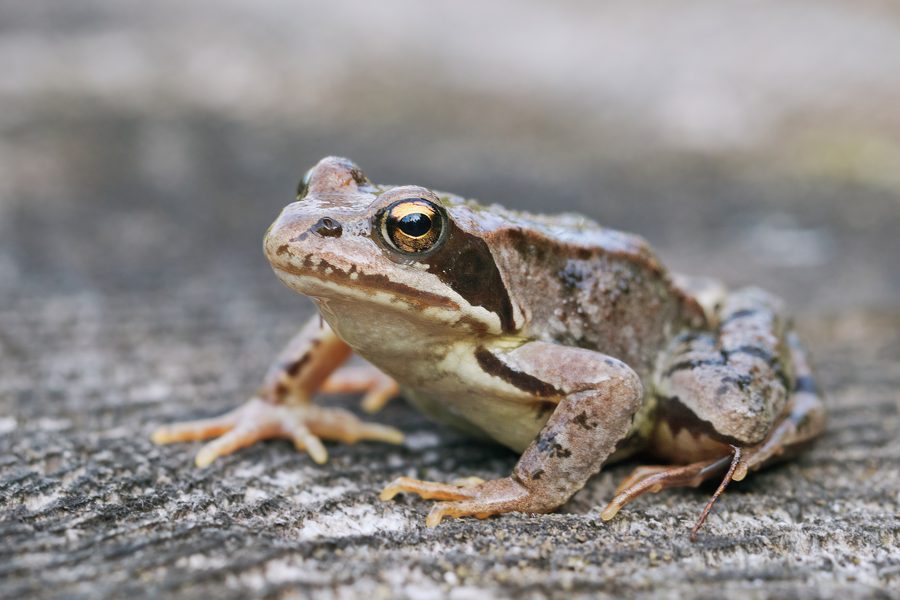
Frog (Pixabay)
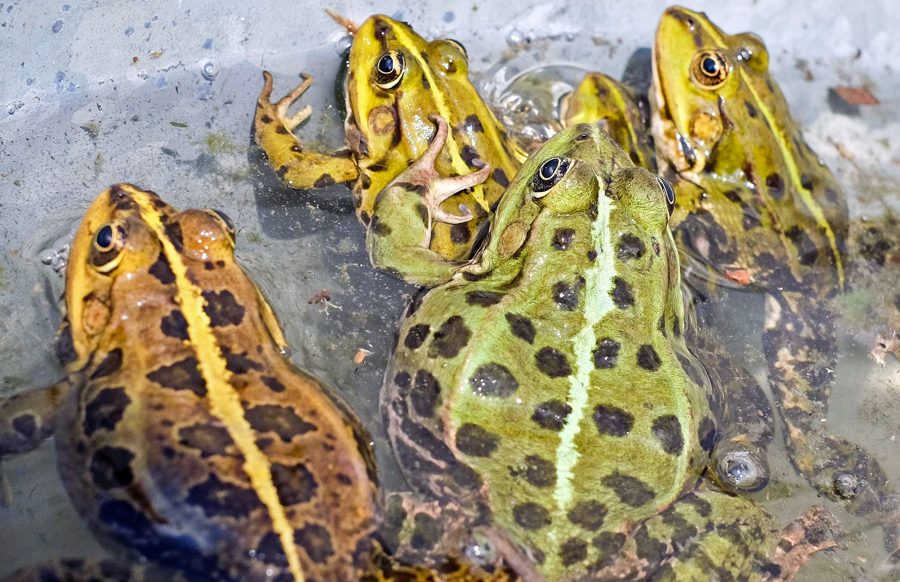
Frogs (Pixabay)
References
Discussion
There is little doubt that the Hebrew and Greek words mean “frog". The plague of frogs mentioned in Exodus comes after the plague of polluted water. The frogs seem to have left the water and come into the villages. Since frogs eat flies and thus control fly populations, it seems likely that the death of the frogs was one of the causes of the next two plagues to trouble Mitsrayim (Egypt), namely gnats and flies.
Description
The two most common frogs in the Middle East and Mitsrayim are the Edible Frog Rana esculenta and the Spotted Frog Rana punctata. They are both about 70 millimeters (3 inches) long and are brown or olive-green in color. They live in the water almost all of the time and eat gnats, flies, and other waterside insects. They lay eggs, which hatch as tadpoles and gradually grow legs. The hind legs are much bigger and better developed than the front legs, since the hind legs are used for jumping.
Special significance or symbolism
Frogs were considered unclean by the Yehudim (Jews) and also by the Mitsrim (Egyptians) and Persians, who associated them with demons.
Translation
Frogs are found all over the world, and there should be no problem in finding a local equivalent.
 Open English Translation (OET)