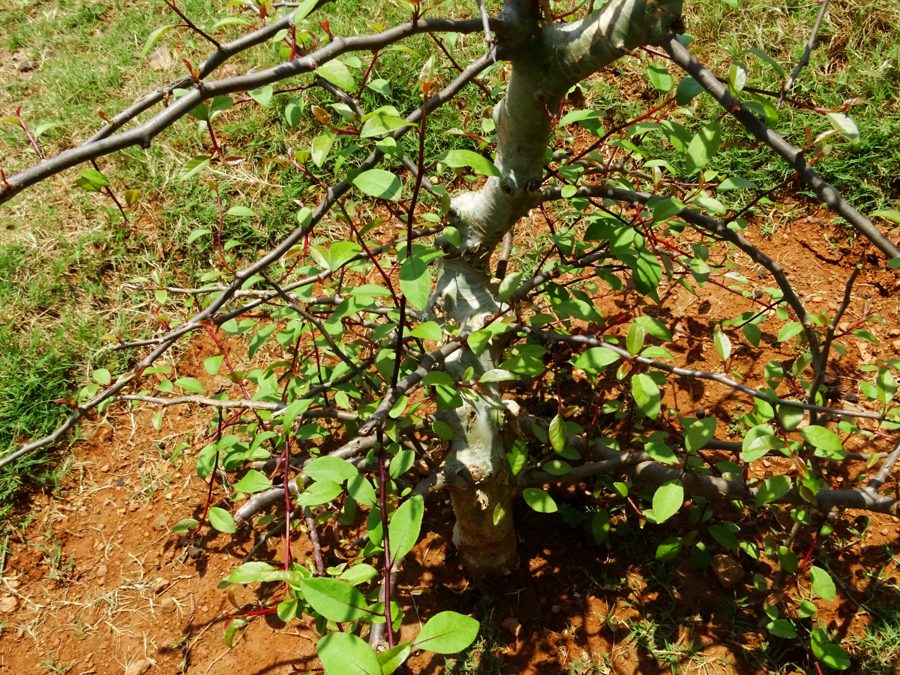
Balsam tree (Commiphora madagascariensis) (© Forestowlet (Wikimedia Commons))
References
- Hebrew בֹּשֶׂם bosem: EXO 25:6, EXO 30:23, EXO 35:8, EXO 35:28, 1 KI 10:2, 1 KI 10:10, 1 KI 10:25, 2 KI 20:13
18 more references
1 CHR 9:29, 1 CHR 9:30, 2 CHR 9:1, 2 CHR 9:9, 2 CHR 9:24, 2 CHR 16:14, 2 CHR 32:27, EST 2:12, SNG 4:10, SNG 4:14, SNG 4:16, SNG 5:1, SNG 5:13, SNG 6:2, SNG 8:14, ISA 3:24, ISA 39:2, EZEK 27:22
Discussion
The Hebrew word bosem, which is often rendered “balm” (derived from “balsam”), can refer to any type of aromatic healing substance, but it also designates the product of a particular tree, the Balsam or Opobalsamum Commiphora gileadensis. Arabs call it balasam or balasham. In the Talmud it is called afarsimon. Excavations near En Gedi have uncovered an ancient processing plant for balsam oil.
Moldenke is of the opinion that in SNG 5:1 bosem (rendered “spice”) refers to gum tragacanth (see 4.2.7 Tragacanth (gum tragacanth)). We support Zohary and Hepper who associate bosem with opobalsamum.
Description
The opobalsamum tree likes a desert or semi-desert climate. It grows to 2–3 meters (7–10 feet) tall and has small, wrinkled, three-part leaves, white flowers, and pea-sized red berries that have a fragrant yellow seed inside. The bark of younger branches is gray, turning brown with age. The resin appears by itself in green droplets from the stems and branches, but collectors also make cuts in the branches to speed the process. The droplets turn from green to brown, clump together, and fall to the ground, where they are collected.
Special significance
In Bible times, balsam oil was used in holy anointing oil, as medicine, and as an ingredient of perfume.
Translation
A generic word or phrase for sweet-smelling substances is appropriate to render bosem, although where a specific name for the balsam tree is available, as in southwestern Arav (Arabia) and Somalia, this could also be used. At least one hundred species of the genus Commiphora are spread throughout dry areas of the world. Translators in some areas will know the plants; others may know only the dried resin of Commiphora sold in spice markets.
 Open English Translation (OET)