
OET OET-RV OET-LV GHT ULT UST BSB MSB BLB AICNT OEB WEBBE WMBB NET LSV FBV TCNT T4T LEB BBE Moff JPS Wymth ASV DRA YLT Drby RV SLT Wbstr KJB-1769 KJB-1611 Bshps Gnva Cvdl TNT Wycl SR-GNT UHB BrLXX BrTr Related Parallel Simple Interlinear Topics Reference Dictionary Search
OET By Document By Section By Chapter Details
OET INT FRT GEN EXO LEV NUM DEU JOB JOS JDG RUTH 1 SAM 2 SAM PSA AMOS HOS 1 KI 2 KI 1 CHR 2 CHR PROV ECC SNG JOEL MIC ISA ZEP HAB JER LAM YNA NAH OBA DAN EZE EZRA EST NEH HAG ZEC MAL GES LES ESG DNG 2 PS TOB JDT WIS SIR BAR MAN 1 MAC 2 MAC 3 MAC 4 MAC YHN MARK MAT LUKE ACTs YAC GAL 1 TH 2 TH 1 COR 2 COR ROM COL PHM EPH PHP 1 TIM TIT 1 PET 2 PET 2 TIM HEB YUD 1 YHN 2 YHN 3 YHN REV
This is still an early look into the drafted text of the Open English Translation of the Bible. Please double-check the text in advance before using in public.
1:1 God’s command to rebuild the temple
1 In Dareyavesh’s (Darius’s) second year as king of Persia, on the 1st of the sixth month, the prophet Haggai brought Yahweh’s message to the governor of Yehudah, Zerubavel (Shealtiyel’s son), and to the high priest, Yehoshua (Yehotsadak’s son), telling them that[ref] 2 Commander-in-chief Yahweh says, “These people say that it’s not the right time to rebuild Yahweh’s residence.”
3 Then Yahweh gave this message to the prophet Haggai to tell the people:
4 Is it a time for all of you to live in your panelled houses, while Yahweh’s temple lies in ruins? 5 So now Commander-in-chief Yahweh says: “Decide what you’re all going to do. 6 You’ve all planted a lot, but only harvested a little. You’ve eaten, but it never fills you. You all drink, but never enough to satisfy you. You put on clothes, but never feel warm enough. You earn wages, but your pockets seem to be full of holes.”
7 So Commander-in-chief Yahweh says again: “Decide what you’re all going to do. 8 Go up into the hills and bring back timber to build the temple. This will please and honour me,” says Yahweh.
9 “You expected much, but gained little. Anything you brought home, I blew away again. Why? Commander-in-chief Yahweh says it’s because my residence is still in ruins, while you’re all busy working on your own houses. 10 That’s why the sky withholds the dew and the soil withholds its crops. 11 I’ve summoned a drought onto the land and into the hills, onto the grain and the new wine, onto the oil and crops from the ground, onto both people and livestock, and onto everything you all do.”

1:8 OSHB variant note: ו/אכבד: (x-qere) ’וְ/אֶכָּבְדָ֖ה’: lemma_c/3513 n_0.0 morph_HC/VNh1cs id_37iy2 וְ/אֶכָּבְדָ֖ה
1:10 OSHB note: Marks a place where we agree with BHQ against BHS in reading L.
1:10 OSHB note: We read one or more consonants in L differently from BHS.
1:10 OSHB note: Marks an anomalous form.
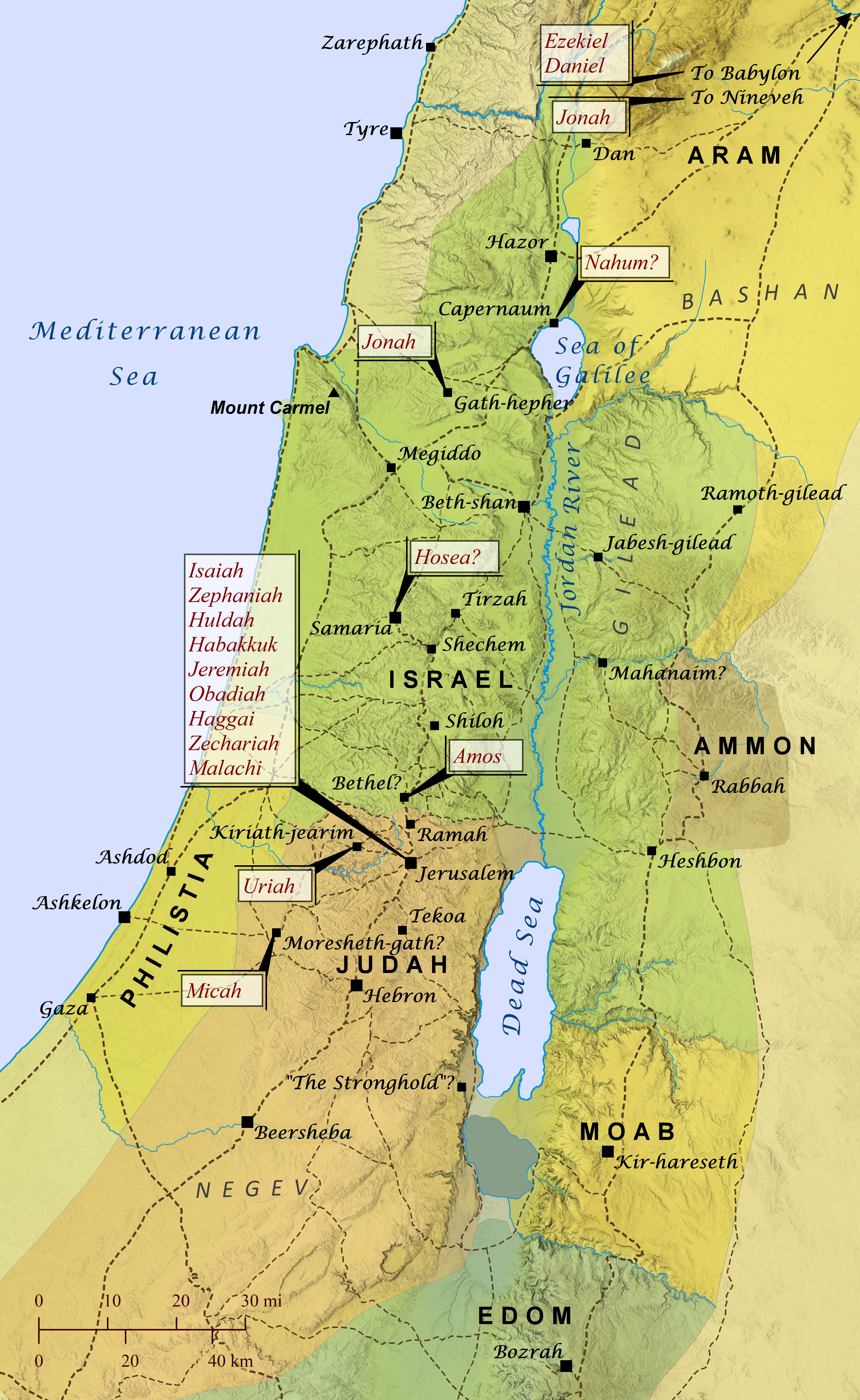
If you ask someone today what biblical prophets did, they will likely tell you that they divinely foretold of future events. While this was often the case, most prophets in the Bible focused as much on “forthtelling” God’s messages as they did on “foretelling” the future. That is, their primary role was to simply “forthtell” divinely acquired messages to leaders and groups of people, and at times that included foretelling of coming judgment, blessing, rescue, etc. Also, though plenty of prophets (sometimes called “seers” in Scripture) often spoke in confrontational or eccentric language that put them at odds with kings and religious leaders, the biblical writers also applied the term prophet to people who communicated God’s messages in ways that many readers today might not think of as prophecy, such as worship leaders appointed by David to “prophesy with lyres, harps, and cymbals” (1 Chronicles 25:1). Similarly, the books of Joshua, Judges, 1 & 2 Samuel, and 1 & 2 Kings are typically categorized as history by Christians, but in the Hebrew canon they belong to the category of Former Prophets. The Lord raised up prophets throughout all of biblical history, from the giving of the law under Moses to the revelation of the last days by the apostle John, and the kings of Israel and Judah often recognized and supported specific people as official prophets of the royal court and consulted them to find out God’s perspective about official matters. Following is a list of nearly everyone designated as prophet or seer in the Old Testament and the primary area of their ministry.
• Zechariah (796 B.C.) [2 Chronicles 24:20] => Jerusalem
• Jonah (780 B.C.) [2 Kings 14:25; Jonah 1:1] => Gath-hepher, Nineveh
• Hosea (770 B.C.) [Hosea 1:1] => Samaria?
• Amos (760 B.C.) [Amos 1:1] => Bethel
• Isaiah (730 B.C.) [2 Kings 19:2; 20:1; 2 Chronicles 26:22; 32:20, 32; Isaiah 1:1] => Jerusalem
• Micah (730 B.C.) [Jeremiah 26:18; Micah 1:1] => Moresheth
• Nahum (650 B.C.) [Nahum 1:1] => Elkosh (Capernaum?)
• Zephaniah (630 B.C.) [Zephaniah 1:1] => Jerusalem?
• Huldah (630 B.C.) [2 Kings 22:14] => Jerusalem
• Habakkuk (600 B.C.) [Habakkuk 1:1; 3:1] => Jerusalem?
• Ezekiel (592 B.C.) [Ezekiel 1:3] => Babylonia/Chebar River
• Uriah (600 B.C.) [Jeremiah 26:20] => Kiriath-jearim
• Jeremiah (587 B.C.) [2 Chronicles 36:12; Jeremiah 1:1; 19:14] => Jerusalem
• Obadiah (586 B.C.) [Obadiah 1:1] => Jerusalem
• Daniel (560 B.C.) [Daniel 7:1; Matthew 24:15] => Babylon
• Haggai (520 B.C.) [Ezra 5:1; Haggai 1:1] => Jerusalem
• Zechariah (520 B.C.) [Ezra 5:1; Zechariah 1:1] => Jerusalem
• Malachi (432 B.C.) [Malachi 1:1] => Jerusalem?