
OET OET-RV OET-LV GHT ULT UST BSB MSB BLB AICNT OEB WEBBE WMBB NET LSV FBV TCNT T4T LEB BBE Moff JPS Wymth ASV DRA YLT Drby RV SLT Wbstr KJB-1769 KJB-1611 Bshps Gnva Cvdl TNT Wycl SR-GNT UHB BrLXX BrTr Related Parallel Simple Interlinear Topics Reference Dictionary Search
OET By Document By Section By Chapter Details
OET INT FRT GEN EXO LEV NUM DEU JOB JOS JDG RUTH 1 SAM 2 SAM PSA AMOS HOS 1 KI 2 KI 1 CHR 2 CHR PROV ECC SNG JOEL MIC ISA ZEP HAB JER LAM YNA NAH OBA DAN EZE EZRA EST NEH HAG ZEC MAL GES LES ESG DNG 2 PS TOB JDT WIS SIR BAR MAN 1 MAC 2 MAC 3 MAC 4 MAC YHN MARK MAT LUKE ACTs YAC GAL 1 TH 2 TH 1 COR 2 COR ROM COL PHM EPH PHP 1 TIM TIT 1 PET 2 PET 2 TIM HEB YUD 1 YHN 2 YHN 3 YHN REV
This is still an early look into the drafted text of the Open English Translation of the Bible. Please double-check the text in advance before using in public.
3:1 Havakkuk’s prayerful song
3 A prayer of the prophet Havakkuk designed to be sung:[fn]
2 Yahweh, I’ve heard the report about what you’ve done,
≈ and I’m in awe of your work, Yahweh.
≈ show us again in this age.
Despite your severe anger, remember to have compassion.
3 God came in from Teman in Edom,
and the sinless one from Mt. Paran. (Instrumental break.)
His splendour blanketed the skies,
≈ and the earth was full of his praise.
4 His brightness was like the light—
where he kept his power.
5 Deadly disease went ahead of him,
≈ then the plague followed along behind.
6 He stood and measured the earth.
He looked and made the nations tremble.
Even the ancient mountains were shattered,
≈ and the everlasting hills bowed down.
His ways are everlasting.
7 I saw the people in tents in Cushan in trouble.
≈ The tent curtains in the Midyan region were trembling.
8 Was your rage against the rivers, Yahweh?
Was your anger against the rivers,
or your fury against the ocean,
when you rode in on your horses and your victorious chariots?
9 You got your bow out ready to use.
Each arrow was a promise you’d made. (Instrumental break.)
You split the earth open with rivers.
10 The mountains saw you and twisted in pain.
A storm brought heavy rain down on them.
The deep sea raised its voice—
11 The sun and moon have stopped in their places
with the light from your arrows as they fly by,
yes, with the gleam of your flashing spear.
12 You have marched over the world in your fury.
You’ve trampled down the nations in anger.
13 You went out to rescue your people—
You crush the leader of the house of wicked people
to strip him from the thigh up to the neck. (Instrumental break.)
14 You have pierced the head of his warriors with his own arrows,
since they came like a storm to scatter us—
their gloating was like someone who destroys weak people in secret.
15 You trod on top of the sea with your horses—
16 I heard, and my insides turned to jelly.
My lips quivered at the sound.
My bones start aching, and my legs tremble beneath me.
However, I will wait quietly for the day of distress to hit the people who invaded us.
17 Even if the fig tree doesn’t produce buds
and there is no fruit on the grapevines,
and although the olive tree stops producing,
and although the sheep and goats can’t return to their pens,
and there are no cattle in their stalls,
I’ll celebrate because God saves me.
19 I trust my master Yahweh for my strength,
and he makes my feet agile like a deer’s feet.
He helps me climb up to my high places.[ref]
For the musical director, on my stringed instruments.
3:1 The meaning of the Hebrew word transliterated ‘shigyonot’ is unknown, but assumed to be some kind of musical directive. (Also in Song/Psalm 7:0.)

3:3 OSHB note: We agree with both BHS 1997 and BHQ on an unexpected reading.
3:4 OSHB note: Marks a place where we agree with BHQ against BHS in reading L.
3:4 OSHB note: We have abandoned or added a ketib/qere relative to BHS. In doing this we agree with L against BHS.
3:14 OSHB variant note: פרז/ו: (x-qere) ’פְּרָזָ֔י/ו’: lemma_6518 n_1.1 morph_HNcmpc/Sp3ms id_35uf4 פְּרָזָ֔י/ו
3:19 OSHB note: Marks a place where we agree with BHQ against BHS in reading L.
3:19 OSHB note: Marks an anomalous form.
3:19 OSHB note: We read punctuation in L differently from BHS.
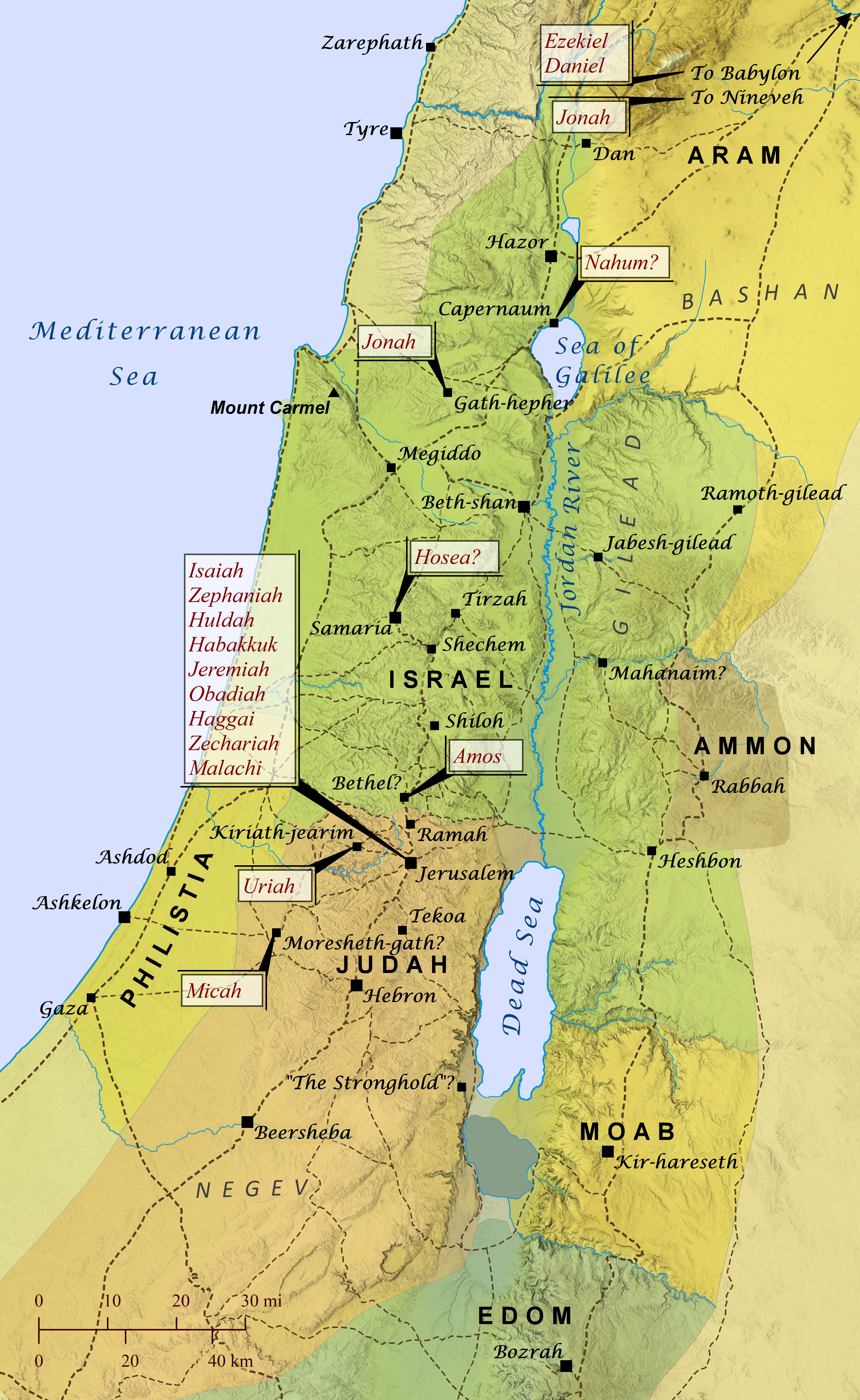
If you ask someone today what biblical prophets did, they will likely tell you that they divinely foretold of future events. While this was often the case, most prophets in the Bible focused as much on “forthtelling” God’s messages as they did on “foretelling” the future. That is, their primary role was to simply “forthtell” divinely acquired messages to leaders and groups of people, and at times that included foretelling of coming judgment, blessing, rescue, etc. Also, though plenty of prophets (sometimes called “seers” in Scripture) often spoke in confrontational or eccentric language that put them at odds with kings and religious leaders, the biblical writers also applied the term prophet to people who communicated God’s messages in ways that many readers today might not think of as prophecy, such as worship leaders appointed by David to “prophesy with lyres, harps, and cymbals” (1 Chronicles 25:1). Similarly, the books of Joshua, Judges, 1 & 2 Samuel, and 1 & 2 Kings are typically categorized as history by Christians, but in the Hebrew canon they belong to the category of Former Prophets. The Lord raised up prophets throughout all of biblical history, from the giving of the law under Moses to the revelation of the last days by the apostle John, and the kings of Israel and Judah often recognized and supported specific people as official prophets of the royal court and consulted them to find out God’s perspective about official matters. Following is a list of nearly everyone designated as prophet or seer in the Old Testament and the primary area of their ministry.
• Zechariah (796 B.C.) [2 Chronicles 24:20] => Jerusalem
• Jonah (780 B.C.) [2 Kings 14:25; Jonah 1:1] => Gath-hepher, Nineveh
• Hosea (770 B.C.) [Hosea 1:1] => Samaria?
• Amos (760 B.C.) [Amos 1:1] => Bethel
• Isaiah (730 B.C.) [2 Kings 19:2; 20:1; 2 Chronicles 26:22; 32:20, 32; Isaiah 1:1] => Jerusalem
• Micah (730 B.C.) [Jeremiah 26:18; Micah 1:1] => Moresheth
• Nahum (650 B.C.) [Nahum 1:1] => Elkosh (Capernaum?)
• Zephaniah (630 B.C.) [Zephaniah 1:1] => Jerusalem?
• Huldah (630 B.C.) [2 Kings 22:14] => Jerusalem
• Habakkuk (600 B.C.) [Habakkuk 1:1; 3:1] => Jerusalem?
• Ezekiel (592 B.C.) [Ezekiel 1:3] => Babylonia/Chebar River
• Uriah (600 B.C.) [Jeremiah 26:20] => Kiriath-jearim
• Jeremiah (587 B.C.) [2 Chronicles 36:12; Jeremiah 1:1; 19:14] => Jerusalem
• Obadiah (586 B.C.) [Obadiah 1:1] => Jerusalem
• Daniel (560 B.C.) [Daniel 7:1; Matthew 24:15] => Babylon
• Haggai (520 B.C.) [Ezra 5:1; Haggai 1:1] => Jerusalem
• Zechariah (520 B.C.) [Ezra 5:1; Zechariah 1:1] => Jerusalem
• Malachi (432 B.C.) [Malachi 1:1] => Jerusalem?