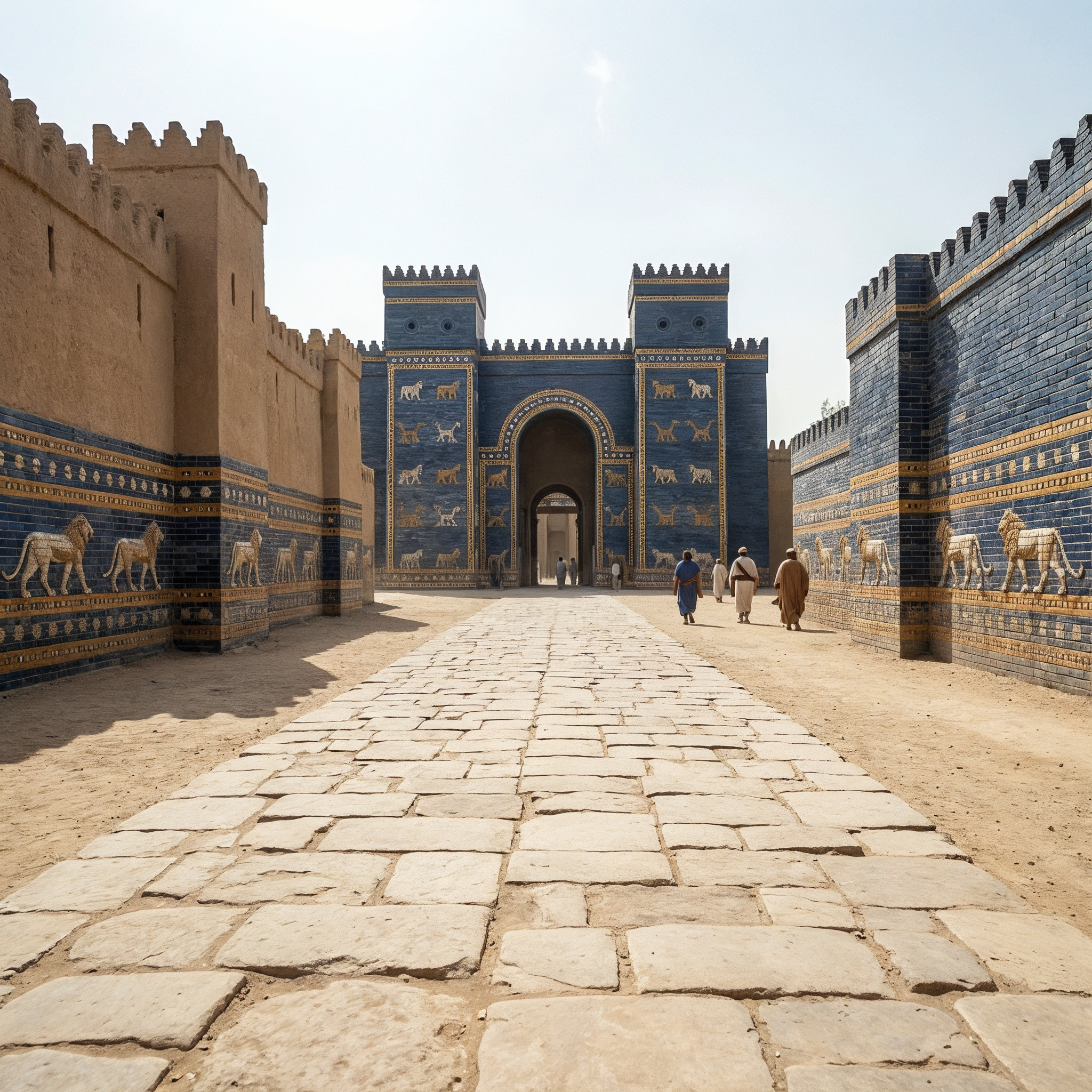
 After two years, the master allowed King Yehoyakim to be defeated by Nevukadnetstsar who then took some of the items out of the temple and took them to Shinar (Babylonia) where he placed them in his god’s temple storerooms.[ref]
OET OET-RV OET-LV GHT ULT UST BSB MSB BLB AICNT OEB WEBBE WMBB NET LSV FBV TCNT T4T LEB BBE Moff JPS Wymth ASV DRA YLT Drby RV SLT Wbstr KJB-1769 KJB-1611 Bshps Gnva Cvdl TNT Wycl SR-GNT UHB BrLXX BrTr Related Parallel Simple Interlinear Topics Reference Dictionary Search
ParallelVerse GEN EXO LEV NUM DEU JOB JOS JDG RUTH 1 SAM 2 SAM PSA AMOS HOS 1 KI 2 KI 1 CHR 2 CHR PROV ECC SNG JOEL MIC ISA ZEP HAB JER LAM YNA (JNA) NAH OBA DAN EZE EZRA EST NEH HAG ZEC MAL LAO GES LES ESG DNG 2 PS TOB JDT ESA WIS SIR BAR LJE PAZ SUS BEL MAN 1 MAC 2 MAC 3 MAC 4 MAC YHN (JHN) MARK MAT LUKE ACTs YAC (JAM) GAL 1 TH 2 TH 1 COR 2 COR ROM COL PHM EPH PHP 1 TIM TIT 1 PET 2 PET 2 TIM HEB YUD (JUD) 1 YHN (1 JHN) 2 YHN (2 JHN) 3 YHN (3 JHN) REV
Dan Intro C2 C3 C4 C5 C6 C7 C8 C9 C10 C11 C12
Dan 1 V1 V3 V4 V5 V6 V7 V8 V9 V10 V11 V12 V13 V14 V15 V16 V17 V18 V19 V20 V21
Note: This view shows ‘verses’ which are not necessarily natural language units and hence sometimes only part of a sentence will be visible—click on any Bible version abbreviation down the left-hand side to see the verse in more of its context. Normally the OET discourages the reading of individual ‘verses’, but this view is only designed as a tool for Bible-translators and others doing comparisons of different translations—the older translations are further down the page (so you can read up from the bottom to trace the English translation history). The OET segments on this page are still early looks into the drafted texts of the Open English Translation of the Bible—please double-check these texts in advance before using in public.
Text critical issues=none Clarity of original=clear Importance to us=normal Speaker(s)=Narrator (All still tentative.)
OET (OET-RV)
After two years, the master allowed King Yehoyakim to be defeated by Nevukadnetstsar who then took some of the items out of the temple and took them to Shinar (Babylonia) where he placed them in his god’s temple storerooms.[ref]
OET-LV my_master And_he/it_gave in_his/its_hand DOM Yəhōyāqīm the_king_of Yəhūdāh and_from_(the)_sum of_the_vessels_of of_the_house_of the_ʼElohīm and_he/it_brought_them the_land_of Shinˊār the_house_of his/its_god and_DOM the_vessels he_brought the_house_of the_treasury_of his/its_god.
UHB וַיִּתֵּן֩ אֲדֹנָ֨י בְּיָד֜וֹ אֶת־יְהוֹיָקִ֣ים מֶֽלֶךְ־יְהוּדָ֗ה וּמִקְצָת֙ כְּלֵ֣י בֵית־הָֽאֱלֹהִ֔ים וַיְבִיאֵ֥ם אֶֽרֶץ־שִׁנְעָ֖ר בֵּ֣ית אֱלֹהָ֑יו וְאֶת־הַכֵּלִ֣ים הֵבִ֔יא בֵּ֖ית אוֹצַ֥ר אֱלֹהָֽיו׃ ‡
(vayyittēn ʼₐdonāy bəyādō ʼet-yəhōyāqim melek-yəhūdāh ūmiqəʦāt kəlēy ⱱēyt-hāʼₑlohim vayəⱱīʼēm ʼereʦ-shinˊār bēyt ʼₑlohāyv vəʼet-hakkēlim hēⱱiyʼ bēyt ʼōʦar ʼₑlohāyv.)
Key: khaki:verbs.
Note: Automatic aligning of the OET-RV to the LV is done by some temporary software, hence the OET-RV alignments are incomplete (and may occasionally be wrong).
BrLXX No BrLXX DAN book available
BrTr No BrTr DAN book available
ULT And the Lord gave into his hand Jehoiakim, king of Judah, and some of the vessels of the house of God. And he brought them, to the land of Shinar, to the house of his god, and he brought the vessels, into the house of treasure of his god.
UST After two years, the Lord allowed Nebuchadnezzar to capture Jehoiakim, the king of Judah. They also captured some of the things that the priests used in God’s temple. They brought them back to Shinar, and Nebuchadnezzar put them in the treasury of the temple of his god.
BSB & MSB And the Lord delivered into his hand Jehoiakim king of Judah, along with some of the articles from the house of God. He carried [these] off to the land of Shinar,[fn] to the house of his god, [where] he put [them] in the treasury of his god.
1:2 That is, Babylonia
OEB No OEB DAN book available
WEBBE The Lord[fn] gave Jehoiakim king of Judah into his hand, with some of the vessels of the house of God;[fn] and he carried them into the land of Shinar to the house of his god. He brought the vessels into the treasure house of his god.
1:2 The word translated “Lord” is “Adonai.”
1:2 The Hebrew word rendered “God” is “אֱלֹהִ֑ים” (Elohim).
WMBB The Lord[fn] gave Jehoiakim king of Judah into his hand, with some of the vessels of the house of God;[fn] and he carried them into the land of Shinar to the house of his god. He brought the vessels into the treasure house of his god.
1:2 The word translated “Lord” (mixed case) is “Adonai.”
1:2 The Hebrew word rendered “God” is “אֱלֹהִ֑ים” (Elohim).
NET Now the Lord delivered King Jehoiakim of Judah into his power, along with some of the vessels of the temple of God. He brought them to the land of Babylonia to the temple of his god and put the vessels in the treasury of his god.
LSV and the Lord gives into his hand Jehoiakim king of Judah, and some of the vessels of the house of God, and he brings them in [to] the land of Shinar, [to] the house of his god, and the vessels he has brought in [to] the treasure-house of his god.
FBV The Lord allowed him to defeat King Jehoiakim,[fn] and also to remove some of the objects used in the Temple of God. He took them back to Babylon,[fn] to the house of his god,[fn] placing them in the treasury of his god.
1:2 “The Lord allowed him to defeat King Jehoiakim”: literally, “The Lord gave King Jehoiakim into his hand.”
1:2 Literally, “the land of Shinar.”
1:2 Or “gods.”
T4T After two years, Yahweh allowed Nebuchadnezzar’s soldiers to capture Jehoiakim, who was the King of Judah. They also took some of the things that were in the temple of God, and took them to Babylonia. There Nebuchadnezzar put them in the temple of his god.
LEB And the Lord gave Jehoiakim the king of Judah into his hand and ⌊some of⌋[fn] of the utensils of the temple of God,[fn] and he brought them to the land of Shinar to the temple of his gods, and he brought the utensils to ⌊the treasury⌋[fn] of his gods.
1:2 Literally “from the end/extremity/limits”
1:2 Hebrew “the God”
1:2 Literally “the house of the treasury”
BBE And the Lord gave into his hands Jehoiakim, king of Judah, with some of the vessels of the house of God; and he took them away into the land of Shinar to the house of his god; and he put the vessels into the store-house of his god.
Moff and, as the Eternal allowed Jehoiakim king of Judah to fall into his hands with some of the vessels belonging to the house of God, he brought the captives into the land of Shinar and put the vessels into the treasury of his god.
JPS And the Lord gave Jehoiakim king of Judah into his hand, with part of the vessels of the house of God; and he carried them into the land of Shinar to the house of his god, and the vessels he brought into the treasure-house of his god.
ASV And the Lord gave Jehoiakim king of Judah into his hand, with part of the vessels of the house of God; and he carried them into the land of Shinar to the house of his god: and he brought the vessels into the treasure-house of his god.
DRA And the Lord delivered into his hands Joakim the king of Juda, and part of the vessels of the house of God: and he carried them away into the land of Sennaar, to the house of his god, and the vessels he brought into the treasure house of his god.
YLT and the Lord giveth into his hand Jehoiakim king of Judah, and some of the vessels of the house of God, and he bringeth them in [to] the land of Shinar, [to] the house of his god, and the vessels he hath brought in [to] the treasure-house of his god.
Drby And the Lord gave Jehoiakim king of Judah into his hand, and a part of the vessels of the house of [fn]God; and he carried them into the land of Shinar, to the house of his [fn]god; and he brought the vessels into the treasure-house of his [fn]god.
RV And the Lord gave Jehoiakim king of Judah into his hand, with part of the vessels of the house of God; and he carried them into the land of Shinar to the house of his god: and he brought the vessels into the treasure house of his god.
(And the Lord gave Jehoiakim king of Yudah into his hand, with part of the vessels of the house of God; and he carried them into the land of Shinar to the house of his god: and he brought the vessels into the treasure house of his god.)
SLT And Jehovah will give Jehoiakim king of Judah into his hand, and from the number of vessels of the house of God: and he will bring them to the land of Shinar the house of his god; and he brought the vessels into the treasure-house of his god.
Wbstr And the LORD gave Jehoiakim king of Judah into his hand, with part of the vessels of the house of God: which he carried into the land of Shinar to the house of his god; and he brought the vessels into the treasure-house of his god.
KJB-1769 And the Lord gave Jehoiakim king of Judah into his hand, with part of the vessels of the house of God: which he carried into the land of Shinar to the house of his god; and he brought the vessels into the treasure house of his god.
(And the Lord gave Jehoiakim king of Yudah into his hand, with part of the vessels of the house of God: which he carried into the land of Shinar to the house of his god; and he brought the vessels into the treasure house of his god.)
KJB-1611 And the LORD gaue Iehoiakim king of Iudah into his hand, with part of the vessels of the house of God, which he caried into the land of Shinar to the house of his god, and he brought the vessels into the treasure house of his god.
(And the LORD gave Yehoiakim king of Yudah into his hand, with part of the vessels of the house of God, which he carried into the land of Shinar to the house of his god, and he brought the vessels into the treasure house of his god.)
Bshps And the Lord deliuered Iehoachim the king of Iuda into his hande, with part of the vessels of the house of God, which he caried away into the lande of Sennar to the house of his God, and he brought the vessels into his gods treasurie.
(And the Lord delivered Yehoachim the king of Yudah into his hand, with part of the vessels of the house of God, which he carried away into the land of Sennar to the house of his God, and he brought the vessels into his gods treasury.)
Gnva And ye Lord gaue Iehoiakim king of Iudah into his hand; with parte of the vessels of the house of God, which he caryed into the land of Shinar, to the house of his god, and he brought the vessels into his gods treasurie.
(And ye/you_all Lord gave Yehoiakim king of Yudah into his hand; with part of the vessels of the house of God, which he carried into the land of Shinar, to the house of his god, and he brought the vessels into his gods treasury.)
Cvdl and the LORDE delyuered Ioachim the kynge off Iuda in to his honde, with certayne ornamentes of the house off God, which he caried awaye vnto the londe of Sennar, to the house of his god and there brought them in to his gods treasury.
(and the LORD delivered Yoachim the king off Yudah in to his hand, with certain ornaments of the house off God, which he carried away unto the land of Sennar, to the house of his god and there brought them in to his gods treasury.)
Wycl And the Lord bitook in his hond Joachym, the kyng of Juda, and he took a part of the vessels of the hous of God; and he bar out tho in to the lond of Sennaar, in to the hous of his god, and he took the vessels in to the hous of tresour of his god.
(And the Lord betook/entrusted in his hand Yoachym, the king of Yuda, and he took a part of the vessels of the house of God; and he bar out those in to the land of Sennaar, in to the house of his god, and he took the vessels in to the house of treasure of his god.)
Luth Und der HErr übergab ihm Jojakim, den König Judas, und etliche Gefäße aus dem Hause Gottes; die ließ er führen ins Land Sinear, in seines Gottes Haus, und tat die Gefäße in seines Gottes Schatzkasten.
(And the/of_the LORD handed-over him Yoyakim, the king Yudas, and several vessels/containers out_of to_him house(n) God’s; the left/let he lead into_the country Sinear, in his God’s house, and did the vessels/containers in his God’s treasure_chest.)
ClVg et tradidit Dominus in manu ejus Joakim, regem Juda, et partem vasorum domus Dei: et asportavit ea in terram Sennaar in domum dei sui, et vasa intulit in domum thesauri dei sui.
(and he_delivered Master in/into/on by_hand his/her Yoakim, the_king Yuda, and part of_vessels home of_God: and asportavit them in/into/on the_earth/land Sennaar in/into/on house/home of_god self, and vessels/utensils brought in/into/on house/home thesauri of_god self.)
This section forms the introduction to the first division and to the book of Daniel as a whole. It tells how some Hebrew boys came to live in Babylon and serve the Babylonian king.
God allowed the king of Babylon, Nebuchadnezzar, to defeat the king of Judah. King Nebuchadnezzar ordered his chief official to choose some boys from Judah and to train them to work in the government of Babylon. Daniel and his three friends were among these boys. They excelled in their studies and the king was pleased with the wise advice they gave.
The phrase “the Lord delivered” (“Adonay gave” in Hebrew) occurs in 1:2, the phrase “God had granted” (“Elohim had given” in Hebrew) occurs in 1:9, and the phrase “God gave” (“Elohim gave” in Hebrew) occurs in 1:17. (1:2a, 1:9, 1:17a). The author used these phrases to emphasize that the Lord is sovereign over the events of history and the lives of his people. God has authority over what happens to Gentile nations and also what happens to his people. This is the theme of this chapter.
Daniel 1:1–2 gives the setting for the first section of Daniel. It tells how God allowed the king of Babylon to defeat the king of Judah.
In Daniel 1:1–2 there are several names of people and places that may be new to your readers. Introduce this new information in a way that is natural in your language. English versions transliterate these names in different ways. It may be helpful to consult how the national translation translates them. It is good to include a map with your translation, showing the location of Babylon and Judah.
And the Lord delivered into his hand Jehoiakim king of Judah,
The Lord gave Nebuchadnezzar victory/power over Jehoiakim, the king of Judah,
Then the Lord God allowed Nebuchadnezzar to defeat/conquer Jehoiakim and the people of Judah.
And the Lord delivered into his hand Jehoiakim king of Judah: The Hebrew expression that the BSB translates literally as the Lord delivered into his hand Jehoiakim king of Judah is a figure of speech. It indicates that God allowed Nebuchadnezzar to defeat Jehoiakim and gain power over him. Some other ways to translate this are:
the Lord delivered King Jehoiakim of Judah into his power (NET)
The Lord gave him victory over King Jehoiakim (NLT)
This verse does not mean that Nebuchadnezzar personally defeated or captured Jehoiakim. His soldiers did the actual fighting under his command. So in some languages it may be necessary to say something like:
And the Lord allowed his men/soldiers to defeat Jehoiakim
the Lord: The Hebrew word that the BSB translates as the Lord is one of the titles that the Bible uses to refer to the God of Israel. It means “master.” This title is different from the personal name for God, Yahweh, which the BSB usually spells as “the LORD,” with all capital letters. See how you translated this title in Genesis 4:4b, 6a.
Jehoiakim king of Judah: The author also used the phrase king of Judah to refer to Jehoiakim in 1:1a. In some languages it may not be natural to repeat this information here. If that is true in your language, you can refer to him in a different way, for example:
King Jehoiakim (GNT)
Jehoiakim (CEV)
along with some of the articles from the house of God.
and the Lord gave Nebuchadnezzar control/possession of some of the things/objects that were in the temple of God.
And he allowed Nebuchadnezzar’s men/soldiers to take/steal some treasures from the temple/building where the people of Judah worshiped God.
along with some of the articles from the house of God: This phrase indicates that the Lord also allowed Nebuchadnezzar power over some religious items used in the worship of God. This happened when Nebuchadnezzar’s army looted or stole some of the valuable objects that were in the temple of God in Jerusalem. In some languages it may be more natural to express this idea with another verb. For example:
The Lord gave him victory over King Jehoiakim of Judah and permitted him to take some of the sacred objects from the Temple of God. (NLT)
The Lord let him capture King Jehoiakim and seize some of the Temple treasures. (GNT)
some of the articles: The Babylonians took possession of some of the things that were in the Jewish temple.For the kinds of articles see 2 Chronicles 36:7, 10,18; Jeremiah 52:17–23 (586 B.C.); Ezra 1:9–11 (537 BC). They did not take them all, and the Hebrews continued to worship at the temple.However, about twenty later (in 586/7 B.C.) the Babylonians attacked the city again. At that time they took all the things that were left in the temple and carried them away to Babylon. They also destroyed the temple itself.
articles: The Hebrew word that the BSB translates as articles is a general word that can refer to a variety of items. In this context, the word is used to refer to objects the Jewish people used in worship rituals. These objects included cups, bowls, lampstands, altars, and tables. These articles were very valuable. The Israelites had made some of them from gold or silver. Some other ways to describe these things in English are:
Temple treasures (GNT)
the things (NCV)
objects
vessels (RSV)
the house of God: Here the phrase the house of God refers to the building where Jewish people worshiped God in Jerusalem. Here is another way to translate this:
the temple of God (NIV)
See the key term “temple” in KBT.
He carried these off to the land of Shinar, to the house of his god,
Nebuchadnezzar brought these things back to the temple/house of his god in the city of Babylon, in the land of Shinar.
When they went back to their own land Shinar, they carried these things with them to the temple/building of the false god whom Nebuchadnezzar worshiped.
He carried these off: The Hebrew verb that the BSB translates as carried…off can mean “brought” or “carried,” depending on the context. Here is another way to translate this:
he brought them (RSV)
King Nebuchadnezzar did not bring or carry anything himself. He ordered his servants and soldiers to transport everything back to his country. So it may be natural to say:
He ordered that these be taken
He caused them to be brought
He caused his men to bring them
these: Scholars differ about what the Hebrew pronoun that the BSB translates as these refers to:
The pronoun these refers to the valuable articles from the temple in Jerusalem. For example:
which he carried to Babylon and put… (NCV) (BSB, NCV)
The pronoun these refers to the human captives. For example:
He took some prisoners back with him (GNT)
Most English translations leave the pronoun ambiguous. It is not clear whether the Babylonian army took Jehoiakim with them back to Babylon at this time. So it is recommended that you leave this ambiguous, referring to either the captives or the treasures or both.
to the land of Shinar, to the house of his god: Nebuchadnezzar’s men brought what they had taken from Jerusalem to their own temple in Babylon.
to the land of Shinar: The word Shinar is an ancient name for the land that later became the country of Babylonia. This land is now part of modern Iraq, south of the city of Baghdad. Genesis 10:10 and 11:1–9 mention that the tower of Babel was in the land of Shinar. See how you translated the name there. There are several possibilities:
Transliterate Shinar, the old name for this area. For example:
the land of Shinar (RSV)
Use Babylonia, a later name for that land. For example:
the land of Babylonia (NLT)
Use the name Babylon, the capital city of that land, because that is where the king’s temple was. For example:
in Babylon (GNT)
Use the two names Shinar and Babylonia. For example:
the land of Shinar, that is, Babylonia
It is important that people do not think that Shinar was a different place from Babylonia. If this is not clear from your translation, you may want to include a footnote that mentions this information.
to the house of his god: The phrase the house of his god refers to the building where the Babylonian people worshiped their god.
There is a textual problem here. Scholars disagree about whether the phrase to the house of his god was part of the original Hebrew text:
Some versions include the phrase to the house of his god. For example:
to the temple of his god (NIV) (NIV, KJV, NASB, RSV, ESV, BSB, REB, NET, GW, GNT, NJPS)
Some versions do not include the phrase to the house of his god, since they consider that this phrase was not in the original Hebrew text. For example:
These he brought to the land of Shinar, and placed the vessels in the treasury of his god. (NRSV) (NRSV, NLT, CEV, NCV)
It is recommended that you follow option (1). The author probably intended to contrast the phrase house of his god (1:2c) with “house of God” (1:2b ).
his god: The Hebrew noun that the BSB translates as his god here refers to the god or gods of a different, non-Jewish religion. In some languages it may not be possible to use the same word to describe the true God and other gods.The Translator’s Handbook on Daniel notes that in some languages it is very difficult to use the word for God for anything other than the true God. The authors suggest that in this case translators may have to translate “the place where he worshipped” or “the house of his religion.” If that is true in your language, there are at least two possibilities:
Use a different expression in your language that describes idols or spirits that some people worship.
Use a general expression that refers to a supernatural being or beings that some people worship. For example:
the one they worshiped
A decision about this expression is very important, so you may need to consult with church and community leaders. When you choose an expression, check it in this context with other speakers of your language.
god: The Hebrew word that the BSB translates as god is plural in form but can be either singular or plural in meaning. English versions disagree about whether they choose singular or plural:
god (BSB, KJV, RSV, GW, REB, CEV, NLT)
gods (NJB, GNT, NCV, NET)
It is recommended that you follow option (1), although the second view is also acceptable. The Babylonians did worship many different gods. Here the text probably refers to the god Marduk, the main god of the city of Babylon.
where he put them in the treasury of his god.
He put them in the place where he kept valuable objects. This was in the temple of the god whom he served.
Nebuchadnezzar ordered/caused them to be placed with his other treasures in the temple of his god.
where he put them in the treasury of his god: The Babylonian king put the valuable articles mentioned in 1:2b into the treasure house of his god. In some languages it may be natural to refer to them explicitly so that readers will understand that they are the same vessels. For example:
putting the vessels in the treasury of his own gods (NJB)
put: Nebuchadnezzar ordered his servants or soldiers to place these articles in the Babylonian temple treasury. In some languages it may be natural to indicate that he did not do this personally. For example:
caused them to be put
ordered his men to place them
in the treasury of his god: The treasury was the place where the king kept the valuable objects of the kingdom of Babylon. It may be possible to indicate its purpose without saying what sort of place it was. For example:
temple treasury (GW)
The treasures or valuable objects were connected with the people’s religion or dedicated to their god. The treasury was probably in their temple. Some ways to say this in English are:
temple storerooms (GNT)
the treasury of/for the temple of his god
his god: The Hebrew word that the BSB translates as his god is the same as in 1:2d. Refer back to the god or gods worshiped by the Babylonians in a way that is natural in your language.
In some languages it may be more natural to express this in a different way, combining 1:2c–d to avoid some of the repetition. For example:
He had them placed in the temple of his gods where the treasures were kept.
Note 1 topic: figures-of-speech / metonymy
וַיִּתֵּן֩ אֲדֹנָ֨י בְּיָד֜וֹ
and=he/it_gave my=master in=his/its=hand
Here, hand represents “power” or “control.” If it would be helpful in your language, you could use an equivalent expression or plain language. Alternate translation: [And the Lord gave into his control]
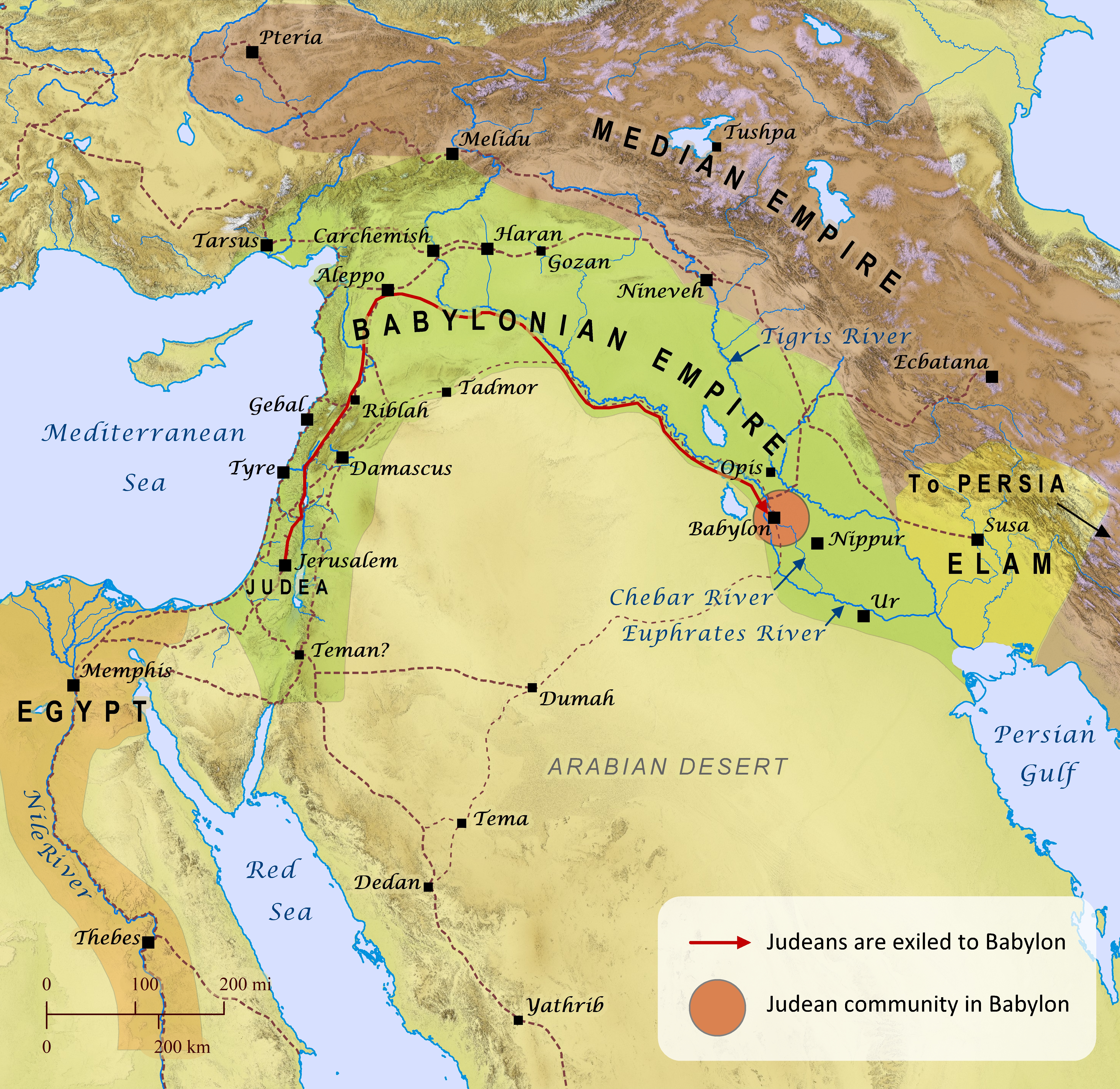
Daniel 1; 2 Kings 24-25; 2 Chronicles 36; Jeremiah 39; 52
One of the most significant events in the story of the Old Testament is the exile of Judah to Babylon in 586 B.C. This event–actually the third in a series of exiles to Babylon (the others occurring in 605 B.C. and 597 B.C.)–precipitated several crises in the nation and in Judaism. The northern kingdom of Israel had already been exiled to Assyria over a century earlier in 722 B.C. (2 Kings 15:29; 17:1-6; 1 Chronicles 5:26; see also “Israelites Are Exiled to Assyria” map), and in some ways that exile was even more devastating. Nevertheless, the Temple of the Lord remained intact in Jerusalem as a place where the faithful could continue to offer their sacrifices. With the destruction of Jerusalem and the Temple of the Lord at the hands of the Babylonians, however, sacrifices could no longer be offered at the Tabernacle or Temple of the Lord (Leviticus 17:2-4; Deuteronomy 12:5-7), and the Lord’s promise to provide a land for his people and a descendant on the throne of David no doubt seemed abandoned. At the same time, however, the Judean exiles were allowed to maintain their religious traditions in Babylon, and many even began to thrive there, including Daniel and his friends, who served at the royal court (Daniel 1; see also “The Land of Exile” map). One of the last kings of Babylon expanded Babylonia further by capturing the desert oases of Dumah, Tema, Dedan, and Yathrib (see “Oases of the Arabian Desert” map), but eventually the Median Empire to the north merged with the Persian Empire to the southeast and conquered the Babylonian Empire. King Cyrus of Persia then decreed that the exiled Judeans, now called “Jews,” could return to their homeland if they desired (2 Chronicles 36:22-23; Ezra 1-2; see also “Jews Return from Exile” map).
Open Bible Data site copyright © 2023–2026 Freely-Given.org.
Python source code for creating these static pages is available on GitHub under an open licence.
For Bible data copyrights, see the details for each displayed Bible version.
The Open English Translation (OET) main site is at OpenEnglishTranslation.Bible or OET.Bible.