Note: This view shows ‘verses’ which are not necessarily natural language units and hence sometimes only part of a sentence will be visible—click on any Bible version abbreviation down the left-hand side to see the verse in more of its context. Normally the OET discourages the reading of individual ‘verses’, but this view is only designed as a tool for Bible-translators and others doing comparisons of different translations—the older translations are further down the page (so you can read up from the bottom to trace the English translation history). The OET segments on this page are still early looks into the drafted texts of the Open English Translation of the Bible—please double-check these texts in advance before using in public.
Key: khaki:verbs.
Note: Automatic aligning of the OET-RV to the LV is done by some temporary software, hence the OET-RV alignments are incomplete (and may occasionally be wrong).
BrLXX (DNG 4:33) Αὐτῇ τῇ ὥρᾳ ὁ λόγος συνετελέσθη ἐπὶ Ναβουχοδονόσορ, καὶ ἀπὸ τῶν ἀνθρώπων ἐξεδιώχθη, καὶ χόρτον ὡς βοῦς ἤσθιε, καὶ ἀπὸ τῆς δρόσου τοῦ οὐρανοῦ τὸ σῶμα αὐτοῦ ἐβάφη, ἕως αἱ τρίχες αὐτοῦ ὡς λεόντων ἐμεγαλύνθησαν, καὶ οἱ ὄνυχες αὐτοῦ ὡς ὁρνέων. (Autaʸ taʸ hōra ho logos sunetelesthaʸ epi Nabouⱪodonosor, kai apo tōn anthrōpōn exediōⱪthaʸ, kai ⱪorton hōs bous aʸsthie, kai apo taʸs drosou tou ouranou to sōma autou ebafaʸ, heōs hai triⱪes autou hōs leontōn emegalunthaʸsan, kai hoi onuⱪes autou hōs horneōn.)
BrTr (DNG 4:33) In the same hour the word was fulfilled upon Nabuchodonosor: and he was driven forth from men, and he ate grass as an ox, and his body was bathed with the dew of heaven, until his hairs were grown like lions' hairs, and his nails as birds' claws.
ULTIn that moment, the word finished against Nebuchadnezzar. And he was driven from man, and he ate grass like oxen, and his body was wet with the dew of the heavens until that his hair had become great like eagles and his nails, like birds.
USTImmediately what this person had said happened to me, Nebuchadnezzar. I no longer lived among people. Instead, I ate grass as oxen do.The dew that forms from the air made my body damp. I lived like that until my hair became as long as eagles’ feathers. My fingernails became like birds’ claws.
BSB & MSBAt that moment the sentence against Nebuchadnezzar was fulfilled. He was driven away from mankind. He ate grass like an ox, and his body was drenched with the dew of heaven, until his hair grew like [the feathers of] an eagle and his nails like [the claws of] a bird.
OEBNo OEB DAN 4:33 book available
WEBBE & WMBBThis was fulfilled the same hour on Nebuchadnezzar. He was driven from men and ate grass like oxen; and his body was wet with the dew of the sky until his hair had grown like eagles’ feathers, and his nails like birds’ claws.
NETNow in that very moment this pronouncement about Nebuchadnezzar came true. He was driven from human society, he ate grass like oxen, and his body became damp with the dew of the sky, until his hair became long like an eagle’s feathers, and his nails like a bird’s claws.
LSVIn that hour the thing has been fulfilled on Nebuchadnezzar, and from men he is driven, and he eats the herb as oxen, and his body is wet by the dew of the heavens, until his hair has become great as eagles, and his nails as birds.
FBVImmediately the decree was fulfilled, and Nebuchadnezzar was driven away from human society. He ate grass like the cattle, and his body was soaked with the dew of heaven. His hair grew matted like a vulture, and his nails like bird claws.)
T4TImmediately what God predicted happened. Nebuchadnezzar became insane, so his advisors forced him to live away from other people. He ate grass like cows do, and dew from the sky caused his body to be damp/wet every morning. He lived like that until his hair was as long as eagles’ feathers, and his fingernails became like birds’ claws.
LEB⌊Immediately⌋[fn] the word was fulfilled ⌊concerning⌋[fn] Nebuchadnezzar, and he was expelled from ⌊human society⌋[fn] and he ate grass like oxen, and his body was bathed with the dew of heaven until his hair was like the hair of an eagle and his nails grew like a bird’s claws.
BBEThat very hour the order about Nebuchadnezzar was put into effect: and he was sent out from among men, and had grass for his food like the oxen, and his body was wet with the dew of heaven, till his hair became long as eagles' feathers and his nails like those of birds.
MoffThe sentence was carried out instantly upon Nebuchadnezzar; he was driven away from human beings, he ate grass like cattle, and his body was drenched with the dews of heaven, till his hair grew as long as the feathers of an eagle and his nails grew like the claws of a bird.
JPS (DAN 4:30) (4-27) The king spoke, and said: 'Is not this great Babylon, which I have built for a royal dwelling-place, by the might of my power and for the glory of my majesty?'
ASVThe same hour was the thing fulfilled upon Nebuchadnezzar: and he was driven from men, and did eat grass as oxen, and his body was wet with the dew of heaven, till his hair was grown like eagles’ feathers, and his nails like birds’ claws.
DRAVerse alignment unavailable (ambiguous).
YLT'In that hour the thing hath been fulfilled on Nebuchadnezzar, and from men he is driven, and the herb as oxen he eateth, and by the dew of the heavens his body is wet, till that his hair as eagles' hath become great, and his nails as birds.'
DrbyThe same hour was the word fulfilled upon Nebuchadnezzar; and he was driven from men, and ate grass as oxen; and his body was bathed with the dew of heaven, till his hair grew like eagles' [feathers], and his nails like birds' [claws].
RVThe same hour was the thing fulfilled upon Nebuchadnezzar: and he was driven from men, and did eat grass as oxen, and his body was wet with the dew of heaven, till his hair was grown like eagles’ feathers, and his nails like birds’ claws.
SLTIn the same moment the word was added upon Nebuchadnezzar: and he was driven out from men, and he shall eat the green herb as oxen, and from the dew of the heavens his body shall be wet till that his hair was increased as eagles, and his nails as birds’.
WbstrThe same hour was the thing fulfilled upon Nebuchadnezzar: and he was driven from men, and ate grass as oxen, and his body was wet with the dew of heaven, till his hairs were grown like eagles' feathers , and his nails like birds' claws .
KJB-1769The same hour was the thing fulfilled upon Nebuchadnezzar: and he was driven from men, and did eat grass as oxen, and his body was wet with the dew of heaven, till his hairs were grown like eagles’ feathers, and his nails like birds’ claws.
KJB-1611The same houre was the thing fulfilled vpon Nebuchad-nezzar, and he was driuen from men, and did eate grasse as oxen, and his body was wet with the dew of heauen, till his haires were growen like Egles feathers, and his nailes like birds clawes. (Modernised spelling is same as from KJB-1769 above, apart from marking of added words (and possibly capitalisation and punctuation))
BshpsThe very same houre was this matter fulfilled vpon Nabuchodonozor, so that he was cast out of mens companie, & did eate grasse like oxen, and his body was wet with the deawe of heauen, till his heeres were growen as Egles fethers and his nayles like byrdes clawes. (The very same hour was this matter fulfilled upon Nabuchodonozor, so that he was cast out of men’s company, and did eat grass like oxen, and his body was wet with the dew of heaven, till his hairs were grown as Eagles feathers and his nails like birds claws.)
GnvaAt the same time was mine vnderstanding restored vnto me, and I returned to the honour of my kingdome: my glory and my beautie was restored vnto me, and my counsellours and my princes sought vnto me, and I was established in my kingdome, and my glory was augmented toward me. (At the same time was mine understanding restored unto me, and I returned to the honour of my kingdom: my glory and my beauty was restored unto me, and my counsellors and my princes sought unto me, and I was established in my kingdom, and my glory was augmented toward me.)
CvdlThe very same houre was this matter fulfylled vpo Nabuchodonosor: so that he was cast out off mes copany, & ate grasse like an oxe. His body was wet with the dew of heauen, till his hayres were as greate as Aegles fethers, and his nales like byrdes clawes. (The very same hour was this matter fulfilled upon Nebuchadnezzar: so that he was cast out off mes company, and ate grass like an ox. His body was wet with the dew of heaven, till his hairs were as great as Eagles feathers, and his nails like birds claws.)
WyclVerse alignment unavailable (ambiguous).
Luth (DAN 4:30) Von Stund an ward das Wort vollbracht über Nebukadnezar, und er ward von den Leuten verstoßen und er aß Gras wie Ochsen, und sein Leib lag unter dem Tau des Himmels und ward naß, bis sein Haar wuchs, so groß als Adlersfedern, und seine Nägel wie Vogelklauen wurden. (From Stood at/to what/which the word accomplished above Nebuchadnezzar, and he what/which from the people violated and he ate grass as/like oxen, and be body lag under to_him dew the heavens and what/which wet, until be hair growth, so large as eagle’s_feathers, and his nails as/like bird’s_claws became.)
The author of Daniel 4 wrote in the Aramaic language. These Notes are based on the BSB, which is based on the Aramaic text called the MT (Masoretic Text). However, the early Greek translation known as the Septuagint is different from the Aramaic text in many places in Daniel 4. Scholars are uncertain why the two are so different. It may be that the Greek translators worked from an Aramaic text that was different from that of the MT. The Notes will discuss the differences between the two texts for certain important passages.
The verse numbers of the BSB and most English versions are different from the verse numbers in the Aramaic text. The NJPS and NJB are two exceptions. They follow the verse numbers in the Aramaic text.Baldwin (p. 107) notes that the chapter divisions in the present Aramaic text were not necessarily those of the original text. The difference in numbering can cause confusion when citing verses in different translations. For example, Daniel 4:1 in the BSB is 3:31 in the NJPS and NJB. Daniel 4:4 is 4:1 in the NJB and NJPS, and so on. When these Notes cite verses in the NJPS and the NJB, they will give both the verse numbers in those versions and the corresponding BSB verse numbers.
Versions give different headings to Daniel 4. For example:
Nebuchadnezzar’s second dream (NRSV)
Nebuchadnezzar’s dream about a tree (NLT)
A letter from Nebuchadnezzar about his insanity (GW)
In some languages it may be more natural that the heading be a full sentence. For example:
Nebuchadnezzar dreamed a second dream
Nebuchadnezzar dreamed about a tree
Nebuchadnezzar wrote a letter about how he became insane
Special Problems:
1. Change of Speaker: In Daniel 4, the person who tells the story varies between the king and the narrator. For example:
A. In 4:1–18 the king told what happened to him in the first person.
B. In 4:19–27 the narrator told the story of how Daniel interpreted the king’s dream.
C. In 4:28–33 the narrator told what happened to Nebuchadnezzar.
D. In 4:34–37 the king again spoke directly in the first person.
The Notes will inform you when there is a change of speaker and suggest how to translate these passages.
2. Repetition: When Daniel interpreted the king’s dream (4:19–27), he repeated parts of what the king had previously told him (in 4:10–16). Later, when the narrator told what happened to the king (4:28–33), he repeated what Daniel had said would happen (in 4:25). This kind of repetition creates suspense in the story. Repetition also helps to emphasize the main theme of the account. For example, at the end of the account, the king repeated information from the beginning (4:3, 34). This information is the theme of the chapter: God is sovereign over human rulers.
3. Synonyms: The author liked to use synonyms, different words with the same or similar meaning. In some cases, he used synonyms to emphasize an idea. For example, in 4:37 the king used three synonyms in the same sentence to emphasize the idea of praise. In some languages this may not be natural. The Notes will suggest other ways you can translate synonyms.
4. Commands: In the dream, the angel made a number of commands. The text does not usually say to whom the angel was giving these commands. Sometimes the angel commanded non-living objects to do something. In all these cases, the angel was speaking a message from God. And when God commands that something happen, it will certainly happen. In some languages it may not be natural to use commands in this way. If that is true in your language, you may be able to translate these commands as authoritative declarations. The Notes will give examples of how you may do this.
5. Poetic Parallelism: The author of Daniel 4 liked to use poetic form to communicate ideas. In Aramaic poetry, authors often used pairs of clauses to say the same thing in two different ways. This type of poetry has many different functions. Sometimes the author used poetry to emphasize themes. Other times he used poetry to mark the climax of a section. This kind of poetry may not be natural in your language. The Notes will describe the function of the poetic speech in Daniel. They will also suggest some options on how you might translate this type of poetry in your own language.
6. Form: The author wrote Daniel 4 in the form of a royal proclamation. This proclamation form gives authority to the account. The style of the proclamation is similar to that of a letter, and the beginning of the chapter is similar to other Aramaic letters. The king first identifies himself. Second, he indicates to whom he is writing, that is, those he intends to read his letter. Third, he greets his readers. In your language, people may have a different way of identifying the author or addressee of a letter. The Notes will suggest some options on how to translate this letter style.
7. Key Terms: Two key terms in Daniel 4 are “earth” and “heaven.” Both words have more than one meaning. The Aramaic word that the BSB generally translates as “earth” can mean either “ground,” “land,” or “world.” The Aramaic word that the BSB generally translates as “heaven” can mean either “sky” or “where God lives.” In 4:26 the author used the word “Heaven” to refer to God himself. The author plays on these two words and their meanings to highlight the main theme of the chapter: “God in heaven rules over the affairs of men on earth.” The Notes will explain the meaning of these two key terms in each context.
Paragraph 4:33
Nebuchadnezzar received the punishment that God had decreed for him.
4:33a
At that moment the sentence against Nebuchadnezzar was fulfilled.
¶ These things happened to Nebuchadnezzar at that very time.
¶ Immediately, God caused this message about Nebuchadnezzar to be fulfilled.
¶ At once these words came true.
At that moment: The Aramaic word that the BSB translates as moment means “a moment, a short space of time.” In this context, it has the more specific sense of “at the same moment, at once.”HALOT, 2001. See also Daniel 3:6–15; 4:33, 5:5. As soon as the king stopped speaking, the events began to occur. Other ways to translate this include:
At once
That very same hour (NLT)
the sentence against Nebuchadnezzar was fulfilled: The Aramaic text more literally says, “the word was fulfilled upon Nebuchadnezzar.” The BSB translates this expression using a passive verb (was fulfilled). If it is more natural in your language to use active verbs, you may be able to say:
At once, God caused these events to happen to the king just as he had announced:
Immediately, the words came true (NCV)
In some languages, it may be more natural to translate this verse in the first person. For example:
Immediately, these things began to happen to me.
the sentence: The Aramaic word that the BSB translates as the sentence is literally “the word.” It refers to what God had proclaimed in 4:32–33. God had said he would punish the king. Other ways to say this in English are:
what had been said (NIV)
the prophecy (NLT)
this judgment (REB)
In some languages it may be more natural to express this idea using a verb. For example:
God judged the king just as he had announced
was fulfilled: The Aramaic word that the BSB translates was fulfilled here means that God caused what he said in 4:32–33 to happen. Here is another way to translate this:
came true (GNT)
4:33b
He was driven away from mankind.
He was forced to live away from other people
People banished him from human society.
People sent me away from their towns.
He was driven away from mankind: Nebuchadnezzar was forced to live away from other people. See the Notes at 4:25a. There are at least two ways to translate this:
Using a passive verb. For example:
Nebuchadnezzar was forced to go away from people (NCV)
Using an active verb. The subject is not in focus. For example:
they (indefinite) forced him to live away from other people
people/others banished him from human society
In some languages it may be more natural to use the first person to refer to Nebuchadnezzar. See the Notes at 4:28–31.
They (indefinite) forced me to live far away from people
They (indefinite) banished me from human society
4:33c
He ate grass like an ox,
and made to eat grass like cattle.
He ate grass like an ox.
I had to eat grass like cattle do.
He ate grass like an ox: See also the Notes at 4:25c, 4:32c. The king acted like an ox. He ate grass in the fields as oxen do.
ate: The verb ate here refers to something the king did on a regular or consistent basis.
like an ox: See also the Notes at 4:25c. In this context, the word ox is probably a collective term for cattle in general. In some languages it may be natural to use a plural term. For example:
like cattle (GW)
like oxen/cattle do
4:33d
and his body was drenched with the dew of heaven,
Each day he became wet from dew from the sky,
The morning dews soaked/chilled him.
Every day my body became damp from the dew.
his body was drenched with the dew of heaven: See the Notes at 4:15c; 4:25d. The king lived outside, without any shelter.The GeCL has: “and slept unprotected in the open.” So he got wet with dew every morning. Other ways to translate this include:
He became wet from dew (NCV)
Dew from the sky made his body wet (GW)
the dew of heaven: See the Notes at 4:15c.
4:33e
until his hair grew like the feathers of an eagle
while his hair grew as long as eagles’ feathers.
His hair grew very long,
My hair grew as long as eagle feathers,
until: The Aramaic connector that the BSB translates as until here introduces something that happened over the same time period as the previous clauses. While the king lived out in the open, his hair grew long. Other ways to translate this include:
As time went by (CEV)
He lived this way until (NLT)
and during that time
his hair grew like the feathers of an eagle: This Aramaic expression that the BSB translates as his hair grew like the feathers of an eagle is literally “his hair like eagles grew big/great.”
grew like: The Aramaic word that the BSB translates as grew is a general word that means “grow big.” In this context it refers to hair that grows long and wild, shaggy and unkempt. Use an expression that is natural in your language to refer to hair that is not cut for a long time. For example:
grew as long as (RSV)
his hair became shaggy like (REB)
like the feathers of an eagle: The Aramaic text does not mention feathers. However, the word is implied from the context and the BSB has supplied it. An eagle is a large flesh-eating bird. It has a large wing span and long feathers. In some cultures, people may not be familiar with eagles. In that case, you may need to:
use the term for a similar large bird. For example:
like a vulture’s feathers
use a general term. For example:
like the feathers of a huge bird
translate the meaning of the comparison. For example:
very long/wild
4:33f
and his nails like the claws of a bird.
His nails grew long like the claws of a bird.
and his nails started to look like birds' claws.
and my fingernails and toenails grew as long as the claws of a large bird.
and his nails like the claws of a bird: The Aramaic expression that the BSB translates as and his nails like the claws of a bird is literally “and his nails like birds.” The verb is implied from 4:33e. The king’s nails grew long, sharp, and curved like birds’ claws. In some cultures, people may only know about small birds and may not be familiar with birds that have long claws. In that case, you may have to translate the meaning without using this comparison. Examples of different ways to translate this expression include:
his nails grew as long as birds’ claws (GW)
his nails grew long, like the claws of a large bird
and=from (the),humankind driven_away and,(the),grass like,oxen ate and,from,the_dew_of the=heavens body_of,his drenched
The expressions was driven and was wet are passive verbal forms. If it would be unnatural to use those forms, you could express the idea in active form or in another way that is natural in your language. Alternate translation: [And people drove him away from man, and he ate grass like oxen, and the dew of the heavens made his body wet]
The point of this comparison is that just as eagles have long feathers and birds have long claws, so the king’s hair and nails grew very long. If it would be helpful in your language, you could make this point explicitly. Alternate translation: [his hair had grown very long, as long as the feathers of eagles, and his nails had grown very long, as long as the claws of birds]
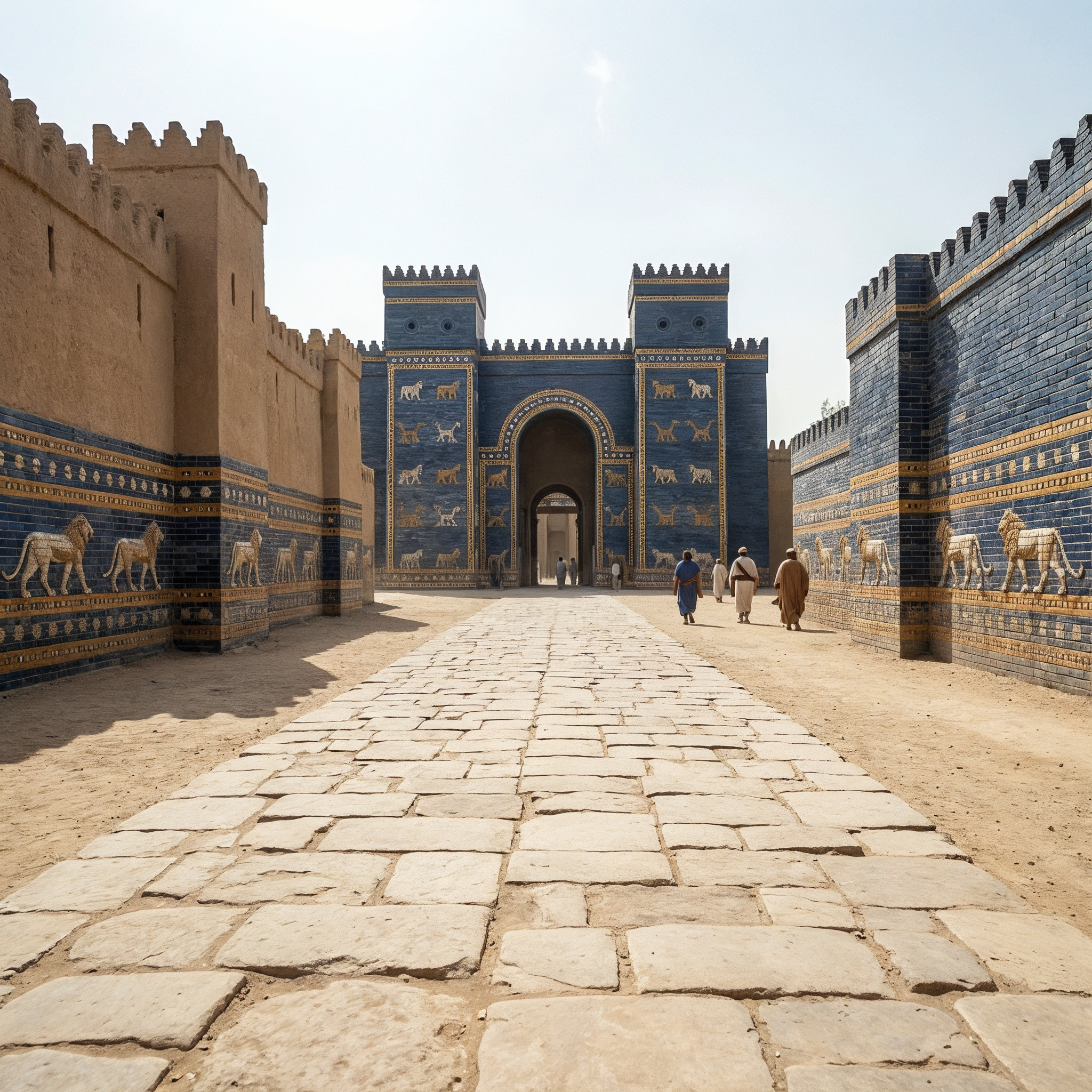 Immediately what had been said in advance happened to Nebuchadnezzar. He was driven away from society. He ate grass like a cow, and his body was wet with dew each morning after sleeping on the ground. Eventually his hair had grown long like eagles’ feathers, and his nails were long like birds’ claws.