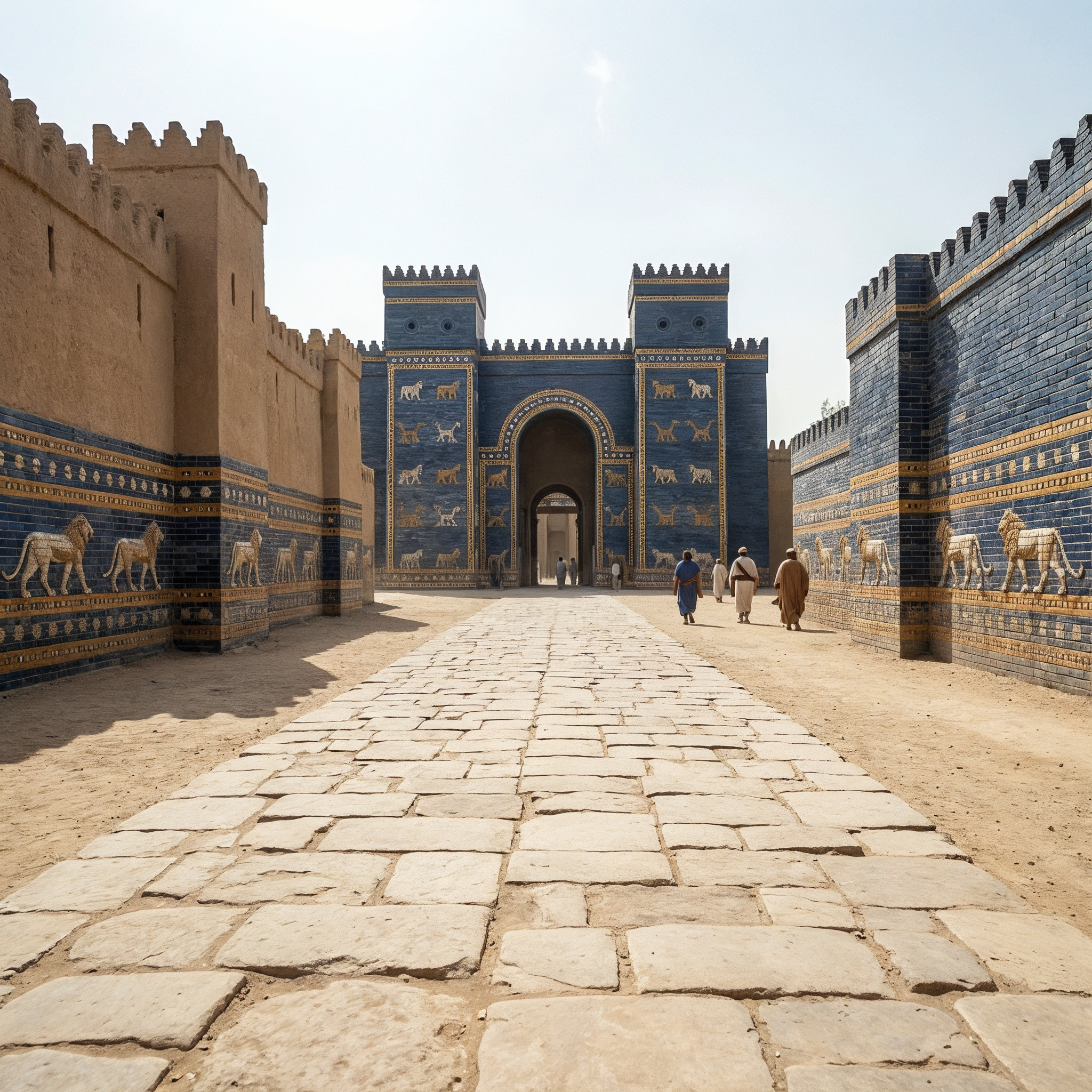
 when he looked across and said, “Isn’t that the great Babylon, which I’ve built as a royal residence by the strength of my power and for the glory of my majesty?”
OET OET-RV OET-LV GHT ULT UST BSB MSB BLB AICNT OEB WEBBE WMBB NET LSV FBV TCNT T4T LEB BBE Moff JPS Wymth ASV DRA YLT Drby RV SLT Wbstr KJB-1769 KJB-1611 Bshps Gnva Cvdl TNT Wycl SR-GNT UHB BrLXX BrTr Related Parallel Simple Interlinear Topics Reference Dictionary Search
ParallelVerse GEN EXO LEV NUM DEU JOB JOS JDG RUTH 1 SAM 2 SAM PSA AMOS HOS 1 KI 2 KI 1 CHR 2 CHR PROV ECC SNG JOEL MIC ISA ZEP HAB JER LAM YNA (JNA) NAH OBA DAN EZE EZRA EST NEH HAG ZEC MAL LAO GES LES ESG DNG 2 PS TOB JDT WIS SIR BAR LJE PAZ SUS BEL MAN 1 MAC 2 MAC 3 MAC 4 MAC YHN (JHN) MARK MAT LUKE ACTs YAC (JAM) GAL 1 TH 2 TH 1 COR 2 COR ROM COL PHM EPH PHP 1 TIM TIT 1 PET 2 PET 2 TIM HEB YUD (JUD) 1 YHN (1 JHN) 2 YHN (2 JHN) 3 YHN (3 JHN) REV
Dan Intro C1 C2 C3 C5 C6 C7 C8 C9 C10 C11 C12
Dan 4 V1 V2 V3 V4 V5 V6 V7 V8 V9 V10 V11 V12 V13 V14 V15 V16 V17 V18 V19 V20 V21 V22 V23 V24 V25 V26 V27 V28 V29 V31 V32 V33 V34 V35 V36 V37
Note: This view shows ‘verses’ which are not necessarily natural language units and hence sometimes only part of a sentence will be visible—click on any Bible version abbreviation down the left-hand side to see the verse in more of its context. Normally the OET discourages the reading of individual ‘verses’, but this view is only designed as a tool for Bible-translators and others doing comparisons of different translations—the older translations are further down the page (so you can read up from the bottom to trace the English translation history). The OET segments on this page are still early looks into the drafted texts of the Open English Translation of the Bible—please double-check these texts in advance before using in public.
Original DAN 4:27: Text critical issues=none Clarity of original=clear Importance to us=normal Speaker(s)=Narrator (All still tentative.)
OET (OET-RV)
when he looked across and said, “Isn’t that the great Babylon, which I’ve built as a royal residence by the strength of my power and for the glory of my majesty?”
OET-LV (DAN 4:27) [fn] Oh/the_king was_replying and_saying(ms) not is_this it Bāⱱel (the)_great which I I_built_it to_a_house_of a_kingdom by_the_strength_of my_power and_for_the_honour_of my_majesty.
4:27 Note: KJB: Dān.4.30
UHB 27 עָנֵ֤ה מַלְכָּא֙ וְאָמַ֔ר הֲלָ֥א דָא־הִ֖יא בָּבֶ֣ל רַבְּתָ֑א דִּֽי־אֲנָ֤ה בֱנַיְתַהּ֙ לְבֵ֣ית מַלְכ֔וּ בִּתְקַ֥ף חִסְנִ֖י וְלִיקָ֥ר הַדְרִֽי׃ ‡
(27 ˊānēh malkāʼ vəʼāmar hₐlāʼ dāʼ-hiyʼ bāⱱel rabtāʼ diy-ʼₐnāh ⱱₑnaytah ləⱱēyt malkū bitəqaf ḩişniy vəliyqār hadriy.)
Key: khaki:verbs.
Note: Automatic aligning of the OET-RV to the LV is done by some temporary software, hence the OET-RV alignments are incomplete (and may occasionally be wrong).
BrLXX (DNG 4:30) ἀπεκρίθη ὁ βασιλεὺς, καὶ εἶπεν, οὐχ αὕτη ἐστὶ Βαβυλὼν ἡ μεγάλη, ἣν ἐγὼ ᾠκοδόμησα εἰς οἶκον βασιλείας, ἐν τῷ κράτει τῆς ἰσχύος μου, εἰς τιμὴν τῆς δόξης μου;
(apekrithaʸ ho basileus, kai eipen, ouⱪ hautaʸ esti Babulōn haʸ megalaʸ, haʸn egō ōkodomaʸsa eis oikon basileias, en tōi kratei taʸs isⱪuos mou, eis timaʸn taʸs doxaʸs mou;)
BrTr (DNG 4:30) the king answered and said, Is not this great Babylon, which I have built for a royal residence, by the might of my power, for the honour of my glory?
ULT The king answered and was saying, “Is this not the great Babylon, which I, I have built it for the house of the kingdom by the might of my power and for the glory of my majesty?”
UST As he looked out over the city, he said aloud, “This is the great city of Babylon that I have built as the place where I rule! I have built it by my own great power to show people what a glorious king I am!”
BSB & MSB the king exclaimed, “Is this not Babylon the Great, which I myself have built as a royal residence by the might of my power and for the glory of my majesty?”
OEB No OEB DAN 4:30 book available
WEBBE & WMBB The king spoke and said, “Is not this great Babylon, which I have built for the royal dwelling place by the might of my power and for the glory of my majesty?”
NET The king uttered these words: “Is this not the great Babylon that I have built for a royal residence by my own mighty strength and for my majestic honor?”
LSV the king has answered and said, “Is this not that great Babylon that I have built, for the house of the kingdom, in the might of my strength, and for the glory of my honor?”
FBV He said, “I was the one who built this great city of Babylon! By my own great power I built it as my royal residence for my majestic glory!”
T4T As he looked out over/across the city, he said to those around him, “I have built this great city of Babylon to be the place where I rule! I have built it to display my own power, in order to show people my glory, to show them that I am very great!”
LEB And the king answered and said, “Is this not the great Babylon which I have built as a royal palace by the strength of my own power, and for the glory of my own majesty?”
BBE The king made answer and said, Is this not great Babylon, which I have made for the living-place of kings, by the strength of my power and for the glory of my honour?
Moff the king was saying, ‘There lies Babylon the great, which I have built for a royal residence by my vast power and to my noble majesty!’
JPS (DAN 4:27) (4-24) Wherefore, O king, let my counsel be acceptable unto thee, and break off thy sins by almsgiving, and thine iniquities by showing mercy to the poor; if there may be a lengthening of thy prosperity.'
ASV The king spake and said, Is not this great Babylon, which I have built for the royal dwelling-place, by the might of my power and for the glory of my majesty?
DRA Verse alignment unavailable (ambiguous).
YLT the king hath answered and said, Is not this that great Babylon that I have built, for the house of the kingdom, in the might of my strength, and for the glory of mine honour?
Drby the king spoke and said, Is not this great Babylon, that I have built for the house of the kingdom by the might of my power and for the glory of my majesty?
RV The king spake and said, Is not this great Babylon, which I have built for the royal dwelling place, by the might of my power and for the glory of my majesty?
SLT The king answered and said, Is not this great Babel, that I built it for the house of the kingdom by the strength of my power, and for the honor of my majesty?
Wbstr The king spoke, and said, Is not this great Babylon, that I have built for the house of the kingdom by the might of my power, and for the honor of my majesty?
KJB-1769 The king spake, and said, Is not this great Babylon, that I have built for the house of the kingdom by the might of my power, and for the honour of my majesty?
KJB-1611 The King spake, and said, Is not this great Babylon, that I haue built for the house of the kingdome, by the might of my power, and for the honour of my maiestie?
(Modernised spelling is same as from KJB-1769 above, apart from capitalisation and punctuation)
Bshps And the king spake, & sayd: Is not this great Babylon that I haue buylt for the house of the kingdome by the might of my power, and for the honour of my maiestie?
(And the king spake, and said: Is not this great Babylon that I have built for the house of the kingdom by the might of my power, and for the honour of my majesty?)
Gnva The very same houre was this thing fulfilled vpon Nebuchad-nezzar, and hee was driuen from men, and did eate grasse as the oxen, and his body was wet with the dewe of heauen, till his heares were growen as eagles feathers, and his nailes like birds clawes.
(The very same hour was this thing fulfilled upon Nebuchad-nezzar, and he was driven from men, and did eat grass as the oxen, and his body was wet with the dew of heaven, till his hears were grown as eagles feathers, and his nails like birds claws.)
Cvdl and sayde: This is the greate cite off Babilo, which I myself (with my power & strength) haue made a kynges courte, for the honoure off my magesty.
(and said: This is the great cite off Babylon, which I myself (with my power and strength) have made a kings court, for the honour off my majesty.)
Wycl Verse alignment unavailable (ambiguous).
Luth (DAN 4:27) hub er an und sprach: Das ist die große Babel, die ich erbauet habe zum königlichen Hause durch meine große Macht, zu Ehren meiner Herrlichkeit.
(began he at/to and spoke: The is the large Babel, the I built have for_the royal house(n) through my large power(n), to/for honour(n) mine glory/splendour.)
ClVg Verse alignment unavailable (ambiguous).
The author of Daniel 4 wrote in the Aramaic language. These Notes are based on the BSB, which is based on the Aramaic text called the MT (Masoretic Text). However, the early Greek translation known as the Septuagint is different from the Aramaic text in many places in Daniel 4. Scholars are uncertain why the two are so different. It may be that the Greek translators worked from an Aramaic text that was different from that of the MT. The Notes will discuss the differences between the two texts for certain important passages.
The verse numbers of the BSB and most English versions are different from the verse numbers in the Aramaic text. The NJPS and NJB are two exceptions. They follow the verse numbers in the Aramaic text.Baldwin (p. 107) notes that the chapter divisions in the present Aramaic text were not necessarily those of the original text. The difference in numbering can cause confusion when citing verses in different translations. For example, Daniel 4:1 in the BSB is 3:31 in the NJPS and NJB. Daniel 4:4 is 4:1 in the NJB and NJPS, and so on. When these Notes cite verses in the NJPS and the NJB, they will give both the verse numbers in those versions and the corresponding BSB verse numbers.
Versions give different headings to Daniel 4. For example:
Nebuchadnezzar’s second dream (NRSV)
Nebuchadnezzar’s dream about a tree (NLT)
A letter from Nebuchadnezzar about his insanity (GW)
In some languages it may be more natural that the heading be a full sentence. For example:
Nebuchadnezzar dreamed a second dream
Nebuchadnezzar dreamed about a tree
Nebuchadnezzar wrote a letter about how he became insane
Special Problems:
1. Change of Speaker: In Daniel 4, the person who tells the story varies between the king and the narrator. For example:
A. In 4:1–18 the king told what happened to him in the first person.
B. In 4:19–27 the narrator told the story of how Daniel interpreted the king’s dream.
C. In 4:28–33 the narrator told what happened to Nebuchadnezzar.
D. In 4:34–37 the king again spoke directly in the first person.
The Notes will inform you when there is a change of speaker and suggest how to translate these passages.
2. Repetition: When Daniel interpreted the king’s dream (4:19–27), he repeated parts of what the king had previously told him (in 4:10–16). Later, when the narrator told what happened to the king (4:28–33), he repeated what Daniel had said would happen (in 4:25). This kind of repetition creates suspense in the story. Repetition also helps to emphasize the main theme of the account. For example, at the end of the account, the king repeated information from the beginning (4:3, 34). This information is the theme of the chapter: God is sovereign over human rulers.
3. Synonyms: The author liked to use synonyms, different words with the same or similar meaning. In some cases, he used synonyms to emphasize an idea. For example, in 4:37 the king used three synonyms in the same sentence to emphasize the idea of praise. In some languages this may not be natural. The Notes will suggest other ways you can translate synonyms.
4. Commands: In the dream, the angel made a number of commands. The text does not usually say to whom the angel was giving these commands. Sometimes the angel commanded non-living objects to do something. In all these cases, the angel was speaking a message from God. And when God commands that something happen, it will certainly happen. In some languages it may not be natural to use commands in this way. If that is true in your language, you may be able to translate these commands as authoritative declarations. The Notes will give examples of how you may do this.
5. Poetic Parallelism: The author of Daniel 4 liked to use poetic form to communicate ideas. In Aramaic poetry, authors often used pairs of clauses to say the same thing in two different ways. This type of poetry has many different functions. Sometimes the author used poetry to emphasize themes. Other times he used poetry to mark the climax of a section. This kind of poetry may not be natural in your language. The Notes will describe the function of the poetic speech in Daniel. They will also suggest some options on how you might translate this type of poetry in your own language.
6. Form: The author wrote Daniel 4 in the form of a royal proclamation. This proclamation form gives authority to the account. The style of the proclamation is similar to that of a letter, and the beginning of the chapter is similar to other Aramaic letters. The king first identifies himself. Second, he indicates to whom he is writing, that is, those he intends to read his letter. Third, he greets his readers. In your language, people may have a different way of identifying the author or addressee of a letter. The Notes will suggest some options on how to translate this letter style.
7. Key Terms: Two key terms in Daniel 4 are “earth” and “heaven.” Both words have more than one meaning. The Aramaic word that the BSB generally translates as “earth” can mean either “ground,” “land,” or “world.” The Aramaic word that the BSB generally translates as “heaven” can mean either “sky” or “where God lives.” In 4:26 the author used the word “Heaven” to refer to God himself. The author plays on these two words and their meanings to highlight the main theme of the chapter: “God in heaven rules over the affairs of men on earth.” The Notes will explain the meaning of these two key terms in each context.
In this paragraph Nebuchadnezzar described in the third person what happened to him twelve months later. In some languages it may be more natural to include a first-person pronoun. For example:
All this happened to me, King Nebuchadnezzar….
If you decide to translate using the first person, you will need to continue doing so throughout this paragraph.
Is this not Babylon the Great, which I myself have built by the might of my power as a royal residence and for the glory of my majesty?: This is a rhetorical question. It functions as an exclamation or strong statement. The king did not expect an answer. He was boasting to himself as he admired what he had done. There are several ways to translate this verse:
Using a rhetorical question. For example:
Is this not magnificent Babylon, which I have built as a royal capital by my mighty power and for my glorious majesty? (NRSV)
Using an exclamation, or an exclamation with a statement. For example:
Just look at this wonderful capital city that I have built by my own power and for my own glory! (CEV)
Look how great Babylon is! I built the royal palace by my own impressive power and for my glorious honor. (GW)
Look at this great city of Babylon! By my own mighty power, I have built this beautiful city as my royal residence to display my majestic splendor. (NLT)
As a statement or statements. For example:
I have built this great Babylon as my royal home. I built it by my power to show my glory and my majesty. (NCV)
the king exclaimed, “Is this not Babylon the Great,
The king boasted to himself: “There is the great city of Babylon.
I said to myself: “Babylon is a magnificent city!
the king exclaimed: The Aramaic expression that the BSB translates as exclaimed is literally “answering and saying.” See the Notes at 4:19c. The two verbs of speech indicate that the king was about to say something important. It appears that the king was alone at the time and was boasting to himself as he looked at the beautiful city of Babylon. His boast was in the form of a rhetorical question. Introduce this boastful question in a way that is natural in your language. For example:
and the king boasted to himself:
The king reflected and said (NASB)
I was saying to myself (CEV)Similarly, the GeCL97.
Is this not Babylon the Great…?: In some languages it may be more natural to translate this as a positive statement or exclamation. For example:
There is the great city of Babylon!
Look how great Babylon is! (GW)
Just look at this great city of Babylon! (NLT)
Babylon the Great: The king admired Babylon by saying that it was Great. Use a word appropriate for praising a city for its beauty, size, and strength. For example:
magnificent Babylon (NRSV)
which I myself have built by the might of my power as a royal residence and for the glory of my majesty?”
I designed it as my capital city
I have built it by my own great power to show everyone how glorious and important I am.”
I had it built to be worthy of me, a king. I in my great strength caused it to rise/exist! It shows what a glorious/amazing king I am!”
I myself have built…as a royal residence: The emphasis is on the pronoun I. However, the king did not build the city by himself in a physical or literal sense. He may have planned it and designed some of the buildings and gardens himself, and then ordered his workers to build them. There are at least two ways you can translate this:
Translate the verb literally:
I built it as a place for me to live as king
Add the implied information of who actually built the city. For example:
I myself ordered my workers to build it as the place where I, the king, should live.
Indicate that the king was the cause of the action. For example:
I have caused it to be built for my residence
I have caused my workers to build it to be the royal city
Translate in a way that is most natural in your language.
as a royal residence: The Aramaic expression that the BSB translates as a royal residence is literally “a house of the kingdom” (KJV). In this context it probably refers to the city of Babylon as a whole. It is good to translate this using an expression that refers to the town where the king lives. For example:
as my capital city (GNT)
as my royal home (NCV)
to be the royal city
by the might of my power…and for the glory of my majesty: Nebuchadnezzar boasted that the beautiful city of Babylon displayed his power and majesty. It was his achievement. He wanted to receive all the praise and credit for it. He wanted all who saw it to recognize that he was a powerful and important ruler. Other ways to translate this include:
to display my power and might, my glory and majesty (GNT)
to show how very powerful I am and how worthy of honor
by the might of my power: The expression that the BSB translates as by the might of my power indicates that Nebuchadnezzar thought that he was able to build the city because he was powerful. The city was evidence of his power. Its existence displayed how powerful he was. Other ways to translate this include:
using my great strength
because I am so strong and powerful
might of my power: In the Aramaic this phrase is literally “the strength of my might.”HALOT. The same two words occur in 2:37 but in the opposite order. The two words “strength” and “might” are close synonyms. Used together they emphasize the king’s pride in his power. Different ways to translate this include:
mighty power (NIV)
my power and might (GNT)
by my own mighty strength (NET)
and for the glory of my majesty: This expression tells why the king built the city of Babylon: the king wanted to show how important he was. The two words glory and majesty are close synonyms and used together they emphasize the king’s pride in his greatness. There are different ways you can translate this:
Using two nouns. For example:
to show my glory and my majesty (NCV)
Using a noun phrase. For example:
and for my glorious honor (GW)
to display my majestic splendor (NLT)
Using a clause with a verb. For example:
so that people will honor me greatly when they see what I have done
so that people will think/know I am very great/important
so that people will give me the respect of which I am worthy
Translate in a way that is natural in your language.
glory: The Aramaic word that the BSB translates as glory here means “dignity, honor.” Some languages may not have an abstract term like this. If that is true in your language, you may need to express this idea using a verb. For example:
People will honor/respect me.
my majesty: The Aramaic word that the BSB translates as majesty is a synonym to “glory.” Nebuchadnezzar wanted to receive honor and respect for his greatness. In some languages it may be natural to translate this idea using a verb. For example:
People will understand/see how important I am.
Note 1 topic: figures-of-speech / rquestion
הֲלָ֥א דָא הִ֖יא בָּבֶ֣ל רַבְּתָ֑א דִּֽי אֲנָ֤ה בֱנַיְתַהּ֙ לְבֵ֣ית מַלְכ֔וּ בִּתְקַ֥ף חִסְנִ֖י וְלִיקָ֥ר הַדְרִֽי
,not? this she/it Bāⱱel (the),great that/who I I,built_it to,a_house_of royal by,the_strength_of of,my_power and,for,the_honor_of of,my_majesty
Nebuchadnezzar is using the question form to boast about what he has accomplished. If a speaker of your language would not use the question form for that purpose, you could translate this as a statement or as an exclamation. Alternate translation: [This is indeed the great Babylon, which I myself have built for the house of the kingdom by the might of my power and for the glory of my majesty!]
Note 2 topic: figures-of-speech / explicitinfo
דִּֽי־אֲנָ֤ה בֱנַיְתַהּ֙
that/who I I,built_it
It might seem that the expression which I, I have built it contains extra information that would not be natural to express in your language. If so, you could shorten it. Alternate translation: [which I have built]
Note 3 topic: writing-pronouns
אֲנָ֤ה בֱנַיְתַהּ֙
I I,built_it
Nebuchadnezzar is stating the pronoun I separately, even though the verb translated as have built already includes this meaning. He is doing that to emphasize that he himself is the one who built this great city, showing his pride in his own achievement. If a speaker of your language would use an explicit pronoun for the same purpose, you may want to use that construction in your translation. If not, your language may have other ways of showing the meaning here. Alternate translation: [which I myself have built it]
Open Bible Data site copyright © 2023–2026 Freely-Given.org.
Python source code for creating these static pages is available on GitHub under an open licence.
For Bible data copyrights, see the details for each displayed Bible version.
The Open English Translation (OET) main site is at OpenEnglishTranslation.Bible or OET.Bible.