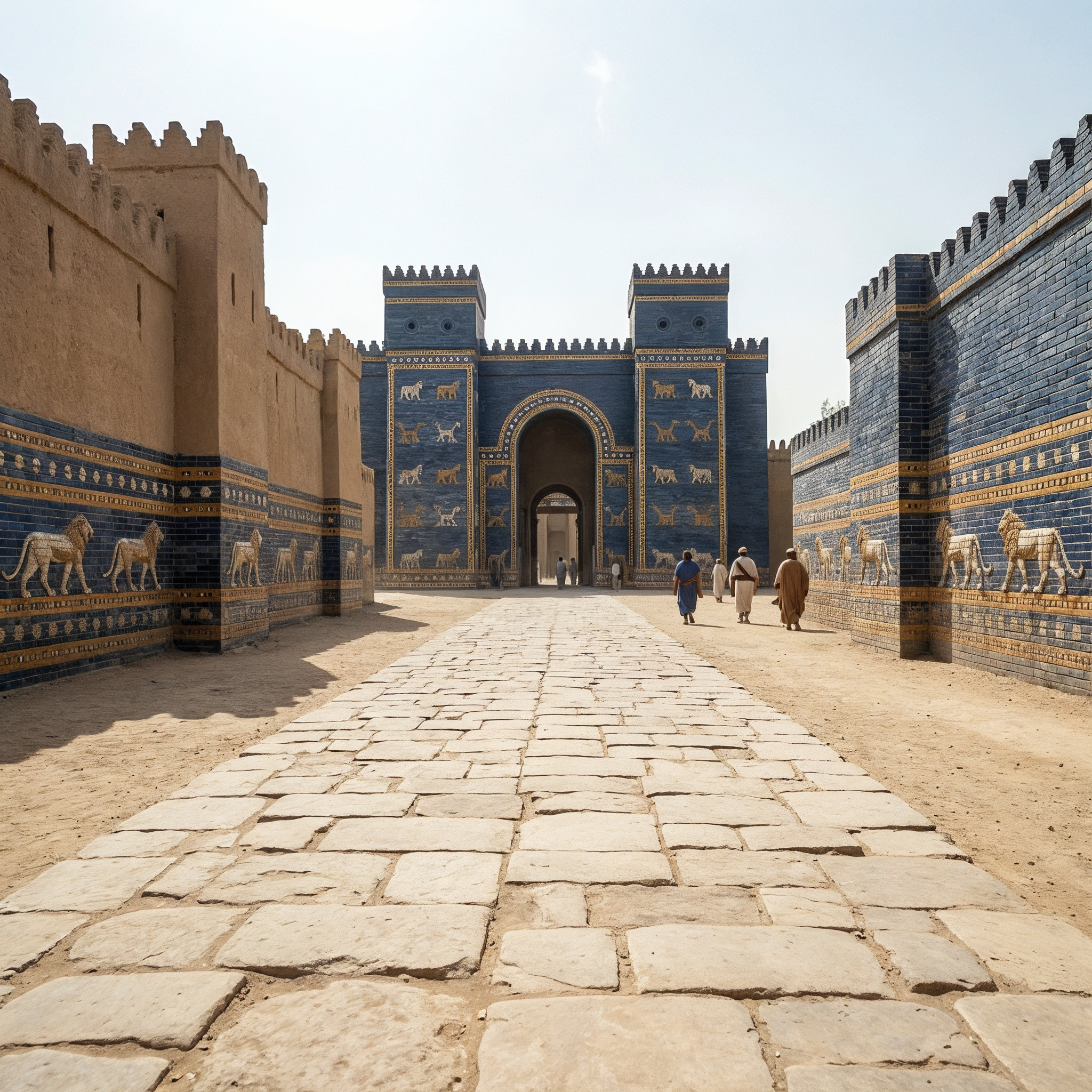
 But just as it was commanded to leave the stump of the tree with its roots, so too your kingdom will be restored to you from the time you recognise that heaven rules over earth.
OET OET-RV OET-LV GHT ULT UST BSB MSB BLB AICNT OEB WEBBE WMBB NET LSV FBV TCNT T4T LEB BBE Moff JPS Wymth ASV DRA YLT Drby RV SLT Wbstr KJB-1769 KJB-1611 Bshps Gnva Cvdl TNT Wycl SR-GNT UHB BrLXX BrTr Related Parallel Simple Interlinear Topics Reference Dictionary Search
ParallelVerse GEN EXO LEV NUM DEU JOB JOS JDG RUTH 1 SAM 2 SAM PSA AMOS HOS 1 KI 2 KI 1 CHR 2 CHR PROV ECC SNG JOEL MIC ISA ZEP HAB JER LAM YNA (JNA) NAH OBA DAN EZE EZRA EST NEH HAG ZEC MAL LAO GES LES ESG DNG 2 PS TOB JDT WIS SIR BAR LJE PAZ SUS BEL MAN 1 MAC 2 MAC 3 MAC 4 MAC YHN (JHN) MARK MAT LUKE ACTs YAC (JAM) GAL 1 TH 2 TH 1 COR 2 COR ROM COL PHM EPH PHP 1 TIM TIT 1 PET 2 PET 2 TIM HEB YUD (JUD) 1 YHN (1 JHN) 2 YHN (2 JHN) 3 YHN (3 JHN) REV
Dan Intro C1 C2 C3 C5 C6 C7 C8 C9 C10 C11 C12
Dan 4 V1 V2 V3 V4 V5 V6 V7 V8 V9 V10 V11 V12 V13 V14 V15 V16 V17 V18 V19 V20 V21 V22 V23 V24 V25 V27 V28 V29 V30 V31 V32 V33 V34 V35 V36 V37
Note: This view shows ‘verses’ which are not necessarily natural language units and hence sometimes only part of a sentence will be visible—click on any Bible version abbreviation down the left-hand side to see the verse in more of its context. Normally the OET discourages the reading of individual ‘verses’, but this view is only designed as a tool for Bible-translators and others doing comparisons of different translations—the older translations are further down the page (so you can read up from the bottom to trace the English translation history). The OET segments on this page are still early looks into the drafted texts of the Open English Translation of the Bible—please double-check these texts in advance before using in public.
Text critical issues=none Clarity of original=clear Importance to us=normal Speaker(s)=Narrator (All still tentative.)
OET (OET-RV)
But just as it was commanded to leave the stump of the tree with its roots, so too your kingdom will be restored to you from the time you recognise that heaven rules over earth.
OET-LV (DAN 4:23) [fn] and_that they_said to_leave the_stump_of its_roots of the_tree kingdom_of_your to/for_you(fs) will_be_enduring from that you_will_know that are_having_mastery the_heavens.
_C4.htm#C4V26">4:23 Note: KJB: Dān.4.26
UHB 23 וְדִ֣י אֲמַ֗רוּ לְמִשְׁבַּ֞ק עִקַּ֤ר שָׁרְשׁ֨וֹהִי֙ דִּ֣י אִֽילָנָ֔א מַלְכוּתָ֖ךְ לָ֣ךְ קַיָּמָ֑ה מִן־דִּ֣י תִנְדַּ֔ע דִּ֥י שַׁלִּטִ֖ן שְׁמַיָּֽא׃ ‡
(23 vədiy ʼₐmarū ləmishbaq ˊiqqar shārəshōhī diy ʼilānāʼ malkūtāk lāk qayyāmāh min-diy tindaˊ diy shalliţin shəmayyāʼ.)
Key: khaki:verbs.
Note: Automatic aligning of the OET-RV to the LV is done by some temporary software, hence the OET-RV alignments are incomplete (and may occasionally be wrong).
BrLXX (DNG 4:26) Καὶ ὅτι εἶπαν, ἐάσατε τὴν φυὴν τῶν ῥιζῶν τοῦ δένδρου· ἡ βασιλεία σου σοὶ μένει, ἀφʼ ἧς ἂν γνῷς τὴν ἐξουσίαν τὴν οὐράνιον.
(Kai hoti eipan, easate taʸn fuaʸn tōn ɽizōn tou dendrou; haʸ basileia sou soi menei, afʼ haʸs an gnōis taʸn exousian taʸn ouranion.)
BrTr (DNG 4:26) And whereas they said, Leave the stumps of the roots of the tree; thy kingdom abides sure to thee from the time that thou shalt know the power of the heavens.
ULT And that they said to leave the stump of the roots of the tree, your kingdom, will be enduring for you from that you know that the heavens, are ruler.
UST However, the angel said to leave the stump of the tree in the ground with its roots. That means that you will rule your kingdom again when you recognize that God rules over human kingdoms.
BSB & MSB As for the command to leave the stump of the tree with its roots, your kingdom will be restored to you as soon as you acknowledge that Heaven rules.
OEB No OEB DAN 4:26 book available
WEBBE & WMBB Whereas it was commanded to leave the stump of the roots of the tree, your kingdom shall be sure to you after you know that Heaven rules.
NET They said to leave the taproot of the tree, for your kingdom will be restored to you when you come to understand that heaven rules.
LSV And that which they said—to leave the stump of the roots of the tree; your kingdom abides for you, after that you know that the heavens are ruling.
FBV However, as it was decreed, the stump and its roots were to be left in the ground. Your kingdom will be restored to you when you acknowledge that Heaven rules.
T4T But the stump of the tree and its roots were left in the ground. That means that you will rule your kingdom again when you learn that it is God [MTY] who is really the ruler.
LEB ⌊And in that⌋[fn] they said to leave alone the stump of the tree’s root, so your kingdom will be restored for you ⌊when⌋[fn] you acknowledge that heaven is sovereign.
BBE And as they gave orders to let the broken end and the roots of the tree be, so your kingdom will be safe for you after it is clear to you that the heavens are ruling.
Moff one whom he chooses. The order to spare the stump of the tree’s roots means that your kingdom shall be secured for you, after you have learned that it is the Heavens who reign.
JPS (DAN 4:23) (4-20) And whereas the king saw a watcher and a holy one coming down from heaven, and saying: Hew down the tree, and destroy it; nevertheless leave the stump of the roots thereof in the earth, even in a band of iron and brass, in the tender grass of the field; and let it be wet with the dew of heaven, and let his portion be with the beasts of the field, till seven times pass over him —
ASV And whereas they commanded to leave the stump of the roots of the tree; thy kingdom shall be sure unto thee, after that thou shalt have known that the heavens do rule.
DRA Verse alignment unavailable (ambiguous).
YLT And that which they said — to leave the stump of the roots of the tree; thy kingdom for thee abideth, after that thou knowest that the heavens are ruling.
Drby And whereas it was commanded to leave the stump of the roots of the tree; thy kingdom shall remain unto thee, after that thou shalt know that the heavens do rule.
RV And whereas they commanded to leave the stump of the tree roots; thy kingdom shall be sure unto thee, after that thou shalt have known that the heavens do rule.
(And whereas they commanded to leave the stump of the tree roots; thy/your kingdom shall be sure unto thee/you, after that thou/you shalt/shall have known that the heavens do rule.)
SLT And that they said to leave the stump of the roots of the tree; thy kingdom being sure to thee, from when thou shalt know that the heavens rule.
Wbstr And whereas they commanded to leave the stump of the tree roots; thy kingdom shall be sure to thee, after that thou shalt have known that the heavens do rule.
KJB-1769 And whereas they commanded to leave the stump of the tree roots; thy kingdom shall be sure unto thee, after that thou shalt have known that the heavens do rule.
(And whereas they commanded to leave the stump of the tree roots; thy/your kingdom shall be sure unto thee/you, after that thou/you shalt/shall have known that the heavens do rule.)
KJB-1611 And whereas they commanded to leaue the stumpe of the tree rootes; thy kingdome shall be sure vnto thee, after that thou shalt haue knowen that the heauens doe rule.
(Modernised spelling is same as from KJB-1769 above)
Bshps Moreouer, where as it was sayd, that the stumpe of the roote of the tree should be left still: it betokeneth, that thy kingdome shall remayne whole vnto thee, after thou hast learned to knowe that the power commeth from heauen.
(Moreover/What’s_more, where as it was said, that the stump of the root of the tree should be left still: it signifies/indicates, that thy/your kingdom shall remain whole unto thee/you, after thou/you hast learned/learnt to know that the power cometh/comes from heaven.)
Gnva At the end of twelue moneths, he walked in the royall palace of Babel.
(At the end of twelve months, he walked in the royal palace of Babel.)
Cvdl Morouer, where as it was sayde, that the rote of the tre shulde be be left still in the grounde: it betokeneth, yt thy kyngdome shall remayne whole vnto ye, after thou hast lerned to knowe, that the power commeth from heauen.
(Moreover/What’s_more, where as it was said, that the root of the tree should be be left still in the ground: it signifies/indicates, it thy/your kingdom shall remain whole unto ye/you_all, after thou/you hast learned/learnt to know, that the power cometh/comes from heaven.)
Wycl Verse alignment unavailable (ambiguous).
Luth (DAN 4:23) Daß aber gesagt ist, man solle dennoch den Stock mit seinen Wurzeln des Baums bleiben lassen: dein Königreich soll dir bleiben, wenn du erkannt hast die Gewalt im Himmel.
(That but said is, man should nonetheless the Stock with his roots(n) the trees remain/stay let: your(s) kingdom should you/to_you(sg) remain/stay, if/when you(sg) recognised have the violence in_the heaven.)
ClVg Verse alignment unavailable (ambiguous).
The author of Daniel 4 wrote in the Aramaic language. These Notes are based on the BSB, which is based on the Aramaic text called the MT (Masoretic Text). However, the early Greek translation known as the Septuagint is different from the Aramaic text in many places in Daniel 4. Scholars are uncertain why the two are so different. It may be that the Greek translators worked from an Aramaic text that was different from that of the MT. The Notes will discuss the differences between the two texts for certain important passages.
The verse numbers of the BSB and most English versions are different from the verse numbers in the Aramaic text. The NJPS and NJB are two exceptions. They follow the verse numbers in the Aramaic text.Baldwin (p. 107) notes that the chapter divisions in the present Aramaic text were not necessarily those of the original text. The difference in numbering can cause confusion when citing verses in different translations. For example, Daniel 4:1 in the BSB is 3:31 in the NJPS and NJB. Daniel 4:4 is 4:1 in the NJB and NJPS, and so on. When these Notes cite verses in the NJPS and the NJB, they will give both the verse numbers in those versions and the corresponding BSB verse numbers.
Versions give different headings to Daniel 4. For example:
Nebuchadnezzar’s second dream (NRSV)
Nebuchadnezzar’s dream about a tree (NLT)
A letter from Nebuchadnezzar about his insanity (GW)
In some languages it may be more natural that the heading be a full sentence. For example:
Nebuchadnezzar dreamed a second dream
Nebuchadnezzar dreamed about a tree
Nebuchadnezzar wrote a letter about how he became insane
Special Problems:
1. Change of Speaker: In Daniel 4, the person who tells the story varies between the king and the narrator. For example:
A. In 4:1–18 the king told what happened to him in the first person.
B. In 4:19–27 the narrator told the story of how Daniel interpreted the king’s dream.
C. In 4:28–33 the narrator told what happened to Nebuchadnezzar.
D. In 4:34–37 the king again spoke directly in the first person.
The Notes will inform you when there is a change of speaker and suggest how to translate these passages.
2. Repetition: When Daniel interpreted the king’s dream (4:19–27), he repeated parts of what the king had previously told him (in 4:10–16). Later, when the narrator told what happened to the king (4:28–33), he repeated what Daniel had said would happen (in 4:25). This kind of repetition creates suspense in the story. Repetition also helps to emphasize the main theme of the account. For example, at the end of the account, the king repeated information from the beginning (4:3, 34). This information is the theme of the chapter: God is sovereign over human rulers.
3. Synonyms: The author liked to use synonyms, different words with the same or similar meaning. In some cases, he used synonyms to emphasize an idea. For example, in 4:37 the king used three synonyms in the same sentence to emphasize the idea of praise. In some languages this may not be natural. The Notes will suggest other ways you can translate synonyms.
4. Commands: In the dream, the angel made a number of commands. The text does not usually say to whom the angel was giving these commands. Sometimes the angel commanded non-living objects to do something. In all these cases, the angel was speaking a message from God. And when God commands that something happen, it will certainly happen. In some languages it may not be natural to use commands in this way. If that is true in your language, you may be able to translate these commands as authoritative declarations. The Notes will give examples of how you may do this.
5. Poetic Parallelism: The author of Daniel 4 liked to use poetic form to communicate ideas. In Aramaic poetry, authors often used pairs of clauses to say the same thing in two different ways. This type of poetry has many different functions. Sometimes the author used poetry to emphasize themes. Other times he used poetry to mark the climax of a section. This kind of poetry may not be natural in your language. The Notes will describe the function of the poetic speech in Daniel. They will also suggest some options on how you might translate this type of poetry in your own language.
6. Form: The author wrote Daniel 4 in the form of a royal proclamation. This proclamation form gives authority to the account. The style of the proclamation is similar to that of a letter, and the beginning of the chapter is similar to other Aramaic letters. The king first identifies himself. Second, he indicates to whom he is writing, that is, those he intends to read his letter. Third, he greets his readers. In your language, people may have a different way of identifying the author or addressee of a letter. The Notes will suggest some options on how to translate this letter style.
7. Key Terms: Two key terms in Daniel 4 are “earth” and “heaven.” Both words have more than one meaning. The Aramaic word that the BSB generally translates as “earth” can mean either “ground,” “land,” or “world.” The Aramaic word that the BSB generally translates as “heaven” can mean either “sky” or “where God lives.” In 4:26 the author used the word “Heaven” to refer to God himself. The author plays on these two words and their meanings to highlight the main theme of the chapter: “God in heaven rules over the affairs of men on earth.” The Notes will explain the meaning of these two key terms in each context.
In this paragraph Daniel interpreted for the king the events of his dream. He explained what the dream foretold.
As for the command to leave the stump of the tree with its roots,
The command that the stump and its roots remain/stay in the ground
But the angel ordered that no one should dig up the stump and/or roots of the tree.
As for the command to leave the stump of the tree with its roots: This verse part introduces the third part of Daniel’s interpretation. See the Notes at 4:23c. Here Daniel identified the part of the dream he was about to interpret. The BSB translates the Aramaic connecter that begins this verse as As for. The NJB translates the Aramaic connector this way:
And the order “Leave the stump and roots of the tree”… (NJB)
This command stands in contrast to the previous commands. Part of the tree was to remain standing. Some versions therefore use a connector that indicates contrast. For example:
But he gave orders not to disturb the stump and roots (CEV)
But the stump and roots of the tree were left in the ground. (NLT)
Connect these verse parts in a way that is natural in your language.
the command: The Aramaic expression that the BSB translates as the command is more literally a verb, “they said.” The pronoun “they” is indefinite. However, in verse 15, the king said it was the angel who gave the order. So you can translate:
it was commanded (RSV)
The angel ordered… (GNT)
The holy one commanded…
to leave the stump of the tree with its roots: See the Notes at 4:15a. This is the content of the command.
The text does not say who the holy one told to do this. The agent of the action is not in focus. If this is not natural in your language, you may be able to say:
that they (indefinite) leave the stump in the ground
that no one should dig up the stump in the ground
that the stump should stay in the ground
In some languages it may be natural to translate this command as direct speech. For example:
And the order, “Leave the stump and roots of the tree”… (NJB)
your kingdom will be restored to you
indicates/signifies that you(sing) will receive your kingdom back.
This means that you(sing) will again rule as king of/in Babylon,
Some English versions supply the word “means” or the phrase “This means” at the beginning of this verse. The Aramaic does note contain either of these but because 4:26b explains the meaning of 4:26a you may need to follow the example of these English versions and supply this implied information. For example:
This means… (GNT)
your kingdom will be restored to you: The Aramaic word that the BSB translates as will be restored is more literally “will remain/endure for/to you.” In some languages it may be possible to translate this as:
you will continue to rule
In some languages however a literal translation might indicate that Nebuchadnezzar would rule without ever stopping. And in this context the verb “will remain/endure” refers to the fact that Nebuchadnezzar would again rule the kingdom or empire of Babylonia. He would become king of Babylon once more. Other ways to translate this include:
your kingdom will be given back to you (NCV)
you will receive your kingdom back again (NLT)
This is a passive clause. If it is more natural in your language to use an active verb, you can say:
it is certain you will rule again
you will become king again (GNT)
God will let you become king again.
your kingdom: See the Notes on kingdom at 4:3c. In this context, kingdom refers to the king’s authority to rule over the Babylonian empire.
as soon as you acknowledge that Heaven rules.
This will happen when you(sing) realize/recognize that God in heaven rules everywhere/earth.
after/once you(sing) understand that God is the greatest/highest ruler.
as soon as you acknowledge that Heaven rules: The Aramaic phrase that the BSB translates as as soon as you acknowledge introduces the condition for the fulfillment of the previous clause. It refers to a time in the future when the king would acknowledge that God is the true King. See also 4:25f where the same phrase is used. Other ways to translate this are:
once you recognize that God is lord over all
when you acknowledge that God rules all the world (GNT)
when you recognize that God is the highest lord
as soon as you acknowledge that: The Aramaic expression that the BSB translates as as soon as you acknowledge that is more literally “when you will know that.” Other ways to translate this in English are:
after you learn that (CEV)
after you recognize (NASB)
from the time that you learn that (NRSV)
Heaven rules: The phrase Heaven rules means that God has authority over all human kingdoms. See the Notes at 4:17c. The same verb is used here. But here Daniel used the name of the place, Heaven, instead of the name of the person who lived there.Baldwin (p. 113) notes that this is the only place in the Old Testament where this figure occurs. It is later used in the books of Maccabees and in the New Testament. In many languages it will be more natural to say explicitly:
the God who rules from heaven is in control (CEV)
God in heaven has true/final authority
In some languages it may be necessary to say explicitly what or whom God rules. For example:
God rules all the world (GNT)
God rules everywhere/everyone
one in heaven rules your kingdom (NCV)
In some languages it may be natural to reverse the order of 4:26b and c. For example:
26aThe command to leave the stump with its roots in the ground means that 26conce you acknowledge that God is sovereign, 26byou will receive your kingdom back.
26aThe command to leave the stump and its roots in the ground indicates/signifies that 26cafter/when you recognize/admit that God rules over all, 26byou will again rule your country.
Note 1 topic: figures-of-speech / infostructure
וְדִ֣י אֲמַ֗רוּ לְמִשְׁבַּ֞ק עִקַּ֤ר שָׁרְשׁ֨וֹהִי֙ דִּ֣י אִֽילָנָ֔א מַלְכוּתָ֖ךְ לָ֣ךְ קַיָּמָ֑ה
and,that commanded to,leave stump_of of,its_roots that/who the,tree kingdom_of,your to/for=you(fs) restored
If it would be more natural in your language, you may want to put the information about the king’s kingdom enduring before the information about leaving the stump of the roots of the tree. Alternate translation: [And your kingdom will be an enduring kingdom for you; that is what they meant when they said to leave the stump of the roots of the tree]
Note 2 topic: figures-of-speech / metonymy
שַׁלִּטִ֖ן שְׁמַיָּֽא
rules the=heavens
Here, the heavens represents “God.” If it would be helpful in your language, you could use an equivalent expression or plain language. Alternate translation: [God is the ruler]
Open Bible Data site copyright © 2023–2026 Freely-Given.org.
Python source code for creating these static pages is available on GitHub under an open licence.
For Bible data copyrights, see the details for each displayed Bible version.
The Open English Translation (OET) main site is at OpenEnglishTranslation.Bible or OET.Bible.