Note: This view shows ‘verses’ which are not necessarily natural language units and hence sometimes only part of a sentence will be visible—click on any Bible version abbreviation down the left-hand side to see the verse in more of its context. Normally the OET discourages the reading of individual ‘verses’, but this view is only designed as a tool for Bible-translators and others doing comparisons of different translations—the older translations are further down the page (so you can read up from the bottom to trace the English translation history). The OET segments on this page are still early looks into the drafted texts of the Open English Translation of the Bible—please double-check these texts in advance before using in public.
ULT At that time my reason returned to me, and for the glory of my kingdom, my majesty and my splendor returned to me. And my counselors and my nobles sought me, and my kingdom was established to me, and exceeding greatness was added to me.
UST Then I was able to think reasonably again. I became the very powerful ruler of a glorious kingdom once more. My advisors and my nobles treated me respectfully again. Once more I ruled my kingdom firmly, and I became much more powerful than I had been before.
BSB & MSB At the same time my sanity was restored, my honor and splendor returned to me for the glory of my kingdom. My advisers and nobles sought me out, and I was restored to my throne, and surpassing greatness was added to me.
OEB No OEB DAN 4:36 book available
WEBBE & WMBB At the same time my understanding returned to me; and for the glory of my kingdom, my majesty and brightness returned to me. My counsellors and my lords sought me; and I was established in my kingdom, and excellent greatness was added to me.
MSG (36-37)“At the same time that I was given back my mind, I was also given back my majesty and splendor, making my kingdom shine. All the leaders and important people came looking for me. I was reestablished as king in my kingdom and became greater than ever. And that’s why I’m singing—I, Nebuchadnezzar—singing and praising the King of Heaven:
“Everything he does is right,
and he does it the right way.
He knows how to turn a proud person
into a humble man or woman.”
NET At that time my sanity returned to me. I was restored to the honor of my kingdom, and my splendor returned to me. My ministers and my nobles were seeking me out, and I was reinstated over my kingdom. I became even greater than before.
LSV At that time my understanding returns to me, and for the glory of my kingdom, my honor and my brightness return to me, and to me my counselors and my great men seek, and over my kingdom I have been made right, and abundant greatness has been added to me.
FBV When my sanity returned, then my kingdom, majesty, and splendor also returned to me. My advisors and nobles came looking for me, and I was restored as ruler over my kingdom, even greater than before.
T4T ¶ When I was able to think correctly again, I was honored again, and I was able to rule my glorious/great kingdom again. My advisors came to me again to talk about what should be done, and I became greater and more powerful than I was before.
LEB ¶ “⌊At that time⌋[fn] my reason returned to me, and also the glory of my kingdom and my majesty and splendor returned to me, and my advisers and my lords[fn] searched me out, and I was established over my kingdom and abundant greatness was added to me.
BBE At the same time my reason came back to me; and for the glory of my kingdom, my honour and my great name came back to me; and my wise men and my lords were turned to me again; and I was made safe in my kingdom and had more power than before.
Moff he is doing. My reason returned to me at the same moment, and, to the glory of my kingdom, I regained my majesty and splendour; my ministers of state and my lords came to consult me, I was firmly seated on my throne and invested with supreme. power.
JPS (DAN 4:33) (4-30) The same hour was the thing fulfilled upon Nebuchadnezzar; and he was driven from men, and did eat grass as oxen, and his body was wet with the dew of heaven, till his hair was grown like eagles' feathers, and his nails like birds' claws.
ASV At the same time mine understanding returned unto me; and for the glory of my kingdom, my majesty and brightness returned unto me; and my counsellors and my lords sought unto me; and I was established in my kingdom, and excellent greatness was added unto me.
DRA Verse alignment unavailable (ambiguous).
YLT 'At that time my understanding doth return unto me, and for the glory of my kingdom, my honour and my brightness doth return unto me, and to me my counsellors and my great men do seek, and over my kingdom I have been made right, and abundant greatness hath been added to me.
Drby At the same time mine understanding returned unto me; and for the glory of my kingdom, my majesty and brightness returned unto me; and my counsellors and my nobles sought me; and I was established in my kingdom, and excellent greatness was added unto me.
RV At the same time mine understanding returned unto me; and for the glory of my kingdom, my majesty and brightness returned unto me; and my counsellors and my lords sought unto me; and I was established in my kingdom, and excellent greatness was added unto me.
SLT In that time my knowledge will turn back to me: and for the honor of my kingdom, my splendor and my brightness will return to me; and my counselors and my nobles will seek to me: and I was established over my kingdom, and excellent greatness was added to me.
Wbstr At the same time my reason returned to me; and for the glory of my kingdom, my honor and brightness returned to me; and my counselors and my lords sought to me; and I was established in my kingdom, and excellent majesty was added to me.
KJB-1769 At the same time my reason returned unto me; and for the glory of my kingdom, mine honour and brightness returned unto me; and my counsellors and my lords sought unto me; and I was established in my kingdom, and excellent majesty was added unto me.
KJB-1611 At the same time my reason returned vnto me, and for the glory of my kingdome, mine honour, and brightnes returned vnto me, and my counsellers, and my LORDs sought vnto me, and I was established in my kingdome, and excellent Maiestie was added vnto me.
(At the same time my reason returned unto me, and for the glory of my kingdom, mine honour, and brightness returned unto me, and my counsellors, and my LORD's sought unto me, and I was established in my kingdom, and excellent Majesty was added unto me.)
Bshps At the same time was myne vnderstanding geuen me againe, and I was restored to the honour of my kingdome, my glorie and my beautie was restored vnto me, & my counsellers and princes sought vnto me, and I was established in my kingdome, & my glorie was augmented towarde me.
(At the same time was mine understanding given me again, and I was restored to the honour of my kingdom, my glory and my beauty was restored unto me, and my counsellors and princes sought unto me, and I was established in my kingdom, and my glory was augmented toward me.)
Gnva No Gnva DAN 4:36 verse available
Cvdl At the same tyme was myne vnderstondynge geuen me agayne, and I was restored to the honoure of my kingdome, to my dignite, and to myne owne shappe agayne. My great estates and prynces sought vnto me, and I was set in my kyngdome agayne, so that I had yet greater worshipe.
(At the same time was mine understanding given me again, and I was restored to the honour of my kingdom, to my dignity, and to mine own shape again. My great estates and princes sought unto me, and I was set in my kingdom again, so that I had yet greater worship.)
Wycl Verse alignment unavailable (ambiguous).
Luth (DAN 4:33) Zur selbigen Zeit kam ich wieder zur Vernunft, auch zu meinen königlichen Ehren, zu meiner Herrlichkeit und zu meiner Gestalt. Und meine Räte und Gewaltigen suchten mich; und ward wieder in mein Königreich gesetzt; und ich überkam noch größere Herrlichkeit.
(To/For same time/period came I again to/for reason, also to/for my royal honour(n), to/for mine glory/splendour and to/for mine shape(n). And my councils and mighty_(ones) were_looking_for me; and what/which again in my kingdom set(v); and I crossed_over/obtained still bigger glory/splendour.)
ClVg Verse alignment unavailable (ambiguous).
SOTN SIL Open Translator’s Notes:
Section 4:1–37: God judged King Nebuchadnezzar
The author of Daniel 4 wrote in the Aramaic language. These Notes are based on the BSB, which is based on the Aramaic text called the MT (Masoretic Text). However, the early Greek translation known as the Septuagint is different from the Aramaic text in many places in Daniel 4. Scholars are uncertain why the two are so different. It may be that the Greek translators worked from an Aramaic text that was different from that of the MT. The Notes will discuss the differences between the two texts for certain important passages.
The verse numbers of the BSB and most English versions are different from the verse numbers in the Aramaic text. The NJPS and NJB are two exceptions. They follow the verse numbers in the Aramaic text.Baldwin (p. 107) notes that the chapter divisions in the present Aramaic text were not necessarily those of the original text. The difference in numbering can cause confusion when citing verses in different translations. For example, Daniel 4:1 in the BSB is 3:31 in the NJPS and NJB. Daniel 4:4 is 4:1 in the NJB and NJPS, and so on. When these Notes cite verses in the NJPS and the NJB, they will give both the verse numbers in those versions and the corresponding BSB verse numbers.
Versions give different headings to Daniel 4. For example:
Nebuchadnezzar’s second dream (NRSV)
Nebuchadnezzar’s dream about a tree (NLT)
A letter from Nebuchadnezzar about his insanity (GW)
In some languages it may be more natural that the heading be a full sentence. For example:
Nebuchadnezzar dreamed a second dream
Nebuchadnezzar dreamed about a tree
Nebuchadnezzar wrote a letter about how he became insane
Special Problems:
1. Change of Speaker: In Daniel 4, the person who tells the story varies between the king and the narrator. For example:
A. In 4:1–18 the king told what happened to him in the first person.
B. In 4:19–27 the narrator told the story of how Daniel interpreted the king’s dream.
C. In 4:28–33 the narrator told what happened to Nebuchadnezzar.
D. In 4:34–37 the king again spoke directly in the first person.
The Notes will inform you when there is a change of speaker and suggest how to translate these passages.
2. Repetition: When Daniel interpreted the king’s dream (4:19–27), he repeated parts of what the king had previously told him (in 4:10–16). Later, when the narrator told what happened to the king (4:28–33), he repeated what Daniel had said would happen (in 4:25). This kind of repetition creates suspense in the story. Repetition also helps to emphasize the main theme of the account. For example, at the end of the account, the king repeated information from the beginning (4:3, 34). This information is the theme of the chapter: God is sovereign over human rulers.
3. Synonyms: The author liked to use synonyms, different words with the same or similar meaning. In some cases, he used synonyms to emphasize an idea. For example, in 4:37 the king used three synonyms in the same sentence to emphasize the idea of praise. In some languages this may not be natural. The Notes will suggest other ways you can translate synonyms.
4. Commands: In the dream, the angel made a number of commands. The text does not usually say to whom the angel was giving these commands. Sometimes the angel commanded non-living objects to do something. In all these cases, the angel was speaking a message from God. And when God commands that something happen, it will certainly happen. In some languages it may not be natural to use commands in this way. If that is true in your language, you may be able to translate these commands as authoritative declarations. The Notes will give examples of how you may do this.
5. Poetic Parallelism: The author of Daniel 4 liked to use poetic form to communicate ideas. In Aramaic poetry, authors often used pairs of clauses to say the same thing in two different ways. This type of poetry has many different functions. Sometimes the author used poetry to emphasize themes. Other times he used poetry to mark the climax of a section. This kind of poetry may not be natural in your language. The Notes will describe the function of the poetic speech in Daniel. They will also suggest some options on how you might translate this type of poetry in your own language.
6. Form: The author wrote Daniel 4 in the form of a royal proclamation. This proclamation form gives authority to the account. The style of the proclamation is similar to that of a letter, and the beginning of the chapter is similar to other Aramaic letters. The king first identifies himself. Second, he indicates to whom he is writing, that is, those he intends to read his letter. Third, he greets his readers. In your language, people may have a different way of identifying the author or addressee of a letter. The Notes will suggest some options on how to translate this letter style.
7. Key Terms: Two key terms in Daniel 4 are “earth” and “heaven.” Both words have more than one meaning. The Aramaic word that the BSB generally translates as “earth” can mean either “ground,” “land,” or “world.” The Aramaic word that the BSB generally translates as “heaven” can mean either “sky” or “where God lives.” In 4:26 the author used the word “Heaven” to refer to God himself. The author plays on these two words and their meanings to highlight the main theme of the chapter: “God in heaven rules over the affairs of men on earth.” The Notes will explain the meaning of these two key terms in each context.
Paragraph 4:36–37
After the king repented, he was able to think and act like a human again.
4:36a–b
The Aramaic text on 4:36 can be interpreted in two main ways:
It indicates that when the king’s sanity returned, he received back his position as king. For example:
When my sanity returned, my honor, my majesty, and the glory of my kingdom were given back to me. (GNT) (BSB, GNT, NIV, NLT)
It indicates that when the king honored God, two things happened: his sanity returned, and he became king again. For example:
At that time my sanity returned to me. I was restored to the honor of my kingdom, and my splendor returned to me. (ESV) (NET, NRSV/RSV, NJB, ESV, REB, GW, CEV, NCV)
The two interpretations are not very different. The difference is more one of emphasis. If you must choose between them, it is recommended that you follow interpretation (1). 4:34b has already told how the king’s sanity returned. This happened when he first looked up to God in heaven (4:34a). This verse refers back to that event and indicates that because of it Nebuchadnezzar was able to receive his royal throne back again.
4:36a
At the same time my sanity was restored,
¶ When/As God restored/healed my mind,
¶ So I began to think normally/clearly again. At the same time
At the same time my sanity was restored: The expression that the BSB translates as At the same time my sanity was restored refers back to 4:34b. This was the time when the king looked up to heaven (4:34a) and acknowledged that God had authority over the kingdoms of men (4:34–35). Other ways to translate this idea include:
When my sanity returned to me (NLT)
I began to think clearly again, and right/soon after that…
At the same time: The Aramaic phrase that the BSB translates as At the same time is literally “at the/that time.” The BSB has supplied the word same. In this context the phrase refers to the same general time period. The events were closely linked and followed soon after one another.
my sanity was restored: This refers to the time when the king began to think like a human being again. See the Notes at 4:34b. Translate it here as you did there. For example:
my mind came back to me (GW)
my reason returned to me (ESV)
I could think normally again (NCV)
4:36b
my honor and splendor returned to me
people again began to honor me as king. I amazed/impressed them all,
he also caused people to give me honor/praise once again. People were in awe of the great things I did.
my honor and splendor returned to me: This is a passive clause. It indicates that Nebuchadnezzar received back the honor and splendor that he had previously had. God caused people to honor him once more. It may be more natural in some languages to use an active verb. For example:
I received once again great honor and power
God caused people to honor and admire me again.
God gave back my great honor and power. (NCV)
my honor: See the Notes at 4:30b. The Aramaic word that the BSB translates as honor here refers to how important and great the king was in the view of other people. In some languages it may be more natural to translate this idea as an action:
People honored me as king.
People respected me highly/greatly.
splendor: The Aramaic word that the BSB translates as splendor means “radiance, brightness, brilliance.” Here it is used figuratively to refer to the king’s great fame. There are two ways to translate this figure of speech:
4:36c
for the glory of my kingdom.
and, as a result, they honored/respected the kingdom of Babylon.
In this way the kingdom of Babylon once again became great.
for the glory of my kingdom: This indicates result. Because of Nebuchadnezzar’s renewed honor, the kingdom of Babylon once again became great. You can say:
so that people once again highly respected the kingdom I ruled.
and as a result people again began to call the kingdom of Babylon great.
glory: See the Notes at 4:30b. The Aramaic word that the BSB translates as glory means “dignity, honor.”HALOT. The word yaqar also occurs in Daniel 2:6, 37; 4:36, 5:18, 20; 7:14. In some languages, it may be more natural to translate this idea as a verb. For example:
people highly respected the kingdom of Babylon
everyone called the kingdom of Babylon great
my kingdom: See the Notes at 4:3c. The Aramaic word that the BSB translates kingdom can have different meanings. In this context, it refers to the empire of Babylon that King Nebuchadnezzar ruled.
General Comment on 4:36b–c
In some languages it may be natural to reverse the order of 4:36b and 4:36c, translating the result before the causes. For example:
36cOnce again people began to call the kingdom of Babylon great, 36bbecause God caused people to honor me again and to admire the great things I did.
4:36d
My advisers and nobles sought me out,
My advisers/counselors and officials came to meet me,
My ministers and leading men came to me to ask my help/advice.
My advisers and nobles sought me out: The Aramaic verb that the BSB translates as sought means “to call upon, to request something.”HALOT has: “to call upon, to beseech.” Goldingay (p. 81) says that the sense is close to “acclaim.” He translates: “sought audience.” These important men in the government came to talk to Nebuchadnezzar once again. They wanted to ask for his help and advice. Other ways to translate this include:
My advisers and nobles came to ask my advice
My advisers and nobles wanted to meet with me again. (GW)
My officials and my noblemen welcomed me (GNT)
My advisers: See the Notes at Daniel 3:24b, 3:27a. Here the word advisers has the general sense of high-ranking royal officials. These were men who had previously served Nebuchadnezzar. Here is another way to translate this:
officials (GNT)
nobles: The Aramaic word that the BSB translates as nobles refers to influential people or dignitaries in the Babylonian court.HALOT, 1978. Here is another way to translate this:
officers (NLT)
4:36e
and I was restored to my throne,
and I was restored to my throne: The Aramaic text of this verse part is more literally “and concerning/over my kingdom, it was established.” English versions agree that this indicates that Nebuchadnezzar again began to reign over Babylonia. The word “kingdom” and the pronoun “it” refer to royal authority, the power and right to rule as king. There are two ways to translate this clause:
Using a passive verb, as the BSB has done. For example:
and I was re-established in my kingdom (REB)
I was given back my kingdom (GW)
Using an active verb. God is the one who restored Nebuchadnezzar to his throne. That is, God caused him to rule as king again. For example:
God caused me to rule again in Babylon.
God gave me the authority to rule again over the kingdom of Babylon
I became king again (NCV)
4:36f
and surpassing greatness was added to me.
and surpassing greatness was added to me: The Aramaic expression that the BSB translates as surpassing greatness was added to me is literally “extraordinary greatness was added to me.” The word meaning greatness includes both the idea of power and the idea of honor/fame. The clause indicates that Nebuchadnezzar became even more powerful and famous than he had been previously. Other ways to translate this include:
and I had greater power than ever before (CEV)
and was even greater and more powerful than before (NCV)
with even greater honor than before (NLT)
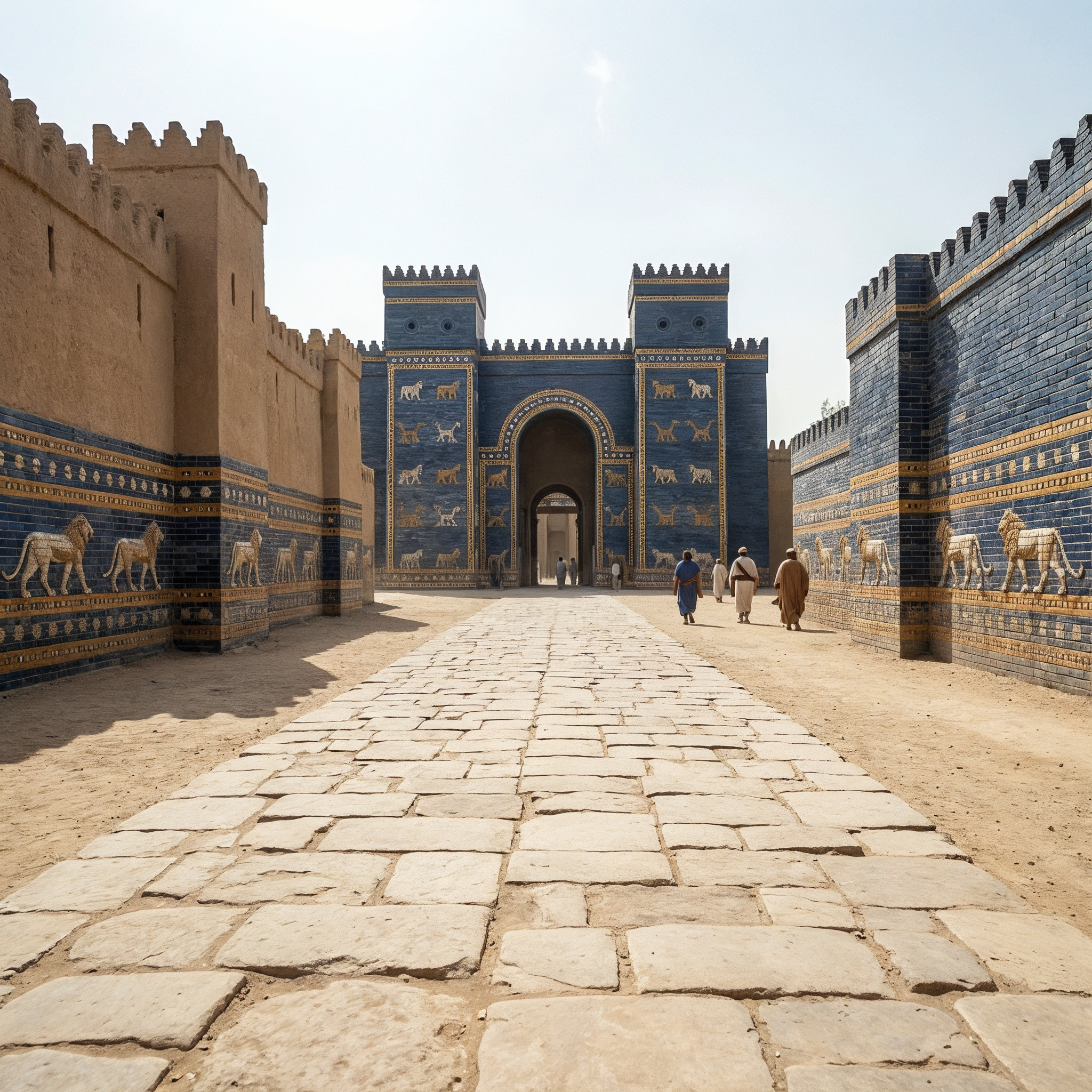 “At that time my sanity returned to me, and I was reestablished in my kingdom. My majesty and my splendour was restored to me as I became again the respected leader of my kingdom. My counsellors and my nobles wanted to be in my company, and I became even more powerful than I was before.