 •
Divided: Your kingdom has been divided and given to the Medes and the Persians.”
•
Divided: Your kingdom has been divided and given to the Medes and the Persians.”
OET OET-RV OET-LV GHT ULT UST BSB MSB BLB AICNT OEB WEBBE WMBB NET LSV FBV TCNT T4T LEB BBE Moff JPS Wymth ASV DRA YLT Drby RV SLT Wbstr KJB-1769 KJB-1611 Bshps Gnva Cvdl TNT Wycl SR-GNT UHB BrLXX BrTr Related Parallel Simple Interlinear Topics Reference Dictionary Search
ParallelVerse GEN EXO LEV NUM DEU JOB JOS JDG RUTH 1 SAM 2 SAM PSA AMOS HOS 1 KI 2 KI 1 CHR 2 CHR PROV ECC SNG JOEL MIC ISA ZEP HAB JER LAM YNA (JNA) NAH OBA DAN EZE EZRA EST NEH HAG ZEC MAL LAO GES LES ESG DNG 2 PS TOB JDT ESA WIS SIR BAR LJE PAZ SUS BEL MAN 1 MAC 2 MAC 3 MAC 4 MAC YHN (JHN) MARK MAT LUKE ACTs YAC (JAM) GAL 1 TH 2 TH 1 COR 2 COR ROM COL PHM EPH PHP 1 TIM TIT 1 PET 2 PET 2 TIM HEB YUD (JUD) 1 YHN (1 JHN) 2 YHN (2 JHN) 3 YHN (3 JHN) REV
Dan Intro C1 C2 C3 C4 C6 C7 C8 C9 C10 C11 C12
Dan 5 V1 V2 V3 V4 V5 V6 V7 V8 V9 V10 V11 V12 V13 V14 V15 V16 V17 V18 V19 V20 V21 V22 V23 V24 V25 V26 V27 V29 V30 V31
Note: This view shows ‘verses’ which are not necessarily natural language units and hence sometimes only part of a sentence will be visible—click on any Bible version abbreviation down the left-hand side to see the verse in more of its context. Normally the OET discourages the reading of individual ‘verses’, but this view is only designed as a tool for Bible-translators and others doing comparisons of different translations—the older translations are further down the page (so you can read up from the bottom to trace the English translation history). The OET segments on this page are still early looks into the drafted texts of the Open English Translation of the Bible—please double-check these texts in advance before using in public.
Text critical issues=none Clarity of original=clear Importance to us=normal Speaker(s)=Narrator (All still tentative.)
OET (OET-RV)
•
Divided: Your kingdom has been divided and given to the Medes and the Persians.”
OET-LV Peres it_has_been_broken_in_two kingdom_of_your and_it_has_been_given to_Māday and_Pāraşns.
UHB פְּרֵ֑ס פְּרִיסַת֙ מַלְכוּתָ֔ךְ וִיהִיבַ֖ת לְמָדַ֥י וּפָרָֽס׃ ‡
(pərēş pərīşat malkūtāk viyhīⱱat ləmāday ūfārāş.)
Key: khaki:verbs.
Note: Automatic aligning of the OET-RV to the LV is done by some temporary software, hence the OET-RV alignments are incomplete (and may occasionally be wrong).
BrLXX No BrLXX DAN book available
BrTr No BrTr DAN book available
ULT ‘Peres’: your kingdom has been divided and given to the Mede and the Persian.”
UST ‘Peres’ means ‘separated.’ God is going to separate your kingdom from you. The Medes and the Persians will conquer it, and they will rule it instead of you.”
BSB & MSB • PERES[fn] means that your kingdom has been divided and given over to the Medes and Persians.”
5:28 Peres (the singular of Parsin) sounds like the Aramaic for divided and for Persia.
OEB No OEB DAN book available
WEBBE & WMBB PERES: your kingdom is divided, and given to the Medes and Persians.”
NET As for peres – your kingdom is divided and given over to the Medes and Persians.”
LSV Divided—Your kingdom is divided, and it has been given to the Medes and Persians.”
FBV Divided—your kingdom has been divided and given to the Medes and the Persians.”
T4T • Parsin means ‘divided’. That means that God has divided your kingdom. Some of it will be ruled by people from Media and some will be ruled by people from Persia.”
LEB “ ‘Peres’—your kingdom has been divided and given to the Medes and Persians.’ ”
BBE Peres; your kingdom has been cut up and given to the Medes and Persians.
Moff Peres (divided), your kingdom is divided up and assigned to the Medes and the ‘Persians.’ ”
JPS PERES, thy kingdom is divided, and given to the Medes and Persians.'
ASV PERES; thy kingdom is divided, and given to the Medes and Persians.
DRA PHARES: thy kingdom is divided, and is given to the Medes and Persians.
YLT Divided — Divided is thy kingdom, and it hath been given to the Medes and Persians.'
Drby PERES, Thy kingdom is divided, and given to the Medes and Persians.
RV PERES; thy kingdom is divided, and given to the Medes and Persians.
(PERES; thy/your kingdom is divided, and given to the Medes and Persians.)
SLT Pharsin; Thy kingdom was divided, and it shall be given to the Medes and to Persia.
Wbstr PERES; Thy kingdom is divided, and given to the Medes and Persians.
KJB-1769 PERES; Thy kingdom is divided, and given to the Medes and Persians.
(PERES; Thy/Your kingdom is divided, and given to the Medes and Persians.)
KJB-1611 PERES, thy kingdome is diuided, and giuen to the Medes and Persians.
(Modernised spelling is same as from KJB-1769 above, apart from capitalisation and punctuation)
Bshps PHERES, thy kingdome is deuided, and geuen to the Medes, and Perses.
(PHERES, thy/your kingdom is divided, and given to the Medes, and Perses.)
Gnva PERES, thy kingdome is deuided, and giuen to the Medes and Persians.
(Modernised spelling is same as from KJB-1769 above, apart from capitalisation and punctuation)
Cvdl Phares, Thy kyngdome is delt in partes, and geuen to the Medes and Perses.
(Phares, Thy/Your kingdom is dealt in parts, and given to the Medes and Perses.)
Wycl Phares, thi rewme is departid, and is youun to Medeis and Perseis.
(Phares, thy/your realm is departed, and is given to Medes and Perseis.)
Luth Peres, das ist, dein Königreich ist zerteilet und den Medern und Persern gegeben.
(Peres, the is, your(s) kingdom is divided and the Medesn and Persiansn given.)
ClVg Phares: divisum est regnum tuum, et datum est Medis, et Persis.
(Phares: divided it_is kingdom your(sg), and given/present(n) it_is Medis, and Persis.)
The author continued to write in the Aramaic language. He wrote about how King Belshazzar gave a big banquet and made use of the sacred treasures from the Jerusalem temple. Belshazzar saw a hand writing a mysterious message on the wall. Only Daniel was able to explain the message, that God was about to punish Belshazzar. That same night an army of Medes and Persians conquered the city and killed Belshazzar.
English versions give different headings to Daniel 5. These include:
The Handwriting on the Wall (GW)
The Writing on the Wall (NIV)
King Belshazzar’s Banquet (CEV)
In some languages it may be more natural to write the heading in the form of a clause. For example, you could say:
King Belshazzar saw a hand write on the wall.
King Belshazzar had/gave a banquet/feast.
Some versions give headings to the subsections of Daniel 5. For example, the NLT has two headings:
The Writing on the Wall (5:1)
Daniel explains the writing (5:13)
The NRSV has three headings:
Belshazzar’s Feast (5:1)
The Writing on the Wall (5:5)
The Writing on the Wall Interpreted (5:13)
You should decide the number of headings that is best in your translation. The purpose of headings is to help readers to follow the events of the story. Headings also help the reader understand the relationships between the different parts of the story. You should try not to have more headings than necessary.
Historical Background:
Nabonidus was the king of Babylon from 556 to 539 B.C. Historical records indicate that he married Nitocris, the daughter of Nebuchadnezzar, and that Belshazzar was their oldest son.See the ancient Greek historian Herodotus and the Nabonidus Chronicles. While Nabonidus was absent from Babylon during the last ten years of his reign, Belshazzar acted as king in his place.
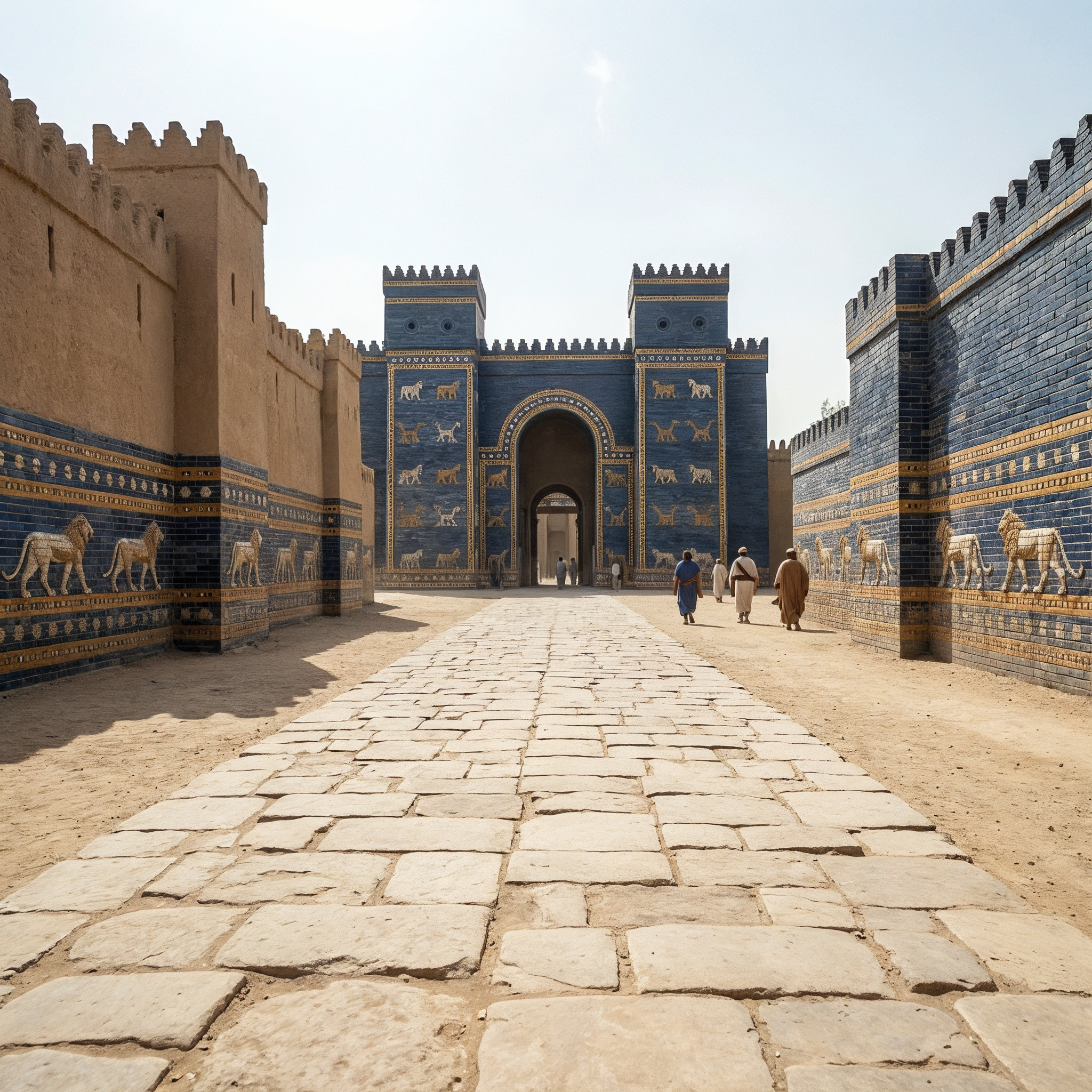
Daniel 5 describes the last night of the Babylonian empire. From other historic sources we know that Cyrus, the king of Persia, attacked the Babylonian army during the 7th month of the year 539 B.C. On the 15th day of that month, they attacked the town of Sippar and King Nabonidus fled. The next day Cyrus’ army entered the city of Babylon without any battle and killed its ruler, Belshazzar. Daniel 5 describes what Belshazzar was doing on the last day of the Babylonian empire.
In these three verses Daniel interpreted the words on the wall. He explained what they meant.
PERES means that your kingdom has been divided
‘Peres’ means ‘division.’ There are divisions in your kingdom.
‘Parsin,’ or ‘divided,’ means/indicates that God will divide your kingdom.
PERES: The Aramaic word that the BSB transliterates as PERES is the singular of the Aramaic word “Parsin” in 5:25b.Daniel may also have intended to make a play on the word pares which means Persia. The kingdom of Persia attacked and conquered Babylon that very night. Daniel interpreted it as the verb that sounded like it, the verb that means “divided.”The verb is a perfect passive form. It can also refer to half a shekel or half a mina.
Translate this word in the same way as in 5:25b. For example:
You may transliterate the Aramaic word PERES or “parsin.” For example:
parsin: your kingdom has been divided (NJB) In the online version of the NJB, “parsin” and “divided” are not in italics. However, they may be in italics in printed versions. The words “divisions” and “Parsin/parsin” are in italics in the GNT, NLT, and CEV, cited just below. So in those cases the codes are appropriate.
You may translate the meaning of the word PERES. For example:
Divided—your kingdom will be divided (GW)
divisions, your kingdom is divided up (GNT)
You may both transliterate and supply the meaning. For example:
Parsin means ‘divided’ (NLT)
parsin, which means “divided” (CEV)
your kingdom has been divided: The Aramaic word that the BSB translates as divided means “break in two, divide, separate.” This was to happen that very night. God had decided this and it was certain to happen. Daniel referred to this future event as if it had already happened.This is the haphal perfect of šelem. HALOT (1996) suggests “to make an end of, finish, or to abandon.” This was a special way that prophets talked when they proclaimed a message from God. Use the verb tense that is natural in your language. For example:
your kingdom will be divided (GW)
Your kingdom is being divided (NCV)
I declare/proclaim what God has decided: the division of your kingdom!
The word divided does not mean that the Medes and the Persians would share the country with the Babylonians. It means that God would end the power of the Babylonian empire. Translate the meaning in a way that is natural in your language. For example:
your kingdom is broken
This is a passive clause. In some languages it may be more natural to translate this as an active clause. God is the implied subject. For example:
God will divide your kingdom
God has decided to break your kingdom
your kingdom: See also the Notes at 5:26b. In this context the Aramaic word that the BSB translates as kingdom refers to the territory of Babylonia.
and given over to the Medes and Persians.”
God will give your kingdom to the Medes and Persians.
The Medes and the Persians will conquer it.”
and given over to the Medes and Persians: The Aramaic phrase that the BSB translates as given over to the Medes and Persians indicates that God would allow the Medes and Persians to conquer the kingdom of Babylon. This was an event still to happen, in the very near future. So in some languages it may be natural to translate this using a future tense verb. For example:
will be…given to the Medes and Persians (GW)
This is a passive clause. In some languages an active clause may be more natural. If that is true in your language, you may supply the subject “God” and say:
God will give it to the Medes and Persians.
God will allow the Medes and Persians to conquer it.
Medes: The Medes were an Indo-European tribe that lived in the area that is now part of the modern country of Iran.
Persians: The Persians were a tribe that lived in the land that is now called Iran. They had previously been allies of the Babylonians. The Aramaic word that the BSB translates as Persians sounds like the word “PERES.” Some versions show this play on words by using italics for both words. Another option is to explain the play on words in a footnote.
Note 1 topic: figures-of-speech / explicit
פְּרִיסַת֙ מַלְכוּתָ֔ךְ וִיהִיבַ֖ת לְמָדַ֥י וּפָרָֽס
divided kingdom_of,your and,it_has_been_given to,Medes and,Persians
The implication is that God is the one who has divided the kingdom and that the Medes and the Persians will take control of it, which happened soon afterward. You could include this information if that would be helpful to your readers. Alternate translation: [God has divided your kingdom and has given it to the Medes and the Persians, who will soon rule over it]
Note 2 topic: figures-of-speech / activepassive
פְּרִיסַת֙
divided
The expression has been divided is a passive verbal form. If it would be unnatural to use that form, you could express the idea in active form or in another way that is natural in your language. Alternate translation: [has broken apart] or [God has divided]
Note 3 topic: figures-of-speech / activepassive
וִיהִיבַ֖ת
and,it_has_been_given
The expression given is a passive verbal form. If it would be unnatural to use that form, you could express the idea in active form or in another way that is natural in your language. Alternate translation: [and God has given it]
Note 4 topic: grammar-collectivenouns
לְמָדַ֥י וּפָרָֽס
to,Medes and,Persians
In this verse, the word Mede is singular in form, but it refers to all of the Medes as a group, and the word Persian refers to all of the Persians as a group. If it would be helpful in your language, you could use the plural form of “Mede” and “Persian.” Alternate translation: [to the Medes and the Persians]
Open Bible Data site copyright © 2023–2026 Freely-Given.org.
Python source code for creating these static pages is available on GitHub under an open licence.
For Bible data copyrights, see the details for each displayed Bible version.
The Open English Translation (OET) main site is at OpenEnglishTranslation.Bible or OET.Bible.