Note: This view shows ‘verses’ which are not necessarily natural language units and hence sometimes only part of a sentence will be visible—click on any Bible version abbreviation down the left-hand side to see the verse in more of its context. Normally the OET discourages the reading of individual ‘verses’, but this view is only designed as a tool for Bible-translators and others doing comparisons of different translations—the older translations are further down the page (so you can read up from the bottom to trace the English translation history). The OET segments on this page are still early looks into the drafted texts of the Open English Translation of the Bible—please double-check these texts in advance before using in public.
Key: khaki:verbs.
Note: Automatic aligning of the OET-RV to the LV is done by some temporary software, hence the OET-RV alignments are incomplete (and may occasionally be wrong).
BrLXXVerse alignment unavailable (unsupported).
BrTrVerse alignment unavailable (unsupported).
ULTBelshazzar said in the taste of the wine to bring the vessels of gold and silver that Nebuchadnezzar his father had taken out from the temple that, was in Jerusalem so that the king and his nobles, his wives and his concubines might drink from them.
USTHe became drunk, and he commanded his servants to bring the gold and silver cups that his grandfather, Nebuchadnezzar, had taken from the temple in Jerusalem. He wanted to drink from them with his officials, his wives, and his concubines.
5:2Or predecessor or grandfather; also in verses 11, 13, and 18
OEBNo OEB DAN 5:2 book available
WEBBE & WMBBBelshazzar, while he tasted the wine, commanded that the golden and silver vessels which Nebuchadnezzar his father had taken out of the temple which was in Jerusalem be brought to him, that the king and his lords, his wives and his concubines, might drink from them.
NETWhile under the influence of the wine, Belshazzar issued an order to bring in the gold and silver vessels – the ones that Nebuchadnezzar his father had confiscated from the temple in Jerusalem – so that the king and his nobles, together with his wives and his concubines, could drink from them.
LSVBelshazzar has said—while tasting the wine—to bring in the vessels of gold and of silver that his father Nebuchadnezzar had taken from the temple that [is] in Jerusalem, that the king may drink with them, and his great men, his wives, and his concubines.
FBVUnder the wine's influence Belshazzar ordered his servants to bring in the cups and bowls of gold and silver his father[fn] Nebuchadnezzar had taken from the Temple in Jerusalem so that he and his nobles, his wives and concubines, could drink from them.
5:2“Father” as used here does not necessarily mean his actual father.
T4TWhile he was drinking, he commanded thathis servants bring to him the gold and silver cups that the previous king, Nebuchadnezzar, had taken from the temple in Jerusalem. He did that because he wanted himself and his officials, his wives, and even his ◄concubines/slave wives► to drink from them, making fun of the god that we Israelis worshiped.
LEB⌊When he tasted the wine⌋,[fn] Belshazzar commanded that they bring the vessels of gold and silver that Nebuchadnezzar his ⌊predecessor⌋[fn] had taken from the temple that was in Jerusalem, so that the king and his lords,[fn] his wives and his concubines may drink from them.
BBEBelshazzar, while he was overcome with wine, gave orders for them to put before him the gold and silver vessels which Nebuchadnezzar, his father, had taken from the Temple in Jerusalem; so that the king and his lords, his wives and his other women, might take their drink from them.
MoffHe was drinking his wine in front of the thousand of them, when, carried away by the wine, Belshazzar gave orders for the gold and silver vessels removed from the temple at Jerusalem by his father Nebuchadnezzar, to be brought in, so that the king and his lords, his consorts and his concubines, might drink out of them.
JPSBelshazzar, while he tasted the wine, commanded to bring the golden and silver vessels which Nebuchadnezzar his father had taken out of the temple which was in Jerusalem; that the king and his lords, his consorts and his concubines, might drink therein.
ASVBelshazzar, while he tasted the wine, commanded to bring the golden and silver vessels which Nebuchadnezzar his father had taken out of the temple which was in Jerusalem; that the king and his lords, his wives and his concubines, might drink therefrom.
DRAVerse alignment unavailable (unsupported).
YLTBelshazzar hath said — while tasting the wine — to bring in the vessels of gold and of silver that Nebuchadnezzar his father had taken from the temple that [is] in Jerusalem, that drink with them may the king, and his great men, his wives, and his concubines.
DrbyBelshazzar, while he tasted the wine, commanded to bring the golden and silver vessels that Nebuchadnezzar his father had taken out of the temple which was in Jerusalem; that the king and his nobles, his wives and his concubines, might drink in them.
RVBelshazzar, whiles he tasted the wine, commanded to bring the golden and silver vessels which Nebuchadnezzar his father had taken out of the temple which was in Jerusalem; that the king and his lords, his wives and his concubines, might drink therein. (Belshazzar, whilst/while he tasted the wine, commanded to bring the golden and silver vessels which Nebuchadnezzar his father had taken out of the temple which was in Yerusalem; that the king and his lords, his wives and his concubines, might drink therein.)
SLTBelshazzar said, in tasting the wine, to bring in for the vessels of gold and silver that Nebuchadnezzar his father brought forth from the temple that was in Jerusalem; and in them the king and his nobles, his wives and his concubines, will drink.
WbstrBelshazzar, while he tasted the wine, commanded to bring the golden and silver vessels which his father Nebuchadnezzar had taken out of the temple which was in Jerusalem; that the king, and his princes, his wives, and his concubines, might drink in them.
KJB-1769Belshazzar, whiles he tasted the wine, commanded to bring the golden and silver vessels which his father Nebuchadnezzar had taken out of the temple which was in Jerusalem; that the king, and his princes, his wives, and his concubines, might drink therein.[fn][fn] (Belshazzar, whilst/while he tasted the wine, commanded to bring the golden and silver vessels which his father Nebuchadnezzar had taken out of the temple which was in Yerusalem; that the king, and his princes, his wives, and his concubines, might drink therein.)
KJB-1611[fn]Belshazzar, whiles he tasted the wine, commaunded to bring the golden and siluer vessels, which his father Nebuchad-nezzar had taken out of the temple which was in Ierusalem, that the king and his princes, his wiues, and his concubines might drinke therein. (Modernised spelling is same as from KJB-1769 above, apart from punctuation and footnotes)
BshpsAnd Balthasar when he had tasted the wine, commaunded to bring hym the golden and siluer vessels, whiche his father Nabuchodonozor had brought from the temple in Hierusalem, that the king and his princes, and his wyues, and his concubines, might drinke therin. (And Balthasar when he had tasted the wine, commanded to bring him the golden and silver vessels, which his father Nabuchodonozor had brought from the temple in Yerusalem, that the king and his princes, and his wives, and his concubines, might drink therein.)
GnvaAnd Belshazzar whiles he tasted the wine, commanded to bring him the golden and siluer vessels, which his father Nebuchad-nezzar had brought from the Temple in Ierusalem, that the King and his princes, his wiues, and his concubines might drinke therein. (And Belshazzar whilst/while he tasted the wine, commanded to bring him the golden and silver vessels, which his father Nebuchad-nezzar had brought from the Temple in Yerusalem, that the King and his princes, his wives, and his concubines might drink therein.)
Cvdland when he was dronken wt wyne, he commaunded to brynge him ye golden and syluer vessel, which his father Nabuchodonosor had taken out of the temple at Ierusalem: that the kynge and his lordes (with his quene and concubynes) might drike therout. (and when he was drunk with wine, he commanded to bring him ye/you_all golden and silver vessel, which his father Nebuchadnezzar had taken out of the temple at Yerusalem: that the king and his lords (with his queen and concubines) might drink thereout.)
WyclVerse alignment unavailable (unsupported).
LuthUnd da er trunken war, hieß er die güldenen und silbernen Gefäße herbringen, die sein Vater Nebukadnezar aus dem Tempel zu Jerusalem weggenommen hatte, daß der König mit seinen Gewaltigen, mit seinen Weibern und mit seinen Kebsweibern daraus tränken. (And there he drink was, was_called he the golden and silvery vessels/containers bring_here, the be father Nebuchadnezzar out_of to_him temple to/for Jerusalem taken_away had, that the/of_the king with his mighty_(ones), with his women and with his concubines from_it soak.)
The author continued to write in the Aramaic language. He wrote about how King Belshazzar gave a big banquet and made use of the sacred treasures from the Jerusalem temple. Belshazzar saw a hand writing a mysterious message on the wall. Only Daniel was able to explain the message, that God was about to punish Belshazzar. That same night an army of Medes and Persians conquered the city and killed Belshazzar.
English versions give different headings to Daniel 5. These include:
The Handwriting on the Wall (GW)
The Writing on the Wall (NIV)
King Belshazzar’s Banquet (CEV)
In some languages it may be more natural to write the heading in the form of a clause. For example, you could say:
King Belshazzar saw a hand write on the wall.
King Belshazzar had/gave a banquet/feast.
Some versions give headings to the subsections of Daniel 5. For example, the NLT has two headings:
The Writing on the Wall (5:1)
Daniel explains the writing (5:13)
The NRSV has three headings:
Belshazzar’s Feast (5:1)
The Writing on the Wall (5:5)
The Writing on the Wall Interpreted (5:13)
You should decide the number of headings that is best in your translation. The purpose of headings is to help readers to follow the events of the story. Headings also help the reader understand the relationships between the different parts of the story. You should try not to have more headings than necessary.
Historical Background:
Nabonidus was the king of Babylon from 556 to 539 B.C. Historical records indicate that he married Nitocris, the daughter of Nebuchadnezzar, and that Belshazzar was their oldest son.See the ancient Greek historian Herodotus and the Nabonidus Chronicles. While Nabonidus was absent from Babylon during the last ten years of his reign, Belshazzar acted as king in his place.
Daniel 5 describes the last night of the Babylonian empire. From other historic sources we know that Cyrus, the king of Persia, attacked the Babylonian army during the 7th month of the year 539 B.C. On the 15th day of that month, they attacked the town of Sippar and King Nabonidus fled. The next day Cyrus’ army entered the city of Babylon without any battle and killed its ruler, Belshazzar. Daniel 5 describes what Belshazzar was doing on the last day of the Babylonian empire.
Paragraph 5:1–4
Daniel 5:1–4 introduces a new episode in the narrative. It identifies the time, place, and the major characters in this new episode.
5:2a
Under the influence of the wine,
As he was drinking/enjoying his/the wine,
After the king had been drinking for a while,
Under the influence of the wine: The Aramaic phrase that the BSB translates as Under the influence of the wine is more literally “in the taste of the wine.” This is a time indicator that introduces the beginning of the action in the story. Belshazzar was enjoying the wine, probably at the end of the meal. Possibly he was drunk and was not thinking clearly.The NRSV says, “Under the influence of the wine….” and the CEV says, “He got drunk.” This is possible but is not stated by the author. However, this is not stated clearly and it is best to leave this as just a possibility. For example, in English one can say:
While Belshazzar was enjoying the/his wine
In some languages a translation like that of the BSB may suggest that Belshazzar was drinking alone. If that is the case in your language, it may be necessary to say, like the GNT:
While they were drinking (GNT)
Here is another way to translate this phrase:
As he drank the wine
5:2b
Belshazzar gave orders to bring in the gold and silver vessels
he ordered his servants to bring to him the gold and silver vessels
he called for the gold and silver cups/bowls
Belshazzar gave orders to bring in the gold and silver vessels: The Aramaic expression that the BSB translates as gave orders is literally “said in a decree.” Belshazzar made an order or decree that his servants bring him certain goblets made of silver and gold. Other ways to translate this include:
Belshazzar commanded that they bring in the vessels of gold and silver (NRSV)
Belshazzar issued an order to bring in the gold and silver vessels (REB)
and ordered his servants to bring in the gold and silver cups (CEV)
the gold and silver vessels: Workmen or artisans had made these vessels from gold and silver metals. Some of the vessels were made of gold and others were made of silver. It is implied that they were therefore beautiful and valuable. If people do not use or value gold and silver in your culture, you may:
borrow terms from the national language. It is important that your readers understand that these metals were valuable and beautiful. For example:
vessels of valuable metals/materials called gold and silver
describe these metals. For example:
vessels made from the most beautiful and precious metals
the treasures
gold: See the Notes at 2:32a. This was the most precious and valuable metal that people had at that time. It was easy for people to bend and shape gold. As a result, people used gold to make coins, jewelry and different vessels.
silver: Silver is a pale colored metal that is lighter and less valuable than gold, but still precious. In the Ancient Near East, silver was a standard of trade and a symbol of wealth. People used silver to make jewelry, coins, and decorations.
vessels: The Aramaic word that the BSB translates as vessels is a general word. It can refer to a variety of different containers. In this context, it refers to containers that hold liquids. The Hebrew priest had used these containers to offer sacrifices to God. See the Notes at 1:2b. English versions translate this term in different ways.
cups (NLT)
cups and bowls (GNT)
goblets (NIV)
5:2c
that Nebuchadnezzar his father had taken from the temple in Jerusalem,
that his father/grandfather Nebuchadnezzar had taken from the temple in Jerusalem.
that his predecessor King Nebuchadnezzar had removed/looted from God’s house in Jerusalem.
that Nebuchadnezzar his father had taken from the temple in Jerusalem: This clause refers to something that had happened over forty years before. There had been many sacred treasures in the temple. The Hebrew people had used them in their religious ceremonies. Nebuchadnezzar had ordered his men to remove some of these sacred treasures from the temple and to bring them to Babylon. See 1:2b–d. Some of these items, “the gold and silver vessels,” Belshazzar now ordered to be brought to him in the hall of feasting.
Nebuchadnezzar his father: The relationship between Nebuchadnezzar and Belshazzar is not certain. It appears that Belshazzar was the son of King Nabonidus, who had married Nebuchadnezzar’s daughter. So in this context the word father can mean both “predecessor” and “ancestor” (here, grandfather).
There are several ways to translate the word father here:
If your readers will understand that the term father can have this extended meaning, you can use it here.
You may translate it as “predecessor.” For example:
his predecessor Nebuchadnezzar (NLT)
You may translate it with a word referring to an ancestor. For example:
his grandfather Nebuchadnezzar (GW)
had taken from the temple in Jerusalem: The Aramaic word that the BSB translates as had taken refers back to an action that took place forty years before the main narrative. It indicates that King Nebuchadnezzar had commanded his soldiers or servants to carry these treasures out of the temple and back to Babylon. Other ways to translate this include
had carried off from the Temple in Jerusalem (GNT)
had orderedhis men to take/steal from the Jerusalem
had looted/confiscated from the house of God in Jerusalem
the temple in Jerusalem: This phrase refers to the building where Jewish people worshiped God and offered sacrifices. God was present there in a special way. See the key term “temple” in KBT.
5:2d
so that the king could drink from them, along with his nobles, his wives, and his concubines.
He ordered this so that he, together with his nobles/officials, wives, and concubines, could use them to drink from.
King Belshazzar wanted to be able to drink from these sacred cups/bowls—he himself and his leading/important men, his wives, and his secondary/lesser wives.
so that the king could drink from them, along with his nobles, his wives, and his concubines: The king wanted to display and use the religious treasures from God’s temple. He wanted his guests to admire them and admire him for possessing them.
so that: The Aramaic connector that the BSB translates as so that here introduces a purpose clause. Introduce Nebuchadnezzar’s purpose in a way that is natural in your language. For example:
in order that
He wanted to… (GW)
the king: The phrase the king here refers to Belshazzar himself. In some languages it may be natural to use a pronoun here. But make sure that it is clear that the pronoun refers to Belshazzar, not to Nebuchadnezzar. The GNT uses the pronoun “he.”
could drink from them: It was an act of disrespect and sacrilege to drink from the holy cups and bowls in this way. The priests of God had dedicated these vessels to God, for service in God’s temple. Now Belshazzar wanted to use them for a drinking party. This showed that he had no respect for God.
In some cultures readers might not understand that it was disrespectful to drink from the cups. It may be necessary to indicate or imply this by the way you translate drink from them. For example:
might enjoy drinking from them
might make use of them in their drinking
might put them to use themselves
along with his nobles: See the Notes on this title at 5:1a.
his wives, and his concubines: These two groups of women, wives and concubines, together made up the king’s harem. They were all the king’s sexual partners and could not marry anyone else.
his wives: The king’s wives had the higher status. They generally brought a dowry into the marriage, their children had full inheritance rights, and if the king died they kept a position of privilege.
and his concubines: A “concubine” was a secondary wife. The relationship was permanent and recognized, but concubines had lower status than the official wives. They had fewer legal rights, and the children they bore to the king also had fewer rights. A “concubine” was often a female slave whom the king purchased or took captive in a war.
However, scholars disagree as to the meaning of the Aramaic word used here:
It means concubines. That is, it means wives of secondary status. For example:
It means female entertainers or slaves who were not in an official or recognized relationship with the king. For example:
the women who sang for him (NJB) (NJB, NCV, REB)
It is recommended that you follow interpretation (1), along with the majority of English versions. In some languages it may be natural to describe the role of concubine with a phrase such as:
Daniel is using the phrase in the taste of the wine as a common expression of the culture to mean that Belshazzar was under the influence of the wine that he had been drinking. If this phrase does not have that meaning for your readers, you could use a comparable expression from your language that does have that meaning, or you could state the meaning plainly. Alternate translation: [Belshazzar became drunk and said] or [while under the influence of the wine]
Elsewhere in Daniel and Ezra, in the Aramaic portions of Scripture, the term that the ULT translates here as taste means “command” or “decree.” While many interpreters favor “taste” here, the sense of “command” would also suit the context and have the same basic meaning. Alternate translation: [Belshazzar said by command of the wine]
(Some words not found in UHB: Bēləshaʼʦʦr he/it_said in,the_taste_of of,the_wine to,bring DOM_the,vessels_of of_(the),gold and,(the),silver that/who taken Nəⱱūkadneʦʦar father_of,his from/more_than the,temple that/who [was]_in,Jerusalem so,that_they_may_drink with,them Oh/the=king and,nobles_of,his wives_of,his and,concubines_of,his )
Belshazzar is using the term father to mean “grandfather,” or more generally, “ancestor.” If it would be helpful in your language, you could state the meaning plainly. Alternate translation: [Nebuchadnezzar his grandfather]
Drinking from these vessels was a symbolic action by which the king mocked the God whose temple was in Jerusalem. Verse 4 makes clear that the Belshazzar wanted to honor his own idols rather than God, whom his grandfather Nebuchadnezzar had learned to fear and honor. If it would be helpful to your readers, you could explain the significance of this action in the text or in a footnote.
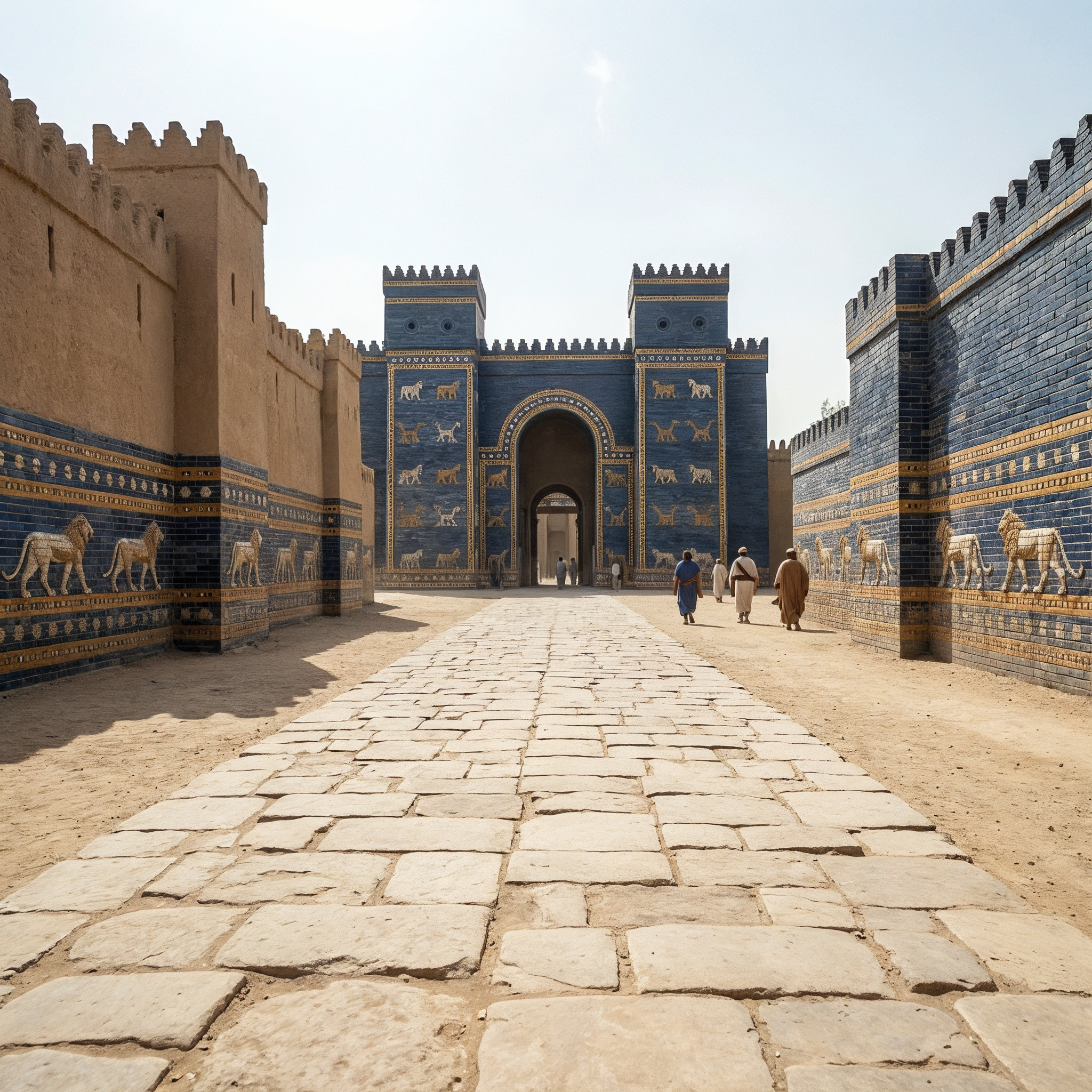 As Belshatstsar was drinking the wine, he remembered the gold and silver cups that his father Nevukadnetstsar had taken from the temple in Yerushalem, and ordered that they be brought in so that the king and his nobles, and his wives and his concubines, could drink from them.