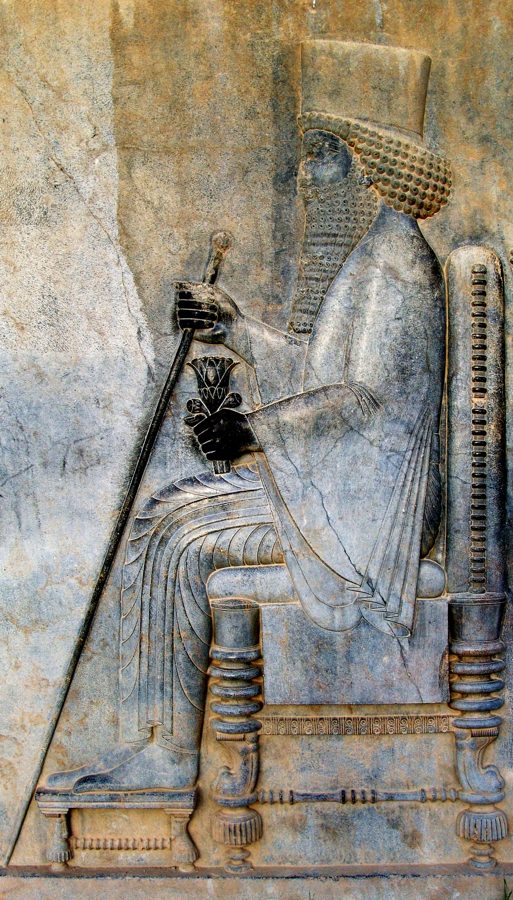
Relief of Dareyavesh (Darius) sitting on his throne in Persepolis (© درفش کاویانی, CC BY-SA 3.0, via Wikimedia Commons)
References
- Hebrew כִּסֵּא kise’, kiseh: GEN 41:40, EXO 11:5, EXO 12:29, DEUT 17:18, HERO 3:20, 1 SAM 2:8, 2 SAM 3:10, 2 SAM 7:13
108 more references
2 SAM 7:16, 2 SAM 14:9, 1 KI 1:13, 1 KI 1:17, 1 KI 1:20, 1 KI 1:24, 1 KI 1:27, 1 KI 1:30, 1 KI 1:35, 1 KI 1:37, 1 KI 1:46, 1 KI 1:47, 1 KI 1:48, 1 KI 2:4, 1 KI 2:12, 1 KI 2:19, 1 KI 2:24, 1 KI 2:33, 1 KI 2:45, 1 KI 3:6, 1 KI 5:5, 1 KI 7:7, 1 KI 8:20, 1 KI 8:25, 1 KI 9:5, 1 KI 10:9, 1 KI 10:18, 1 KI 10:19, 1 KI 16:11, 1 KI 22:10, 1 KI 22:19, 2 KI 10:3, 2 KI 10:30, 2 KI 11:19, 2 KI 13:13, 2 KI 15:12, 2 KI 25:28, 1 CHR 17:12, 1 CHR 17:14, 1 CHR 22:10, 1 CHR 28:5, 1 CHR 29:23, 2 CHR 6:10, 2 CHR 6:16, 2 CHR 7:18, 2 CHR 9:8, 2 CHR 9:17, 2 CHR 9:18, 2 CHR 18:9, 2 CHR 18:18, 2 CHR 23:20, EST 1:2, EST 5:1, JOB 26:9, JOB 36:7, PSA 9:4, PSA 9:7, PSA 11:4, PSA 45:6, PSA 47:8, PSA 89:4, PSA 89:14, PSA 89:29, PSA 89:36, PSA 89:44, PSA 93:2, PSA 94:20, PSA 97:2, PSA 103:19, PSA 122:5, PSA 132:11, PROV 16:12, PROV 20:8, PROV 20:28, PROV 25:5, PROV 29:14, ISA 6:1, ISA 9:7, ISA 14:9, ISA 14:13, ISA 16:5, ISA 22:23, ISA 47:1, ISA 66:1, YIR 1:15, YIR 3:17, YIR 13:13, YIR 14:21, YIR 17:12, YIR 17:25, YIR 22:2, YIR 22:4, YIR 22:30, YIR 29:16, YIR 33:17, YIR 33:21, YIR 36:30, YIR 43:10, YIR 49:38, YIR 52:32, LAM 5:19, EZEK 1:26, EZEK 10:1, EZEK 26:16, EZEK 43:7, YNA 3:6, HAG 2:22, ZEC 6:13 - Aramaic כָּרְסֵא korse’: DAN 5:20, DAN 7:9
- Greek δίφρος difros: JDT 11:19
- Greek θρόνος thronos: MAT 5:34, MAT 19:28, MAT 23:22, MAT 25:31, LUKE 1:32, LUKE 1:52, LUKE 22:30, ACTs 2:30
70 more references
ACTs 7:49, COL 1:16, HEB 1:8, HEB 4:16, HEB 8:1, HEB 12:2, REV 1:4, REV 2:13, REV 3:21, REV 4:2, REV 4:3, REV 4:4, REV 4:5, REV 4:6, REV 4:9, REV 4:10, REV 5:1, REV 5:6, REV 5:7, REV 5:11, REV 5:13, REV 6:16, REV 7:9, REV 7:10, REV 7:11, REV 7:15, REV 7:17, REV 8:3, REV 11:16, REV 12:5, REV 13:2, REV 14:3, REV 16:10, REV 16:17, REV 19:4, REV 19:5, REV 20:4, REV 20:11, REV 20:12, REV 21:3, REV 21:5, REV 22:1, REV 22:3, JDT 1:12, JDT 9:3, ESG 5:1, ESG 8:12, WIS 5:23, WIS 6:21, WIS 7:8, WIS 9:4, WIS 9:10, WIS 9:12, WIS 18:15, SIR 1:8, SIR 10:14, SIR 24:4, SIR 40:3, SIR 47:11, BAR 5:6, 1 MAC 2:57, 1 MAC 7:4, 1 MAC 10:52, 1 MAC 10:53, 1 MAC 10:55, 1 MAC 11:52, 4 MAC 17:18, ODE 3:8, PSS 2:19, PSS 17:6 - Latin thronus: L ESD 8:21
Description
The throne was a relatively large and elaborate seat upon which a ruler sat. It could be made of stone or wood or even other substances such as precious metals and ivory. It usually had a back and often armrests on the sides. The throne of Shelomoh (Solomon) is described in 1 KI 10:19, 1 KI 10:20 and 2 CHR 9:18, 2 CHR 9:19 as being elevated and approached by stairs. See 3.1.7 Stairs, steps<REALIA:3.1.7>.
———
Usage
On official occasions the ruler sat on the throne. This could be for the reception of foreign dignitaries, the passing of judgment, or the making and declaration of major decisions regarding the nation.
———
Translation
“Throne” may be rendered “great chair,” “important seat,” or “king’s chair.” On the other hand, a description of the “throne” as a place of judging or of decision making may be the rendering, for example, “chair from which the ruler gives orders,” “seat of decision making for a ruler,” or “seat of judging.”
The Greek word thronos refers only to a throne, but the Hebrew words kise’ and kiseh are the normal words for a seat (see 5.9 Chair, seat<REALIA:5.9>). When the seat of a king is in view, then the proper translation of these Hebrew words is “throne.”
 Open English Translation (OET)