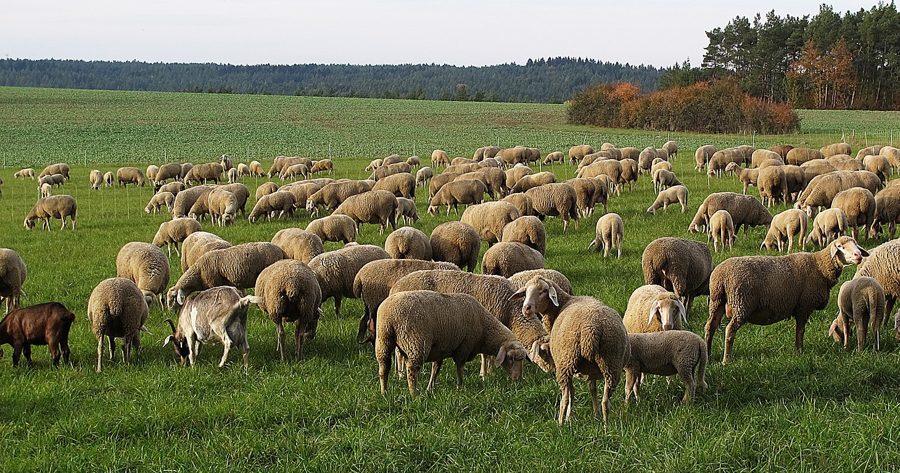
Flock of sheep (Wolfgang Eckert (Pixabay))
References
- Hebrew מַרְעִית mar‘it: YIR 10:21
- Hebrew עֵדֶר ‘eder: GEN 29:2, GEN 29:3, GEN 29:8, GEN 30:40, GEN 32:16, GEN 32:19, HERO 5:16, 1 SAM 17:34
- Hebrew צֹאן ts’on: GEN 4:2, GEN 4:4, GEN 12:16, GEN 13:5, GEN 20:14, GEN 21:27, GEN 21:28, GEN 24:35
239 more references
GEN 26:14, GEN 27:9, GEN 29:2, GEN 29:3, GEN 29:6, GEN 29:7, GEN 29:8, GEN 29:9, GEN 29:10, GEN 30:31, GEN 30:32, GEN 30:36, GEN 30:38, GEN 30:39, GEN 30:40, GEN 30:41, GEN 30:42, GEN 30:43, GEN 31:4, GEN 31:8, GEN 31:10, GEN 31:12, GEN 31:19, GEN 31:38, GEN 31:41, GEN 31:43, GEN 32:5, GEN 32:7, GEN 33:13, GEN 34:28, GEN 37:2, GEN 37:12, GEN 37:14, GEN 38:12, GEN 38:13, GEN 38:17, GEN 45:10, GEN 46:32, GEN 46:34, GEN 47:1, GEN 47:3, GEN 47:4, GEN 47:17, GEN 50:8, EXO 2:16, EXO 2:17, EXO 2:19, EXO 3:1, EXO 9:3, EXO 10:9, EXO 10:24, EXO 12:21, EXO 12:32, EXO 12:38, EXO 20:24, EXO 22:1, EXO 22:30, EXO 34:3, LEV 1:2, LEV 1:10, LEV 3:6, LEV 5:6, LEV 5:15, LEV 5:18, LEV 6:6, LEV 22:21, LEV 27:32, NUM 11:22, NUM 15:3, NUM 22:40, NUM 27:17, NUM 31:28, NUM 31:30, NUM 31:32, NUM 31:36, NUM 31:37, NUM 31:43, NUM 32:16, NUM 32:36, DEUT 7:13, DEUT 8:13, DEUT 12:6, DEUT 12:17, DEUT 12:21, DEUT 14:23, DEUT 14:26, DEUT 15:14, DEUT 15:19, DEUT 16:2, DEUT 18:4, DEUT 28:4, DEUT 28:18, DEUT 28:31, DEUT 28:51, DEUT 32:14, YEHO 7:24, 1 SAM 8:17, 1 SAM 14:32, 1 SAM 15:9, 1 SAM 15:14, 1 SAM 15:15, 1 SAM 15:21, 1 SAM 16:11, 1 SAM 16:19, 1 SAM 17:15, 1 SAM 17:20, 1 SAM 17:28, 1 SAM 17:34, 1 SAM 24:3, 1 SAM 25:2, 1 SAM 25:4, 1 SAM 25:16, 1 SAM 25:18, 1 SAM 27:9, 1 SAM 30:20, 2 SAM 7:8, 2 SAM 12:2, 2 SAM 12:4, 2 SAM 17:29, 2 SAM 24:17, 1 KI 1:9, 1 KI 1:19, 1 KI 1:25, 1 KI 4:23, 1 KI 8:5, 1 KI 8:63, 1 KI 22:17, 2 KI 5:26, 1 CHR 4:39, 1 CHR 4:41, 1 CHR 5:21, 1 CHR 12:40, 1 CHR 17:7, 1 CHR 21:17, 1 CHR 27:31, 2 CHR 5:6, 2 CHR 7:5, 2 CHR 14:15, 2 CHR 15:11, 2 CHR 17:11, 2 CHR 18:2, 2 CHR 18:16, 2 CHR 29:33, 2 CHR 30:24, 2 CHR 31:6, 2 CHR 32:29, 2 CHR 35:7, EZRA 10:19, NEH 3:1, NEH 3:32, NEH 5:18, NEH 10:36, NEH 12:39, JOB 1:3, JOB 1:16, JOB 21:11, JOB 30:1, JOB 42:12, PSA 44:11, PSA 44:22, PSA 49:14, PSA 65:13, PSA 74:1, PSA 77:20, PSA 78:52, PSA 78:70, PSA 79:13, PSA 80:1, PSA 95:7, PSA 100:3, PSA 107:41, PSA 114:4, PSA 114:6, PSA 144:13, PROV 27:23, ECC 2:7, SNG 1:8, ISA 7:21, ISA 13:14, ISA 22:13, ISA 53:6, ISA 60:7, ISA 61:5, ISA 63:11, ISA 65:10, YIR 3:24, YIR 5:17, YIR 12:3, YIR 13:20, YIR 23:1, YIR 23:2, YIR 23:3, YIR 25:34, YIR 25:35, YIR 25:36, YIR 31:12, YIR 33:12, YIR 33:13, YIR 49:20, YIR 49:29, YIR 50:6, YIR 50:8, YIR 50:45, EZEK 24:5, EZEK 25:5, EZEK 34:2, EZEK 34:3, EZEK 34:6, EZEK 34:8, EZEK 34:10, EZEK 34:11, EZEK 34:12, EZEK 34:15, EZEK 34:17, EZEK 34:19, EZEK 34:22, EZEK 34:31, EZEK 36:37, EZEK 36:38, EZEK 43:23, EZEK 43:25, EZEK 45:15, HOS 5:6, YOEL 1:18, AMOS 6:4, AMOS 7:15, YNA 3:7, MIC 2:12, MIC 5:8, MIC 7:14, HAB 3:17, ZEP 2:6, ZEC 9:16, ZEC 10:2, ZEC 11:4, ZEC 11:7, ZEC 11:11, ZEC 11:17, ZEC 13:7 - Hebrew שֶׂה seh: GEN 22:7, GEN 22:8, GEN 30:32, EXO 12:3, EXO 12:4, EXO 12:5, EXO 13:13, EXO 22:1
31 more references
EXO 22:4, EXO 22:9, EXO 22:10, EXO 34:19, EXO 34:20, LEV 5:7, LEV 12:8, LEV 22:23, LEV 22:28, LEV 27:26, NUM 15:11, DEUT 14:4, DEUT 17:1, DEUT 18:3, DEUT 22:1, YEHO 6:21, HERO 6:4, 1 SAM 14:34, 1 SAM 15:3, 1 SAM 17:34, 1 SAM 22:19, PSA 119:176, ISA 7:25, ISA 43:23, ISA 53:7, ISA 66:3, YIR 50:17, EZEK 34:17, EZEK 34:20, EZEK 34:22, EZEK 45:15 - Greek ποίμνη poimnē: MAT 26:31, LUKE 2:8, YHN 10:16, 1 COR 9:7
- Greek ποίμνιον poimnion: LUKE 12:32, ACTs 20:28, ACTs 20:29, 1 PET 5:2, 1 PET 5:3, JDT 2:27, JDT 3:3, SIR 18:13
2 more references
BAR 4:26, PSS 17:40
Discussion
To people in Bible times sheep were the basic domestic animals. A poor person may not have owned any cattle or goats but would generally have had sheep. In Natan’s (Nathan’s) parable in 2 SAM 12:3–6 the poverty of the one person is emphasized by the fact that he had only one lamb.
A wealthy person, on the other hand might own so many animals of different kinds that the herd would be divided up into flocks, each of which had its own herding personnel. In the search for grazing and water, the different flocks, all belonging to one person, would be scattered in different areas. In biblical Hebrew a combination of flocks of domestic animals can be referred to by the inclusive word ‘eder. This word usually includes sheep, but it can also include goats, cattle, donkeys, and possibly even camels. Within a person’s ‘eder sheep would have been the most numerous. If a writer wanted to be more specific, the groups of domestic animals within the ‘eder could be referred to with words meaning flocks, cattle, donkeys, and camels.
This “flock” within an ‘eder was called in Hebrew ts’on. This word always included sheep but could include goats too. Within the ts’on sheep would outnumber goats.
A ts’on consisted of individual animals called seh. While this word usually denotes sheep it can refer to goats too. In some contexts some English versions translate this word as “animal". For instance in EXO 12:5 the Hebrew text is best translated as “It must be an animal (seh) without defect, a one year old male; you may choose it either from your sheep or from your goats."
Translation
The text itself will often indicate the kinds of animal being referred to. In these contexts the translation is not usually difficult. However, when ‘eder is used without indication of what animals are intended, in many languages it is best to translate this word by a phrase meaning “herds of domestic animals” or “herds of animals which people raise".
Similarly with ts’on, the context often indicates whether sheep or goats are being referred to. However, where this word occurs without further clarification, it is best translated as “flocks of sheep and goats".
The translation of seh is not quite so straightforward. In some contexts it is best rendered “one animal", in others “one sheep or goat", and in others “a sheep". In languages in which there are different noun classes or classifiers for large and small animals, the appropriate one for an animal the size of a sheep or goat should be used when translating seh as “animal".
 Open English Translation (OET)